
Best Time to Visit New Zealand: Both Islands, All Seasons
June 3, 2026
New Zealand sits at the bottom of the South Pacific, stretching between 34°S and 47°S latitude — roughly equivalent to the band of latitudes spanning Barcelona to Edinburgh, but with mountain ranges, active volcanoes, and 15,000 kilometres of coastline that bear no resemblance to either. The country is small enough to cross in a few hours but varied enough that the best-time question doesn't have a unified answer. The subtropical Bay of Islands operates on different seasonal rhythms than Fiordland's sub-Antarctic fjords. Queenstown in ski season is a different planet from Queenstown in summer. Getting the timing right for both islands requires understanding what each region rewards, then building an itinerary that sequences them intelligently.
The Core Seasonal Framework
New Zealand's seasons are the inverse of the northern hemisphere: summer is December–February, autumn March–May, winter June–August, spring September–November. This is the foundational fact for planning. Peak tourist season — highest prices, fullest accommodation books, trails requiring advance booking — is December–February, when NZ summer coincides with the northern hemisphere's Christmas–New Year holiday period and the school summer break that follows.
The sweet spots for value and uncrowded conditions are the shoulder seasons: November (just as the season opens) and March–April (as it closes). These windows offer weather almost as good as peak summer with pricing 20–40% lower and significantly more availability for accommodation and guided experiences.
The North Island: October to April
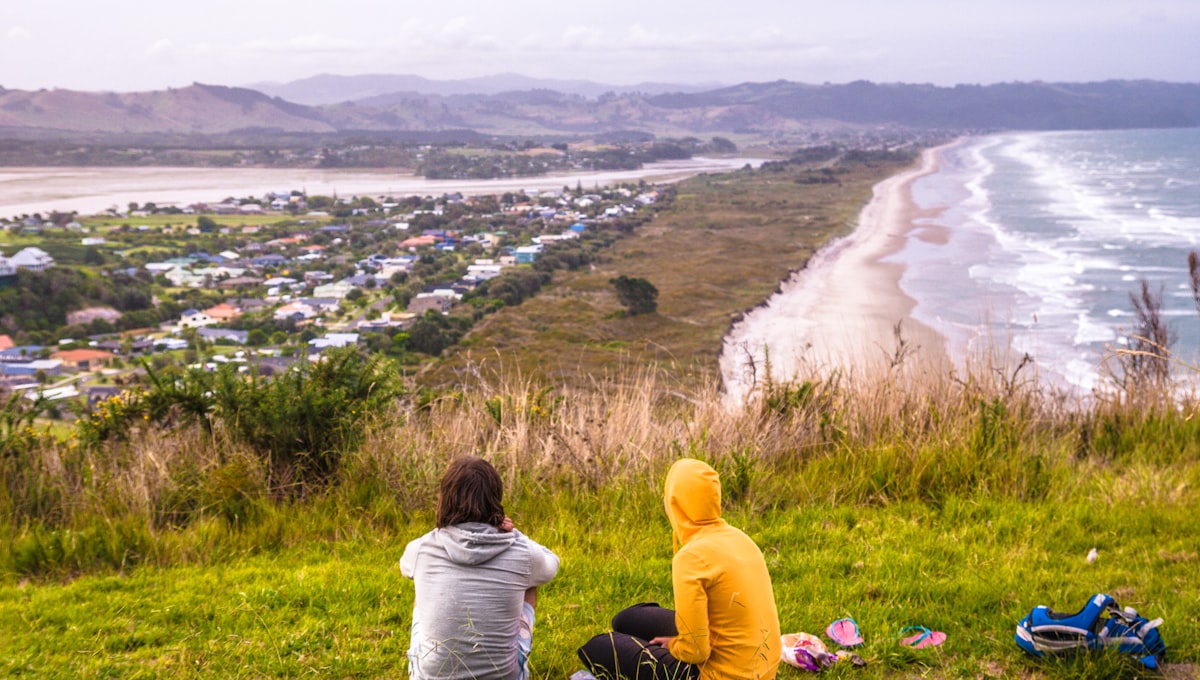
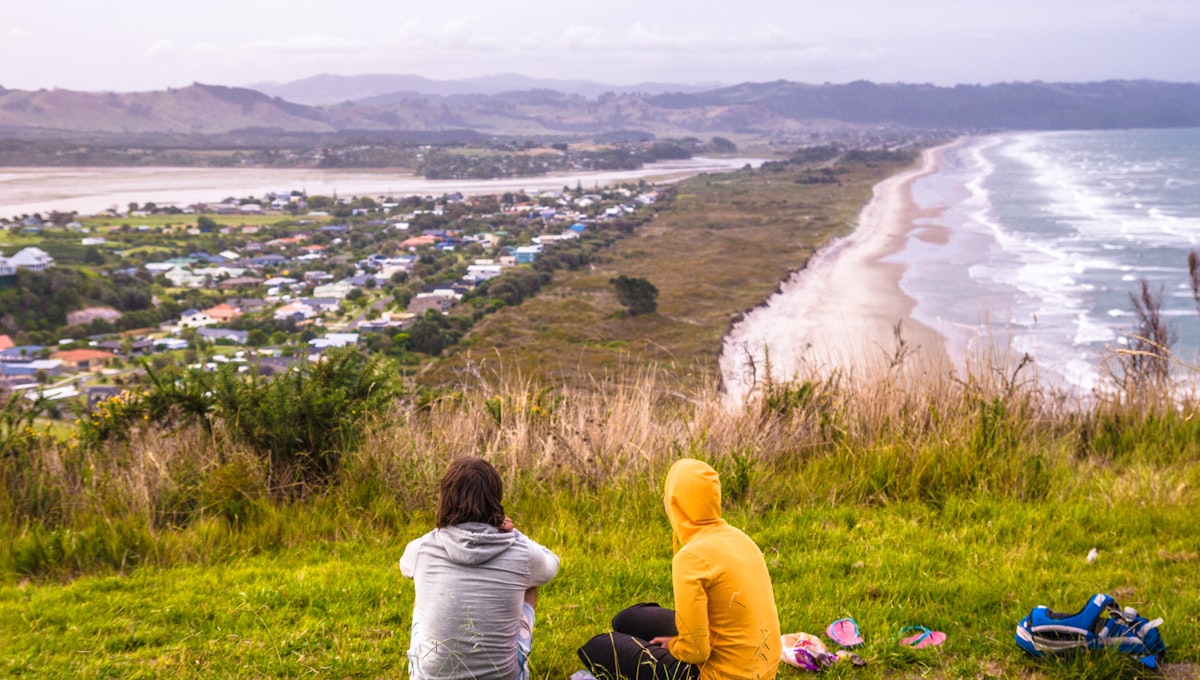
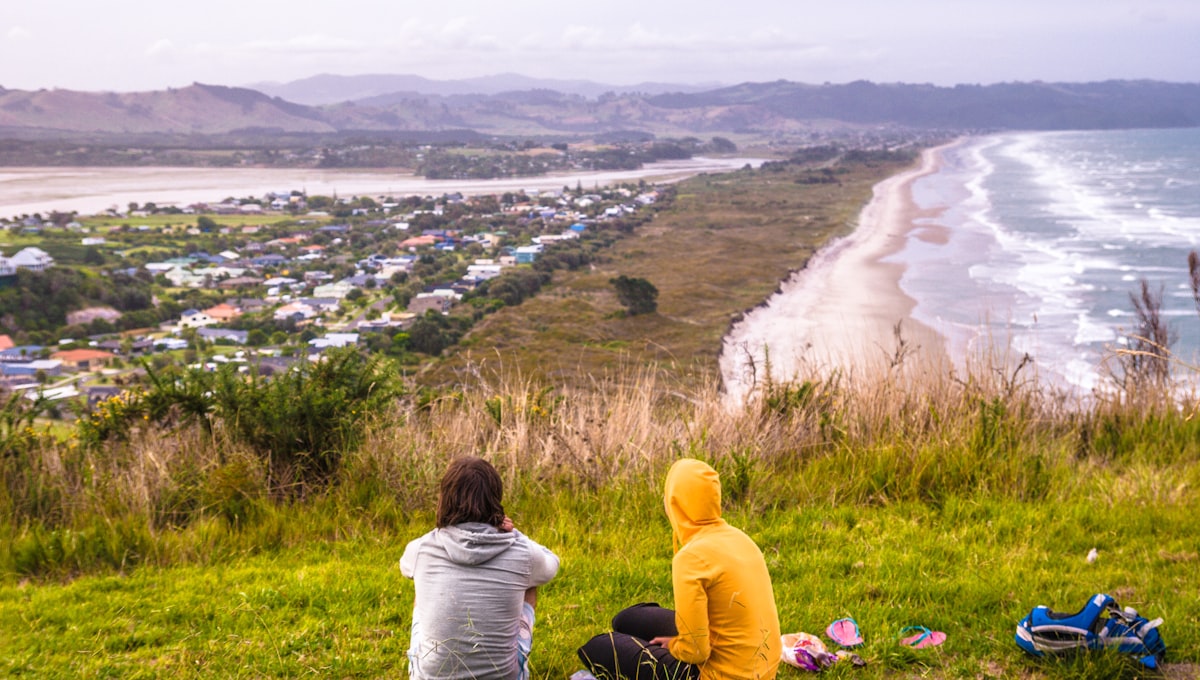
Auckland (AKL) sits at 36°S and has a climate closer to Sydney than to the alpine South Island. The subtropical north — the Bay of Islands, Northland, Coromandel Peninsula — is best in summer, December to March, when the water is warm enough for swimming (22–24°C) and the beaches feel genuinely tropical by northern hemisphere standards. The Ninety Mile Beach and Cape Reinga at the country's northern tip have a raw, windswept quality that peaks in summer when the light is sharp and the sea is intensely blue. Be aware that January–February brings peak domestic tourism with New Zealand school holidays adding to international visitor numbers.
Rotorua sits on the Taupo Volcanic Zone and its geothermal landscape — boiling mud pools at Waiotapu and Wai-O-Tapu, sulphur vents, the Te Puia complex with its Prince of Wales Feathers geyser, the brilliant coloured Champagne Pool — is year-round in accessibility and genuinely extraordinary regardless of season. The surrounding Redwood Forest and Mountain Bike Park make Rotorua attractive to outdoor activity visitors. The geothermal landscape is most rewarding for photographs in autumn (March–May) when the surrounding native bush is coloured and the steam from thermal features is most visible against cooler air. Rotorua is also the most accessible place in New Zealand to engage substantively with Māori culture; Te Puia's Ngāti Whakaue cultural performance and hāngī (earth-oven feast) dinner is the most authentic mainstream offering, and the Mitai Māori Village experience offers a more intimate version.
Wellington, the capital at the southern end of the North Island, has a justly legendary reputation for wind — the Cook Strait funnels Southern Ocean weather through the Wellington urban bowl with unusual force. But it's genuinely one of New Zealand's best cities for food, coffee, and culture, and the wind is less oppressive than the reputation suggests for most visits. Wellington suits almost any season; spring (September–October) is particularly pleasant because the Cuba Street area, the Wellington Waterfront, and the Botanic Garden are at their freshest without summer crowds. The Te Papa Tongarewa museum is outstanding in any weather — the largest museum in the Southern Hemisphere and free to enter, with particularly strong collections on Māori taonga and New Zealand natural history.
The South Island: November to March
The South Island is where New Zealand's most dramatic scenery concentrates — Fiordland, the Southern Alps, Aoraki/Mount Cook, the Marlborough Sounds, Queenstown, the wild West Coast. Here, timing matters more acutely because weather conditions are more extreme and many of the signature experiences are season-dependent.
December to February (Summer): Highest demand, highest prices, but the best window for outdoor activities. The Milford Track, Routeburn Track, Kepler Track, and other Great Walks require DOC bookings made months in advance — popular huts on Milford book out within minutes of the booking window opening in June for the following season. Queenstown operates at full capacity. The advantage of summer is the extraordinary daylight: sunset in Queenstown approaches 9:30 PM in January, extending activity days far beyond what European visitors are accustomed to.
March to May (Autumn): The best compromise period for most independent travellers. March especially is a strong choice — summer crowds have dissipated, school holidays have ended in most source markets, but weather across the South Island remains warm and settled. Fiordland's notorious rainfall eases (Milford Sound receives 7–8m of rainfall annually; the autumn months see less than the summer's more irregular precipitation). The beech forests in Fiordland and Mount Aspiring National Park turn copper and gold through late April and May — some of the most beautiful autumn colour in the southern hemisphere.
June to August (Winter): Queenstown transforms into a ski and snowboard resort town. Coronet Peak and The Remarkables — both 40–50 minutes from Queenstown — run from mid-June through September and attract Australian families and international skiing visitors. Winter flights from cheapest way to fly to Australia to Queenstown (ZQN) are cheaper than summer — useful context for Australian-based travellers building a ski trip. The rest of the South Island in winter is cold, and many mountain trails require crampons and alpine experience. Milford Road can be closed by avalanche risk. Fiordland's waterfalls are at their absolute maximum volume and power in winter — dramatic if you can get there.
September to November (Spring): Underrated for the South Island's alpine regions. Snowmelt in October–November turns rivers high and gives glacial lakes their intensely blue-green colour — the Franz Josef and Fox glacier terminal lakes are at their most spectacular in spring as meltwater floods the lake basins. The Great Walks reopen for the season in late October, and early-season (October–November) bookings are far easier to secure than December peak.
The Fiordland Specifics
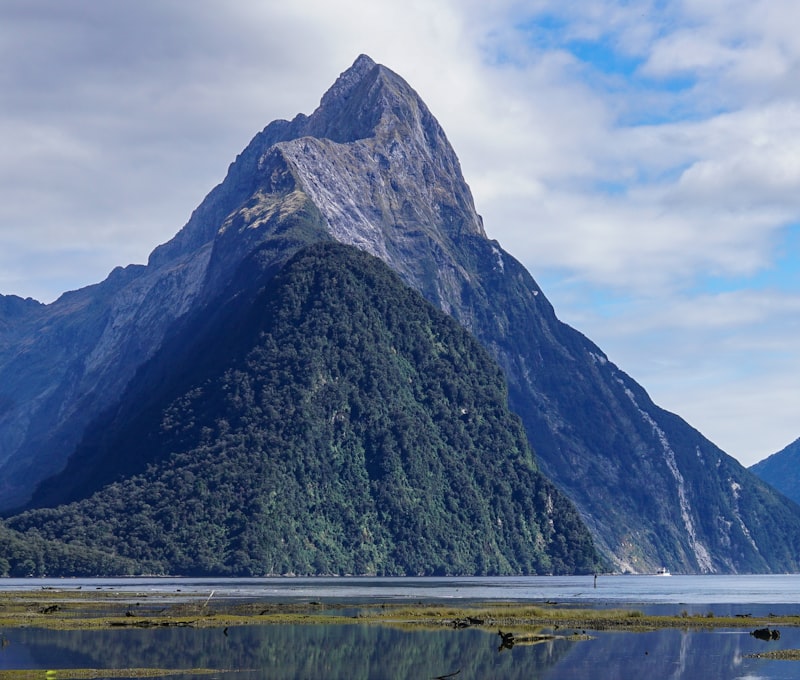
Milford Sound (Te Anau o Tawiti, or Piopiotahi in te reo Māori) is accessible from the town of Te Anau via the Milford Road — one of the world's great scenic drives, 120km through beech forest and past glacial lakes, emerging through the Homer Tunnel into the fjord system. Allow three hours and stop at Mirror Lakes, the Avenue of the Disappearing Mountain, and the Chasm walk (a 20-minute return walk through a gorge where the river has carved dramatic underwater tubes through the rock).
The road is subject to closures in extreme weather and avalanche risk; always check conditions at the New Zealand Department of Conservation (DOC) website before departing. Even if you visit in rain — and Milford Sound averages more than 180 rain days per year — the waterfalls that tumble directly into the fjord from 1,200-metre cliffs are dramatically amplified, and the mist creates its own atmosphere. A cruise on the sound is the core experience (around NZ$80–$140 for a 2-hour cruise); overnight cruises allow you to see the sound at dawn, which is unambiguously the best light.
Doubtful Sound, accessible from Lake Manapouri south of Te Anau, is less visited and arguably more spectacular — three times the length of Milford Sound, reaching further into the Southern Alps. The access logistics (bus to Manapouri, boat across the lake, bus over Wilmot Pass, then cruise) make it a full-day commitment, which filters out casual visitors and means you often have the fjord effectively to yourself.
Getting There and Between Islands
International flights arrive at Auckland (AKL) as the primary gateway, with some direct services to Christchurch (CHC) from Sydney, Melbourne, and selected Asian cities. From London, Air New Zealand's non-stop to Auckland takes 17–18 hours (the second-longest non-stop route in the world when operated) and runs from around £750 return in off-peak periods to £1,200 in peak summer. From the US West Coast, Los Angeles to Auckland runs $700–$1,100 return with Air New Zealand and United.
Domestic travel between the islands uses the Interislander or Bluebridge car ferries across Cook Strait (3 hours, from NZ$60 foot passenger — book ahead in summer as it fills) or short Air New Zealand flights between Auckland and Queenstown (2 hours), Auckland and Christchurch (1.5 hours), and Wellington and Queenstown (1 hour). The Interislander crossing through the Marlborough Sounds — fiords on a smaller scale than Fiordland, but equally beautiful in a more intimate way — is scenic enough to justify doing at least once.
The Two-Week Autumn Itinerary
For two weeks in March–April: fly into Auckland, spend 2 nights, take an Air NZ flight to Queenstown. Spend 4 nights in Queenstown — day trip to Milford Sound (full day), Routeburn Track day walk (full day), Arrowtown village and Arrow River (half day), Glenorchy and the head of Lake Wakatipu (half day scenic drive). Fly to Christchurch, spend 1 night, then drive the South Island's east coast via Kaikōura (whale watching, 2.5 hours from Christchurch) and the Marlborough wine region. Take the Interislander ferry to Wellington, spend 2 nights, fly home. This sequence covers both islands without backtracking, captures autumn colour in Fiordland and the Wanaka region, and gives genuine time in each place.
Aoraki/Mount Cook: The Alpine Alternative to Queenstown
For travellers who prefer stillness over adventure tourism, Aoraki/Mount Cook National Park offers an alternative South Island anchor point to Queenstown. The park centres on New Zealand's highest peak (3,724m) and the surrounding Mackenzie Country — a high tussock plateau of an almost alien beauty, particularly in autumn when the colour is intensely golden. Tekapo village, at the southern end of the Mackenzie Basin, sits beside a turquoise glacially fed lake and the Church of the Good Shepherd (a stone chapel built in 1935, one of the most photographed buildings in NZ), and has some of the darkest skies in the Southern Hemisphere — the Aoraki Mackenzie International Dark Sky Reserve covers 4,300 square kilometres and the stargazing is world-class in clear weather.
The Mount Cook village (2 hours north of Tekapo) has the DOC Visitor Centre, the departure point for the Hooker Valley Track (the best day hike in NZ for scenery per effort ratio — 3 hours return, ending at a glacial lake with Aoraki filling the backdrop), and helicopter flights onto the Tasman Glacier. It has limited accommodation that books out far ahead in December–February; autumn shoulder season guide (March–April) is significantly more available.
New Zealand Costs and Budget Context
New Zealand is not a budget destination by Southeast Asian or Eastern European standards. Accommodation runs NZ$120–$200 per night for a decent mid-range double outside peak season; NZ$200–$350 in Queenstown or at popular Fiordland-adjacent lodges. Food costs NZ$15–$25 for a café lunch, NZ$35–$60 per person for a sit-down dinner with wine. Guided Great Walk bookings (hut accommodation, not porters) run NZ$80–$120 per person per night on the Milford or Routeburn tracks.
Car rental is essentially mandatory for the South Island; the public transport network outside main cities is sparse. Rental rates run NZ$40–$80 per day for a standard compact car in shoulder season, NZ$80–$150 in December–February peak. All major roads are sealed but some South Island scenic routes (the Mount Aspiring area, parts of the West Coast) use one-lane bridges with give-way rules that require attention from first-time visitors.
 Best Time to Visit Japan: Cherry Blossoms, Autumn, or Cheap Season?
 Best Time to Visit Argentina: Patagonia, Buenos Aires, and Wine Country
 Best Time to Visit Colombia: Cartagena, Medellín, and the Coffee Triangle