
Best Time to Visit Colombia: Cartagena, Medellín, and the Coffee Triangle
May 28, 2026
Colombia straddles the equator and runs from sea level on two coasts up through the Andes to altitudes above 5,000 metres. The result is one of the most climatically diverse countries in the Americas, and the reason that "best time to visit" depends almost entirely on which part of Colombia you're talking about. Cartagena on the Caribbean coast has a dry season that ends when the Coffee Triangle's best season begins. Medellín's "eternal spring" is a product of altitude, not latitude. Here is the honest breakdown.
The General Framework: Colombia Has Two Rainy Seasons
Unlike the northern hemisphere's clear seasonal divide, Colombia's climatic year is structured around two dry seasons and two rainy seasons. This is because Colombia is close enough to the equator to experience the inter-tropical convergence zone twice per year as it migrates north and south.
The main dry season runs from December through March. The secondary dry season runs from June through August. The rainy seasons are April–May and September–November. This pattern applies broadly to the Andean interior — Bogotá, Medellín, the Coffee Triangle — though the coastal regions have their own patterns.
Cartagena: The Walled City on the Caribbean
Cartagena's climate is tropical Caribbean: consistently hot (28–33°C year-round) with a distinct dry season from December through April. This is the most popular time to visit — cruise ships dock, hotels fill to capacity, and prices for accommodation in the walled city (Ciudad Amurallada) and the beach island of Bocagrande reach their annual peak. Expect to pay 40–60% more for accommodation in January than in October.
The "low season" in Cartagena runs May through November — the Caribbean rainy season. Rain comes as afternoon downpours (typically 1–3 hours) rather than all-day grey skies. Mornings are often clear and swimmable. The water temperature stays around 27–29°C year-round. Low season Cartagena is significantly cheaper, markedly less crowded, and still perfectly viable for the beach and colonial city experience. The Islas del Rosario (a coral archipelago 45 minutes by boat from the city) are most accessible in calm dry-season weather, but snorkelling remains good year-round.
The best single month for Cartagena, balancing price, crowd levels, and weather, is November. The worst of the rain has typically passed, prices haven't yet risen for the December high season, and the city — with its Spanish colonial walls, bougainvillea-draped balconies, and evening plaza culture — is at its most liveable temperature rather than its most visitor-saturated.
Medellín: The City of Eternal Spring
Medellín sits in the Aburrá Valley at 1,495 metres altitude. The altitude creates the "eternal spring" reputation: temperatures hover between 18°C and 28°C year-round, with little variation across months. The seasonal factor is rain, not temperature.
Medellín's driest months are January–February and July–August. June and July are particularly good for outdoor activities in the city and the surrounding countryside: the Pueblito Paisa hilltop replica village, the botanical garden, the Metrocable lines up to the hillside communes, and day trips to the Parque Arvi cloud forest above the city are all at their best when rain is rare. The Feria de las Flores (Flower Festival) runs in early August — a week of flower-decorated parades and cultural events that represents the city's most ebullient annual moment.
March through May and September through November bring afternoon rains that don't prevent travel but do make outdoor plans less certain. The city's transformed reputation and quality of infrastructure (the metro, the cable cars, the urban escalators linking the hillside barrios to the centre) mean that rainy Medellín is still a highly functional destination — it's a city to spend real time in, not just pass through.
The Coffee Triangle (Eje Cafetero): Valle del Cauca, Quindío, Risaralda
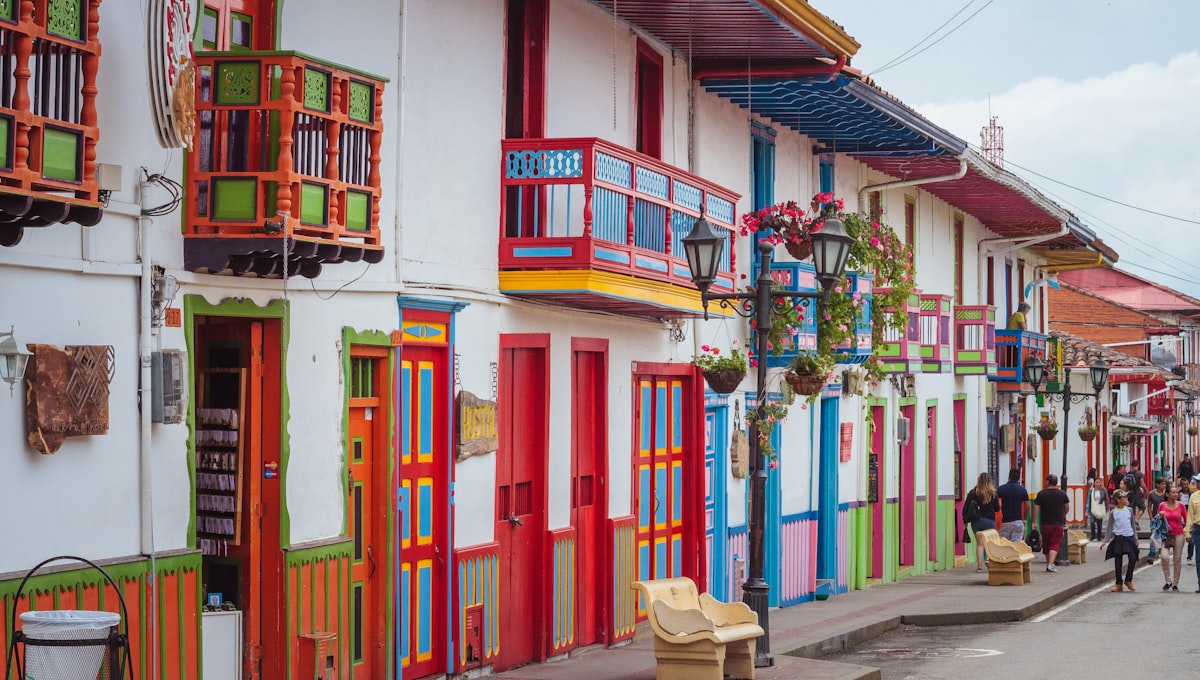
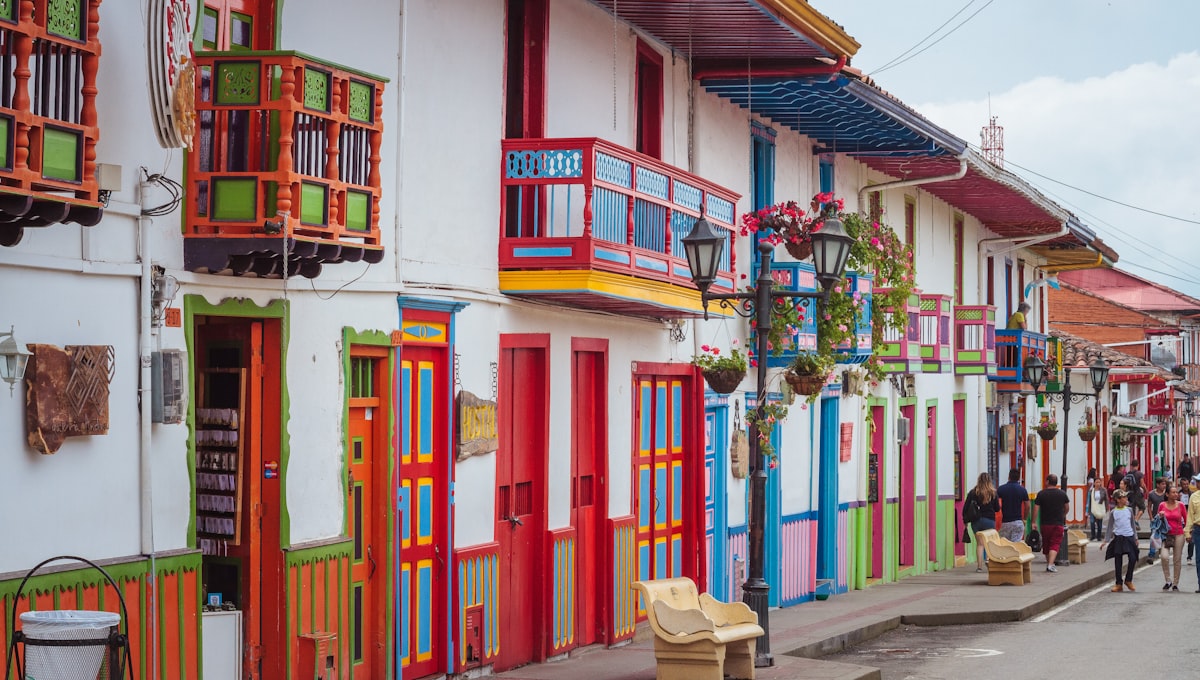
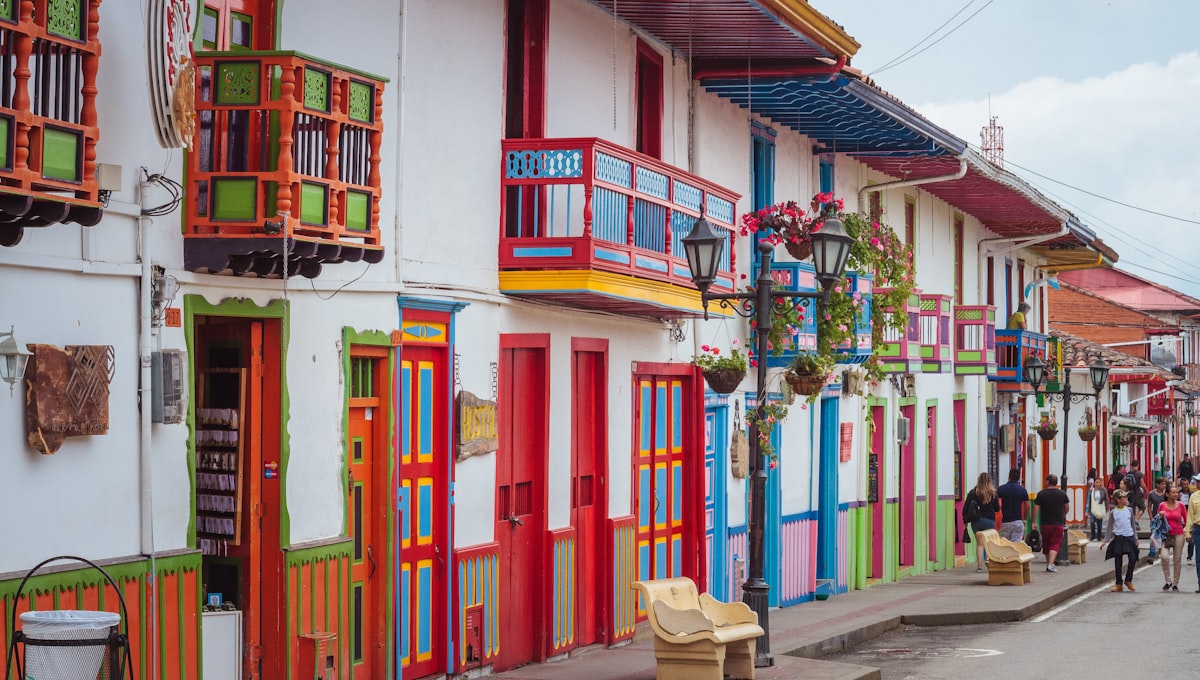
The Coffee Triangle is Colombia's most visually distinctive region: steep hillsides planted with coffee bushes under banana-leaf shade, the dramatic Cocora Valley with its towering wax palms, the colonial Paisa architecture of towns like Salento and Filandia. This region sits at 1,200–2,000 metres, giving it a pleasant 18–24°C climate year-round.
The driest months — January–February and July–August — are best for hiking. The Cocora Valley hike to the hummingbird sanctuary near Acaime involves 3–4 hours of trail walking that becomes genuinely muddy and difficult in rain. The Nevado del Ruiz national park, accessible from Manizales (a 2–3 hour drive from the Triangle), requires dry weather for the high-altitude views. January through February, after the Christmas holiday crowds have thinned, is the most comfortable window for the Coffee Triangle: dry, at peak coffee harvest (October–December produces the main harvest; January–March is the secondary "mitaca" harvest), and with accommodation prices that haven't reached the December holiday peak.
Salento, the most visited Coffee Triangle town, has developed significant tourism infrastructure in recent years: boutique coffee farms offering tours, an excellent restaurant scene, and accommodation from hostel to boutique hotel. April and October rains turn the road between Salento and the Cocora trailhead into a mud channel — a jeep (open-sided Willys) is the standard transport and handles it fine, but waterproofs are mandatory.
Bogotá: The High Plateau Capital
Bogotá sits at 2,600 metres, the third-highest capital in the world after Quito and La Paz. The altitude means cool, cloudy conditions year-round (12–19°C) with the ubiquitous rains following the same April–May and September–November pattern as the Andes interior. The driest months are December–January and July–August.
For most visitors, Bogotá is a transit hub and an introduction to the country — a city of genuine cultural weight (the Gold Museum, the Botero Museum, the Candelaria colonial district) rather than a primary destination. Time your Bogotá days to bracket your Colombia trip in dry-season months, or plan around specific festivals: the Bogotá International Book Fair (FILBo) runs in late April through May, and the International Jazz Festival runs in September — both worth building itineraries around.
Altitude adjustment matters in Bogotá: arriving from sea level and immediately climbing hills or drinking alcohol will produce symptoms. A day or two of light activity and extra water before intense exertion makes the transition significantly more comfortable.
The Month-by-Month Summary
December–January: Best for Cartagena (dry, but expensive and crowded). Good for Coffee Triangle (dry season beginning). Bogotá busier with domestic holiday travel.
February–March: Excellent for the Coffee Triangle (secondary harvest season, drying out). Cartagena still in dry season. Medellín dry and pleasant.
April–May: Rainy season in the Andes. Cartagena entering its rainy period. Bogotá FILBo in late April. Lower prices everywhere.
June–August: Best overall window for most of Colombia. Medellín Flower Festival (August). Dry in the Coffee Triangle and Bogotá. Cartagena experiencing Caribbean rain but mornings clear.
September–November: Second rainy season in the Andes. Caribbean rain at peak in October. Prices low. Excellent option for experienced travellers comfortable with variable weather.
Flights to Colombia from North America and Europe
From the United States, Avianca (AV), American (AA), Delta (DL), United (UA), and Spirit (NK) all fly non-stop to Bogotá (BOG) from multiple East Coast gateways. Fares from Miami run $350–550 return, from New York $420–650. Cartagena (CTG) has non-stop service from Miami (AA, Spirit) at $380–600 return. Medellín (MDE) is served non-stop from New York and Miami.
From Europe, Avianca flies from Madrid (MAD) and Bogotá is also served by Iberia (IB) and Air Europa (UX). Fares from Madrid typically run €650–950 return economy. London–Bogotá with one stop via Madrid or Miami runs £580–850 in shoulder season. Multi-market search is worth running here: Avianca's Spanish-market fares for the Madrid route are sometimes lower in euro terms than the UK-market sterling prices for comparable itineraries.