
48 Hours in Helsinki: Saunas, Design, and the Baltic
June 4, 2026
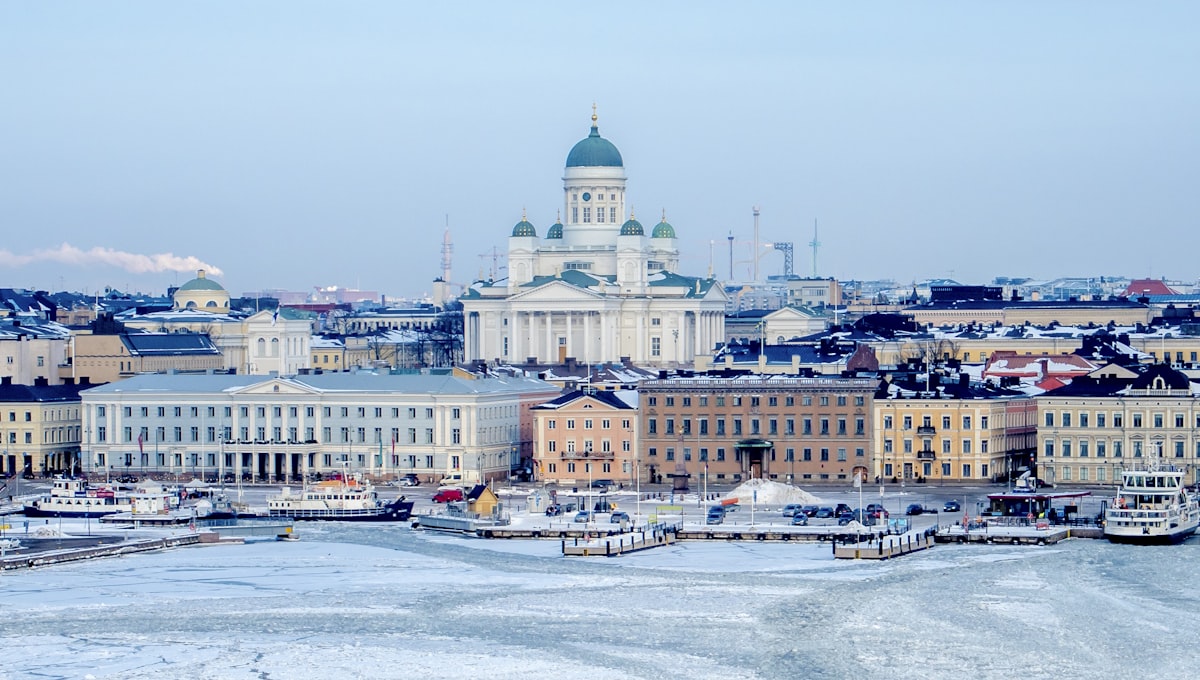
Helsinki doesn't announce itself. There are no obvious skyline moments, no iconic landmarks that land in the global consciousness the way the Eiffel Tower or the Colosseum do, no single image that defines the city in the way that photographs define Stockholm or 48 hours in Copenhagen. What Helsinki has instead is something more sustainable and ultimately more satisfying: a city that works beautifully and consistently, where the coffee is routinely among the best in the world, where the design tradition is both genuine and accessible rather than gallery-priced, where the relationship with water — the harbour, the archipelago, the frozen winter sea — shapes everything about daily life. Two days is enough to get under its skin. Here's how to spend them.
Getting There
Helsinki Airport (HEL) at Vantaa is served by Finnair, British Airways, easyJet, Norwegian, Ryanair, SAS, Lufthansa, and others from most Northern and Western European cities. From London, fares run £60–£140 return depending on season and booking lead time — competitive with similarly distant Scandinavian destinations like Stockholm or Copenhagen. May, June, and September are ideal: long daylight hours (midsummer Helsinki barely gets dark), pleasant temperatures (18–24°C in June), and prices that haven't spiked to July peak levels.
The Ring Rail Line airport train connects to Helsinki Central Station in 30 minutes for €3.20 and runs from 5 AM to midnight. It's the right choice for almost everyone — reliable, frequent, and delivers you into the centre without the taxi fare premium. If you're staying in the design district or near the harbour, a single tram connection from the central station completes the journey.
Helsinki is also reachable by ferry from Stockholm via the Åland archipelago overnight crossing (16–17 hours, from around €80 return with a cabin on Viking Line or Tallink Silja). If you're building a Scandinavian trip with some time flexibility, the ferry is an experience in itself — the archipelago approach to Helsinki at dawn, with thousands of granite islands passing outside the cabin window, is one of the quiet wonders of northern European travel.
Day 1 Morning: The Waterfront and Senate Square
Start at Market Square (Kauppatori) on the South Harbour — Helsinki's most historically significant public space and still its most lived-in. The relationship with the sea is immediately apparent: ferries leave from this quay for the fortress island of Suomenlinna (15 minutes, included in the city day transit ticket), for the island restaurants of the archipelago, and for the 2.5-hour Tallink fast-cat crossing to a weekend in Tallinn in Estonia. The market itself, operating year-round with covered stalls in winter and outdoor stalls in summer, is a good place to begin with Finnish street food: salmon soup (lohikeitto) served in a hollowed-out bread roll, karjalanpiirakka (Karelian rice pastries with egg butter, a Finnish staple going back centuries), and cloudberry jam on fresh crispbread. Prices are honest; the salmon soup is €8–€10.
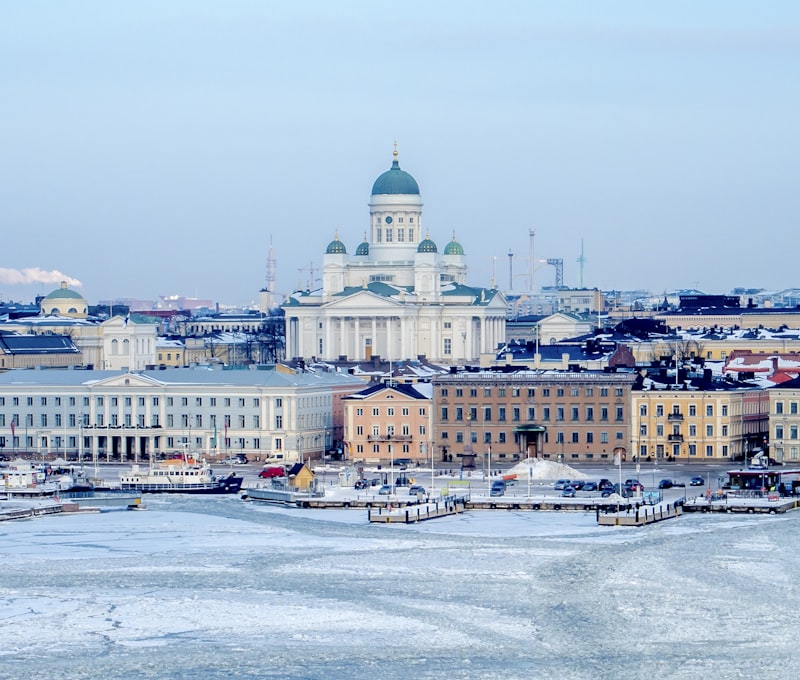
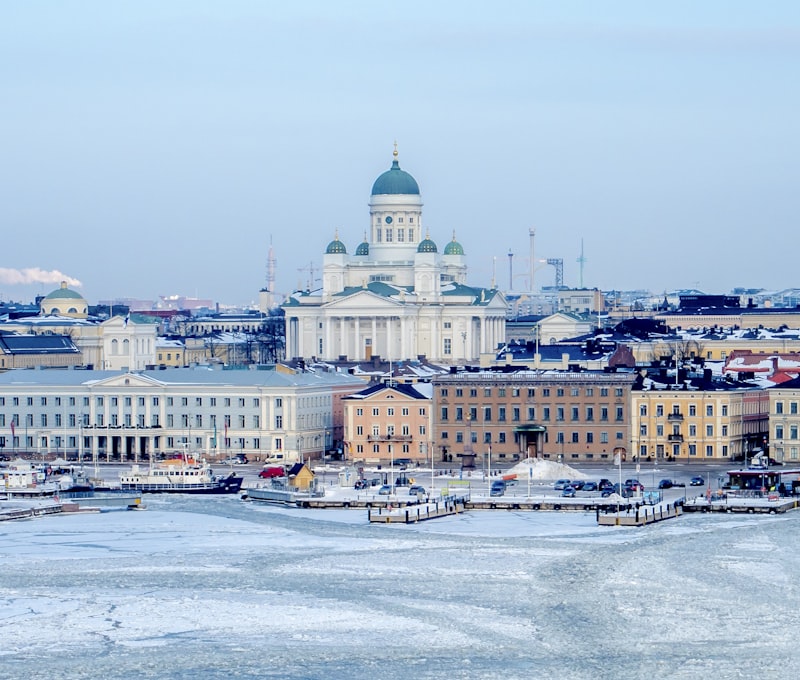
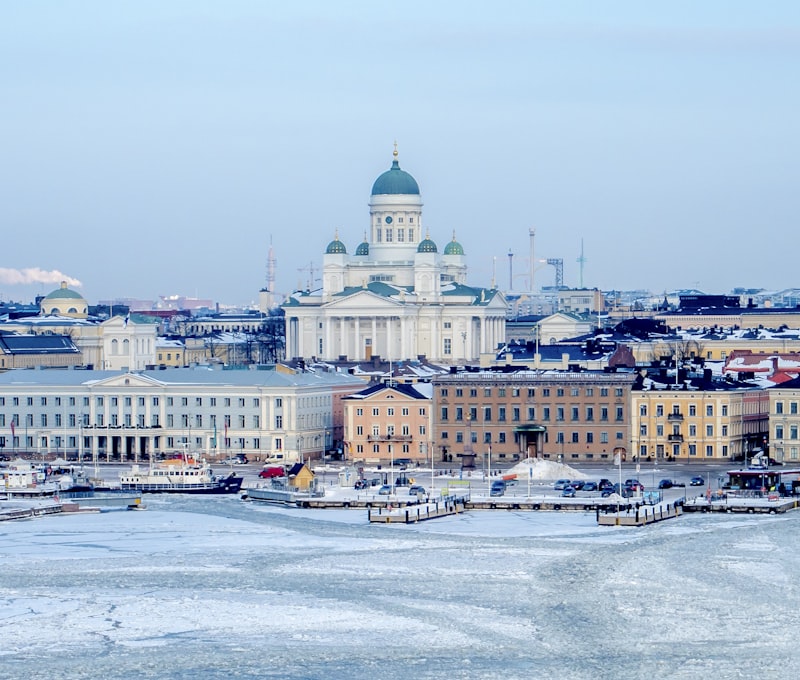
From Kauppatori, walk five minutes uphill to Senate Square (Senaatintori) and Helsinki Cathedral. The cathedral's white Lutheran neoclassical dome — completed 1852, designed by Carl Ludwig Engel — rises above the green cobblestone square in a way that feels almost impossibly photogenic in morning light. The square itself is one of Engel's great urban compositions: symmetrical government buildings on three sides, the cathedral closing the fourth, with the University of Helsinki steps providing a gathering place for students and visitors alike. Give it ten minutes of standing still, which is different from photographing it.
Walk west through Esplanadi Park, Helsinki's main promenade boulevard, lined with flagships of Finnish design brands — Marimekko, Iittala, and others — and public sculpture. The Esplanadi is Helsinki's answer to Las Ramblas but quieter, greener, and more purposeful: Helsinkians actually use it to walk rather than primarily to perform.
Day 1 Afternoon: The Design District
The Design District covers roughly 25 blocks south and west of Esplanadi, bounded loosely by Fredrikinkatu, Iso Roobertinkatu, and the harbour. It contains the highest density of independent design shops, galleries, studios, and concept stores in the Nordic countries — everything from high-end jewellery to vintage Aalto furniture to independent ceramic studios selling work from Finnish art school graduates.
The institutional anchors are worth your time. The Design Museum (entrance on Korkeavuorenkatu, €15) is small but superbly curated, covering Finnish industrial and product design from the early 20th century through the present. The permanent collection traces the lineage from Aalto's bentwood furniture and Arabia ceramics through Nokia's industrial design era to contemporary Finnish design practice. The adjacent Museum of Finnish Architecture (Kasarmikatu, free or low entry depending on current exhibition) covers the built environment from medieval stone churches to Helsinki's 21st-century urban expansion.
Artek on Eteläesplanadi (the flagship store, not the department store concessions) is worth 20 minutes even if you're not buying. Artek is Aalto's own company, still operating, selling his original designs as continuous production runs rather than archive reproductions. The stacking stools, the Paimio chair, the Savoy vase in its various forms — seeing them in a shop environment rather than a museum gives them a different quality. The design section of the Academic Bookstore on Pohjoisesplanadi, designed by Aalto in 1969 and still operating, is similarly worth a detour: the skylights are extraordinary and the bookshop carries the most comprehensive selection of Finnish design, architecture, and photography monographs available in a retail setting.
Lunch at Café Aalto inside the Academic Bookstore: coffee and a pulla (Finnish cardamom bun, sweet and slightly anise-flavoured) is €6–€8 and consumed under those exceptional skylights. It is one of the pleasanter lunch spots in northern Europe.
Afternoon in Kamppi, the neighbourhood west of the design district. The Kamppi Chapel of Silence — a smooth cedar-clad oval structure inserted into the commercial plaza between the Kamppi shopping centre and the bus terminal — is free and offers five minutes of profound quiet that feels like an architectural argument about the value of silence in contemporary city life. It's one of the most genuinely moving small spaces in European architecture and takes almost no time. Amos Rex, immediately adjacent, is Helsinki's most striking contemporary art museum: underground galleries lit by large glass domes that emerge from the plaza surface like bubbles, visible from the street as extraordinary skylights. The building alone justifies the €15–€20 entry; exhibitions are consistently at a standard unusual for a city of Helsinki's size.
Day 1 Evening: Dinner and Sauna
Dinner before sauna is the Finnish sequence. Restaurant Finnjävel in the Design District (Korkeavuorenkatu) is Helsinki's most ambitious Finnish cooking — traditional Finnish ingredients handled with contemporary technique: vendace (a small freshwater fish) with dill cream, rye bread served warm with cultured butter, crayfish ravioli, reindeer with lingonberry and root vegetables. The tasting menu runs €110–€130 per person. Ravintola Nokka on the South Harbour (€45–€60 for a la carte) does exceptional Finnish seasonal produce in a converted 19th-century warehouse with views over the harbour cranes — somewhat more casual and equally good for ingredients sourced directly from Finnish farms and fisheries.
Helsinki has made public sauna culture central to its urban identity with remarkable success in the last decade. The two best venues are architecturally as well as experientially distinctive. Löyly (the Finnish word for the steam produced by throwing water on hot sauna stones) sits on the Hernesaari waterfront south of the city — a cedar-clad building designed by Avanto Architects that descends in terraces to the sea. You move between the wood-burning sauna (80–90°C), a steam room, and the Baltic sea itself, swimming directly from wooden platform steps in summer (water temperature 20–22°C in July) or in winter through a hole cut in the ice. Entry €19–€25; book online in advance as it sells out, particularly on weekend evenings.
Allas Sea Pool on the South Harbour is more accessible — walk-in possible, central location adjacent to Kauppatori, three pool options (heated sea pool at 28°C, unheated sea pool at ambient temperature, traditional sauna pool). The views across to the Suomenlinna fortress islands are particularly good at sunset. Entry to pools and sauna €18–€22.
Day 2: Suomenlinna and the National Landscape
The UNESCO-listed fortress island of Suomenlinna is a 15-minute ferry from Kauppatori (€3.20 return, covered by the Helsinki day transit ticket). The island — actually a cluster of six interconnected islands — has been inhabited continuously since the 1750s and currently houses around 800 permanent residents alongside the historical fortress complex. It's simultaneously a working neighbourhood and a major historical monument, which gives it a different quality from purely touristic fortress islands.
The 18th-century sea fortress (built by Sweden, taken by Russia in 1808, returned to Finland in 1917) covers the islands with fortification walls, cannon emplacements, officers' quarters, a dry dock that still functions, and a submarine from the Finnish Navy's Cold War-era fleet. The Suomenlinna Museum in the Visitors Centre provides a well-constructed 25-minute film and exhibition on the island's history. The King's Gate — the main ceremonial entrance to the fortress from the sea — is the most architecturally significant structure. Walking the full circuit of the outermost island takes 90 minutes and provides panoramic views across the Gulf of Finland toward Tallinn.
In summer, the island has outdoor cafés and the Suomenlinna brewery (Panimo) serving Finnish craft beers in a courtyard setting. The ferry back to Kauppatori runs every 15–30 minutes; no booking required.
Day 2 Afternoon: Temppeliaukio and Kallio
After Suomenlinna, the Temppeliaukio Church — known abroad as the Rock Church — is the essential final architectural experience. Carved directly into a Helsinki granite outcrop in 1969 by Timo and Tuomo Suomalainen, the church is entirely underground except for the copper dome that floats above the surrounding rock face. The interior is extraordinary: raw rock walls around the perimeter, a warm copper ceiling, superb acoustics (regularly used for concerts), and natural light from the clerestory windows between the rock and the dome. Entry €5, worth 30 minutes.
The National Museum of Finland, a neo-Romanesque building near the Parliament House designed by Gesellius, Lindgren, and Saarinen in 1910, provides excellent context for understanding Finland's history from prehistoric times through the Soviet-era Cold War period. The collections are particularly strong on prehistory (Stone Age Finnish material), the medieval period, and the Independence-era national romantic cultural movement. Two hours is appropriate; entry €15.
For the last afternoon, the Kallio neighbourhood northeast of the city centre is Helsinki's most authentic residential district: working-class in origin from the late 19th century, increasingly diverse and creative, with cafés, record shops, vintage clothing, and restaurants that serve the neighbourhood rather than tourist visitors. Lanterna on Hämeentie does Finnish-Italian crossover cooking with excellent pasta and northern fish preparations (€40–€55 dinner for two). Coffee Champion, a tiny counter on Kolmas Linja in Kallio, has won Nordic-level barista competitions and serves some of the city's best single-origin espresso for €3.50. It's the kind of place that exists only in cities with genuine coffee culture.
Budget and Flight Notes
Helsinki is not a cheap city by absolute restaurant-price standards — a dinner for two with wine at a mid-level restaurant runs €70–€100. But the concentration of free or very low-cost experiences (market food, Kauppatori, Esplanadi Park, the walk to Senate Square, Suomenlinna ferry on the day ticket, Temppeliaukio's €5 entry, the Kamppi chapel which is free) means a 48-hour visit is manageable on a modest budget. For flights, checking multiple carriers and multiple markets before booking consistently surfaces Helsinki fares 10–20% below the headline UK search price — the route is served by enough carriers that market pricing differences are real and worth exploiting.
 3 Days in Dubrovnik: Old Town, Islands, and the Best Sunset Spots
 3 Days in Marrakech: Riads, Souks, and the Atlas Mountains