
A Weekend in Tallinn: Medieval Charm on a Budget
June 2, 2026
Tallinn is one of those European cities that routinely surprises people who arrive with modest expectations. They come for a cheap weekend and find a UNESCO World Heritage-listed medieval city with excellent restaurants, a forward-looking digital culture that gave the world Skype, Wise (formerly TransferWise), and e-Residency, and prices low enough that two people can eat and drink extremely well for €60 a night. The old town — cobblestones, Gothic spires, circular watchtowers, and guild houses — is among the most intact medieval urban environments left anywhere on the continent.
A weekend is a good fit for Tallinn. The core is compact enough to cover entirely on foot, and the best experiences don't require a lot of time — they require showing up at the right time of day. The old town before 9 AM is atmospheric and largely empty. The dinner restaurants in Kalamaja on a Friday night are where modern Tallinn lives. Both versions of the city are worth experiencing.
Getting There
Tallinn Airport (TLL) is served by Ryanair, easyJet, Wizz Air, Finnair, SAS, airBaltic, and Nordica from most Northern and Western European cities. From London Stansted or Gatwick, return fares typically run £60–£130 depending on season and lead time. May, June, and early September offer the ideal conditions: long northern daylight hours (it barely gets dark in June), reasonable crowd levels, and competitive prices. July–August brings Tallinn's busiest and most expensive period.
The 48 hours in Helsinki–Tallinn fast ferry (Tallink Silja, Viking Line, Eckerö Line) is an alternative that many travellers underestimate. The crossing takes 2–2.5 hours on the fast catamaran and €30–€70 return for a foot passenger. Helsinki itself is an easy short-haul from London, making a combined Helsinki–Tallinn mini-trip genuinely appealing: fly to Helsinki, take the ferry across to Tallinn for two nights, ferry back, fly home. Two capitals for the price of one flight, with an enjoyable sea crossing included.
Day 1: Old Town from Top to Bottom
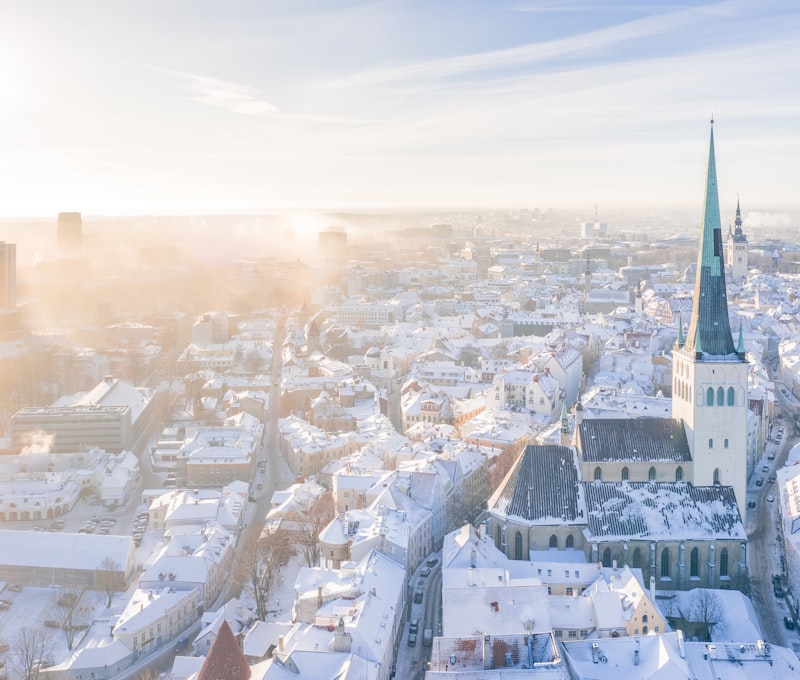
The old town divides into two distinct levels connected by several steep streets and staircases. The Lower Town (Vanalinn) is the merchant city — the main square, the guild houses, the city walls — that developed from the 13th century onward under Hanseatic League trade influence. The Upper Town (Toompea) is the hilltop citadel, seat of power from the Danish knights onward, where the Riigikogu (Estonian parliament) and the Russian Orthodox Alexander Nevsky Cathedral now sit alongside 13th-century fortifications.
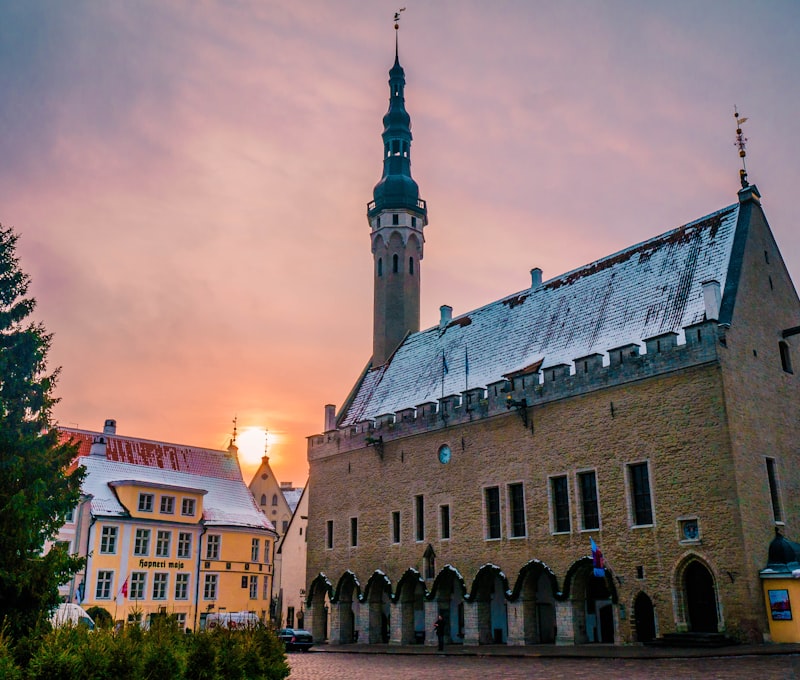
Start early — before 9 AM — to catch the Lower Town without the tour groups that arrive by mid-morning. Town Hall Square (Raekoja plats) at 8 AM on a weekday is genuinely magical: the Gothic town hall dating from 1322–1374, surrounded by coloured merchant houses, is largely empty and you can stand in the middle of the square without being photographed into someone else's group selfie. By 10 AM it fills; by noon it's heaving in July.
From the square, walk north through the merchant streets toward the Great Coastal Gate and the Fat Margaret tower — a round artillery bastion built in 1529, now the Estonian Maritime Museum (€6 entry). The medieval city walls between the Coastal Gate and the towers to the south are remarkably intact: you can walk a section of the ramparts between the towers, which gives an excellent elevated view over the old town rooftops. Double Tower and Nunna Tower are the most atmospheric stops on this walk.
Then climb to Toompea via the Long Leg or Short Leg gate streets. The main viewing platform at Kohtuotsa terrace offers the classic Tallinn panorama — red-tiled rooftops below, church spires and the city wall towers in the middle distance, and on clear days the Baltic sea glinting beyond the port cranes. This is the most-photographed view in Estonia, and deservedly so — particularly in morning light before haze builds. A secondary viewpoint at Patkuli, a five-minute walk further west along the hill's edge, is less crowded and arguably more interesting because it looks down over the lower town's roofscape from a slightly different angle.
The Alexander Nevsky Cathedral (completed 1900) is Russian Orthodox, built during the late Tsarist period, and genuinely striking — onion domes and elaborate tile work. Entry is free and the interior mosaic work is worth ten minutes. Estonians have a complex relationship with the building given its imperial-era origins, but it's a serious piece of architecture regardless of politics.
Lunch at Rataskaevu 16 on Rataskaevu street in the lower old town. This is consistently rated among Tallinn's best restaurants and also among the most honestly priced for the quality. The pork belly with apple and cabbage, and the wild boar dishes, are particularly good. A two-course lunch with local beer runs around €22–€28 per person. Book a day ahead for dinner; walk-in for lunch usually works.
Afternoon: the Medieval Pharmacy on Town Hall Square (Raeapteek) has operated more or less continuously since 1422, making it one of the oldest pharmacies in continuous operation in Europe. The small exhibition inside covers medieval pharmacology and is worth 20 minutes — the remedies prescribed (ground-up millipede tinctures, bat blood salve) are a useful reminder that medicine has improved considerably. Also worth visiting: St Olaf's Church on Pikk street, whose 159-metre spire was briefly the tallest structure in the world in the mid-16th century. The tower is climbable (€5, vertiginous, narrow spiral staircase) and offers the best elevated view over both the old and new Tallinn together.
Evening: dinner in the Kalamaja neighbourhood, a 15-minute walk northwest of the old town gates. Kalamaja is Tallinn's creative district — converted factory buildings, the Telliskivi Creative City complex, independent coffee roasters, and the renovated Balti Jaam market hall. F-hoone on Telliskivi is the district's anchor restaurant: industrial-chic interior with exposed brick and hanging plants, excellent Estonian-Nordic cooking (elk tartare, smoked herring, foraged mushroom dishes), and prices significantly below old-town equivalents. Full dinner with wine for two runs €55–€70.
For drinks: Hell Hunt on Pikk street in the old town is Tallinn's oldest continuously operating pub (opened 1993 — ancient by Estonia's post-Soviet reckoning). Estonian craft beers from producers like Põhjala and Tanker at sensible prices. Alternatively, Pudel Bar on Telliskivi in Kalamaja has a strong selection of Estonian craft and natural wine, a younger and more local crowd, and the kind of unpretentious atmosphere that's genuinely rare in tourist-heavy old towns.
Day 2: Kadriorg, the KUMU, and Helsinki as a Day-Trip
Spend the second morning outside the old town. Take the tram (Tram 1 or 3 from the lower old town, €1.50 single, or €4.50 for a day ticket) east along Narva maantee to Kadriorg park — a baroque estate built in 1718–1724 by Peter the Great for Catherine I, later donated to the Estonian state.
The Kadriorg Palace is now the Estonian Art Museum's foreign collection — Dutch, German, and Russian art from the 16th–20th centuries, displayed in immaculately restored state rooms (entry €7). The surrounding formal and informal park is free to walk and immaculately maintained. It's particularly beautiful in late May–June when the formal garden is in bloom, and again in October when the surrounding beeches and birches turn gold.
A five-minute walk from the palace brings you to KUMU — the Estonian Art Museum's main building, opened 2006 and designed by Finnish architect Pekka Vapaavuori into the side of a limestone hill. This award-winning building is worth visiting even if contemporary art isn't your primary interest: the integration of architecture and landscape is extraordinary. The permanent collection covers Estonian art from the 18th century through the Soviet occupation period (fascinating contextually — the compromises and subtexts in Soviet-era Estonian art are remarkable) and into the contemporary. Temporary exhibitions are consistently strong. Entry €14, and a focused visit takes 90 minutes to two hours.
Lunch near Kadriorg at Kohvik Moon on Võidu street — a neighbourhood café doing excellent Estonian home cooking in a converted apartment space with mismatched furniture and bookshelves. Dark rye bread, creamy potato soup with smoked sausage, pork with sauerkraut — honest, local, very affordable (€12–€16 for two courses and coffee). Exactly the kind of place that doesn't survive in heavy tourist zones, which is why Kadriorg is worth the 15-minute tram ride.
In the afternoon, either return to the old town for anything missed on day 1, or continue to Pirita beach (Tram 1A or bus 34 from Kadriorg, 10 minutes). Pirita's sandy beach and adjacent ruins of the 15th-century Bridgettine Convent are pleasant in good weather. The convent ruins are unexpectedly striking — the intact Gothic gable walls of the ruined church frame views of the sea and the distant old town skyline in a way that feels more Italian hill-town than Nordic.
Budget Summary and Getting the Cheapest Flights
Flights from London run £60–£130 return depending on carrier and season. Accommodation runs €70–€100 per night for a well-located double in the old town or Kalamaja — significantly cheaper than equivalent cities in Western Europe. Food and drink: €30–€50 per person per day eating and drinking well at good restaurants. Total for a two-person weekend including flights: £320–£480 all-in, which makes Tallinn one of the most compelling value propositions in European short-break travel.
For cheapest flights: check Ryanair from Stansted, easyJet from Gatwick, and Wizz Air from Luton against each other. Prices can vary by £30–£50 between carriers on the same dates. May–June departures on weekday flights (Tuesday/Wednesday out, Tuesday/Wednesday back) consistently hit the lower end of the range.
Extending Beyond the Weekend: Day Trips from Tallinn
If you have a third day or want to turn the weekend into a longer Baltic circuit, Tallinn's position makes it an excellent base for day trips. The most obvious extension is the ferry to Helsinki (see the Helsinki guide for full detail): the 2.5-hour crossing to Finland's capital gives you a second capital city at minimal incremental cost. The ferry departs from Tallinn's D-Terminal (15 minutes by tram from the old town) and arrives in Helsinki's Market Square — one of Europe's more satisfying arrival experiences, stepping off a ferry directly into a working harbour market.
Lahemaa National Park, 70km east of Tallinn along the Baltic coast, is Estonia's largest national park and contains some of the country's most beautiful coastal landscape: rocky beaches, ancient limestone cliff formations (klint), and restored manor house estates from the Baltic German nobility period. The Vihula Manor (now a hotel) and Palmse Manor (a museum estate) are the most accessible manor houses. A rental car or organised day tour (several operate from Tallinn) is necessary; public transport to Lahemaa is limited.
Tartu, Estonia's second city and university town 185km south, is worth considering if time permits. Tartu has a different character from Tallinn — more locally oriented, less tourist-polished, with a strong student culture around the University of Tartu (founded 1632). The Estonian National Museum outside Tartu is architecturally extraordinary: a 350-metre-long building designed to resemble the landing strip of a Soviet-era military airfield, built on the actual site of a Soviet airbase. Three hours' round trip by Lux Express or Flixbus makes Tartu a day trip; two nights makes it a proper introduction.
 3 Days in Dubrovnik: Old Town, Islands, and the Best Sunset Spots
 3 Days in Marrakech: Riads, Souks, and the Atlas Mountains