
3 Days in Marrakech: Riads, Souks, and the Atlas Mountains
May 17, 2026
Marrakech (RAK) is one of those cities that intimidates on arrival and rewards persistence. The medina looks like a maze because it essentially is one — designed to confuse invaders, it now mostly confuses tourists with rolling suitcases and offline Google Maps. Three days, structured properly, is enough to understand the city rather than merely survive it.
Getting There
Marrakech Menara Airport is well connected from most of Europe. Ryanair (FR), easyJet (U2), and Transavia (HV) operate routes from London, Paris, Amsterdam, Madrid, and most major European hubs. Return fares from Western Europe regularly land below €100 in shoulder season, making this one of the most accessible European-adjacent destinations. Royal Air Maroc (AT) connects Marrakech directly to North American and Gulf cities.
The airport is 6km from the medina. Petit taxis to Djemaa el-Fna (the main square) cost around 100–120 MAD (about €10), negotiated in advance. Uber operates in Marrakech now, which eliminates the negotiation entirely.
Day 1: The Medina Core
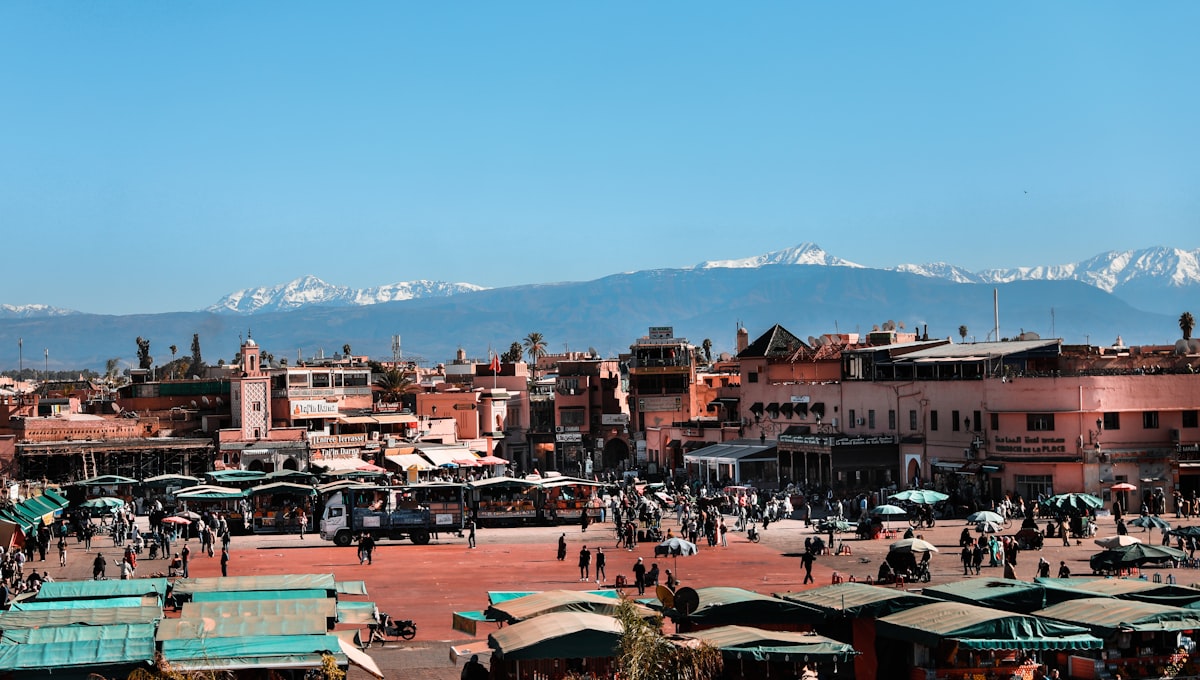
Start early — before 9am — and walk directly to Djemaa el-Fna. At that hour it's mostly fresh orange juice vendors, a few acrobats setting up, and the last of the overnight crowd dispersing. By 10am it fills with tourists; by afternoon it's genuinely overwhelming.
From the square, push north into the souks. There is no single correct route. The main artery runs toward the dyers' quarter (Souk Sabbaghin), passing metalwork, leather goods, spices, and textiles. The quality varies enormously — the outer ring of the souks caters to day-trippers with mass-produced goods; the interior workshops, where artisans actually work, are worth finding.
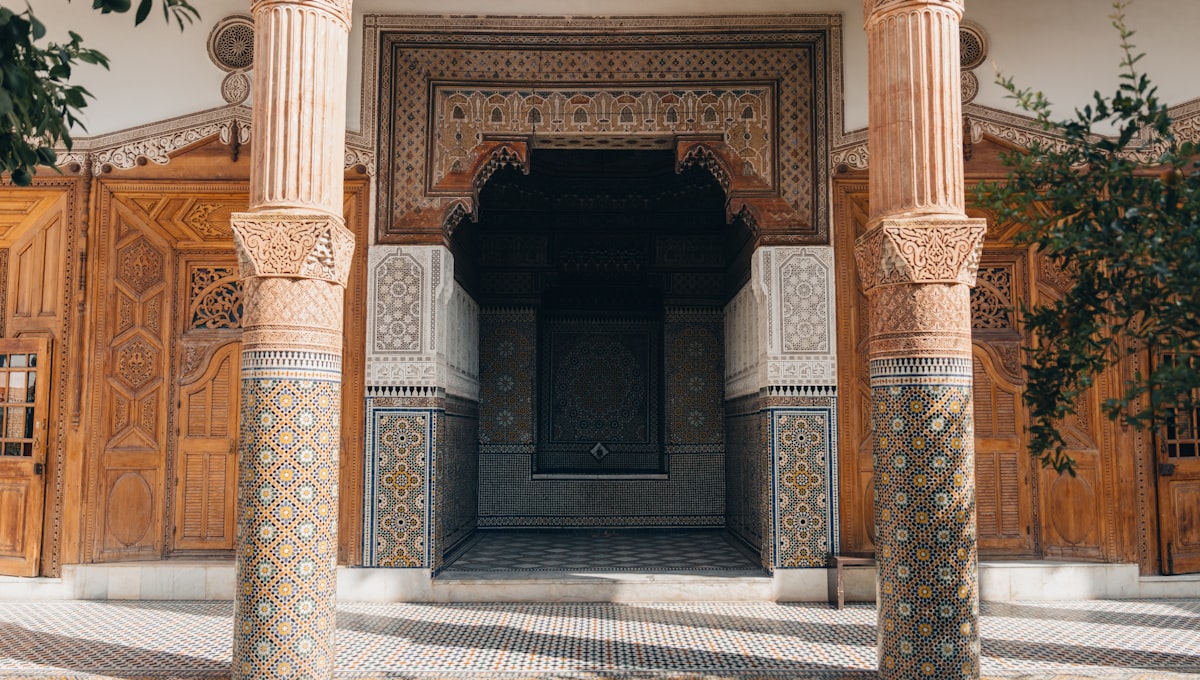
The Bahia Palace is worth an hour of your afternoon — a 19th-century riad-palace complex with beautiful zellij tilework and painted cedar ceilings, typically uncrowded before 11am. Admission is 70 MAD.
In the evening, Djemaa el-Fna transforms. Food stalls set up in the centre of the square from around 6pm — numbered stalls, mostly identical menus (harira soup, merguez, tagines, brochettes). Walk the full circuit before choosing; prices are fixed and clearly displayed. The square is genuinely atmospheric after dark, the smoke from the grills mixing with the sound of Gnawa musicians and the low hum of a hundred simultaneous conversations.
Where to Stay
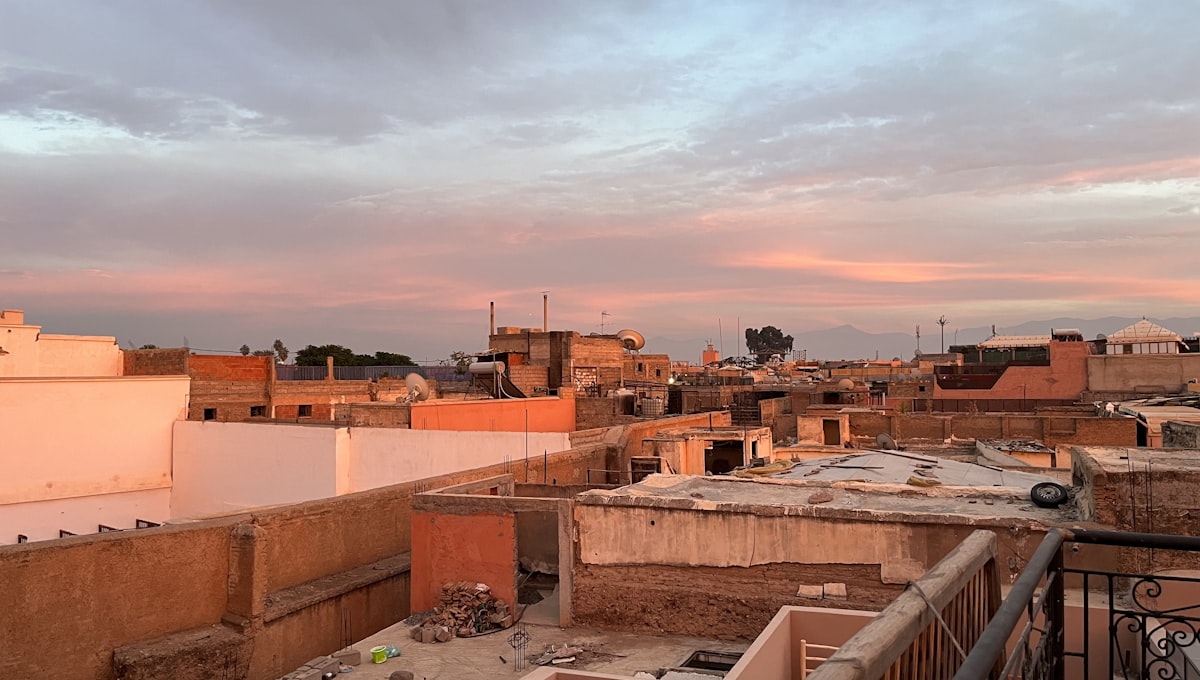
Stay in a riad in the medina. This is non-negotiable. A riad — a traditional Moroccan townhouse built around a central courtyard — is the architectural experience of Marrakech. The courtyards are quiet even 50 metres from the chaos of the souks; the rooftop terraces catch the evening light over the palm groves.
Budget riads start around €40–60/night for a double room with breakfast. Mid-range riads (€80–130/night) include pools, better breakfasts, and often a hammam. Navigation to your riad the first time will involve getting lost at least once; give your host a call on arrival and they'll send someone to collect you from a landmark.
Day 2: Gardens and Palaces
The Majorelle Garden, owned and restored by Yves Saint Laurent and now housing the Musée Yves Saint Laurent Marrakech, is the city's most photographed attraction. The cobalt blue buildings against the succulent garden is justifiably iconic. Go at opening (8am) to avoid tour groups. Admission to the garden is 150 MAD; the fashion museum is an additional 100 MAD and worth it if you have any interest in mid-20th-century couture.
The Saadian Tombs are smaller but extraordinary — a 16th-century royal necropolis sealed for centuries and only rediscovered in 1917. The main mausoleum chamber has one of the finest examples of Andalusian plasterwork outside of the Alhambra. Go before noon.
In the afternoon, hire a driver for the half-day circuit to the Agafay Desert or the Ourika Valley foothills — neither requires a full day and both give you the Atlas Mountain backdrop that makes Marrakech's geography legible.
Day 3: Atlas Mountains
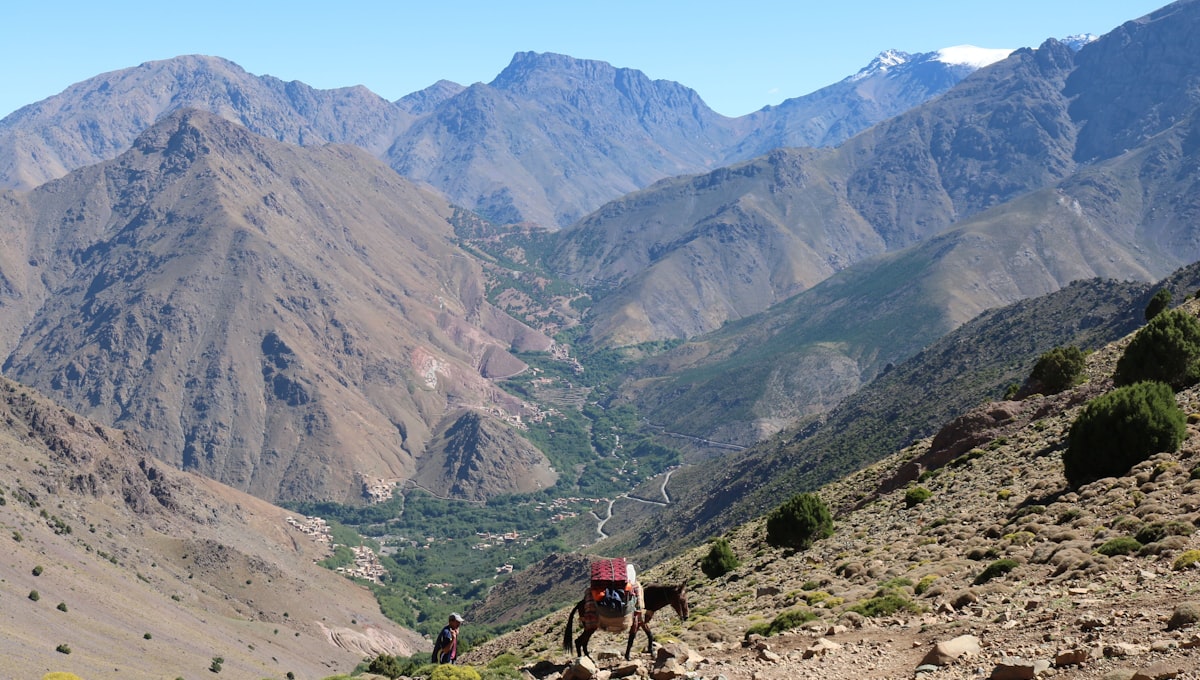
A day trip to the High Atlas is achievable from Marrakech and worth the logistics. The Toubkal National Park begins about 60km south of the city; the trailheads above the village of Imlil are under 2 hours by car. You don't need to summit Jbel Toubkal (the highest peak in North Africa at 4,167m — a 2-day climb) to appreciate the landscape. A morning walk in the Imlil valley — through Berber villages, terraced walnut orchards, and irrigation channels — is genuinely rewarding and requires zero special equipment.
Alternatively, the village of Aït Benhaddou, a UNESCO-listed ksar (fortified village) used in the filming of Gladiator, Laurence of Arabia, and Game of Thrones, is about 2.5 hours from Marrakech. Better as a day trip if you're combining with a Draa Valley extension rather than a standalone.
Eating Well
The food staples — tagines, couscous (Fridays only, traditionally), pastilla — are easy to find and consistently good in the medina. For something more considered, Restaurant Dar Yacout, Al Fassia (women-only kitchen, extraordinary lamb dishes), and Nomad (modern Moroccan rooftop) all represent the upper end without the tourist-trap price premium. Dinner for two at a mid-range restaurant in the medina is typically 250–400 MAD (€25–40) with wine (where available) or tea.
Practical Notes
Currency: Moroccan Dirham (MAD). Not freely convertible — exchange at airport (acceptable rates) or ATMs in the ville nouvelle. Cards are accepted at larger riads and restaurants but the medina mostly runs on cash.
Language: Darija (Moroccan Arabic) and Tamazight (Berber) locally; French works well for most transactions; English is common in tourist-facing businesses.
Best months: October–November and March–April. July and August are brutally hot (40°C+) and crowded; December–February is mild but can be cold at night.
Choosing Your Riad
Not all riads are equal and the choice matters more than in most cities. The medina is large — it takes about 25 minutes to walk from Djemaa el-Fna to the northern edge — and your riad's location determines which part of the city you wake up in.
For proximity to the main attractions: riads within 10 minutes' walk of Djemaa el-Fna on the Rue Riad Zitoun el Jedid or Derb Chtouka corridors give you the best access to the Bahia Palace, the Saadian Tombs, and the square itself. Riad Kniza and Dar les Cigognes in this area are well-regarded mid-range options with pools and hammams.
For a quieter location: the northern medina around the Ben Youssef mosque is further from the tourist core but has more authentic neighbourhood character. Riad El Fenn in this zone — with outstanding art and one of the best rooftops in the city — sits at the higher end of the mid-range.
For a budget stay with character: riads in the EUR 40–70 range are plentiful and often well-run. The key quality signals are a proper central courtyard, breakfast included, and the ability to call you in when you're lost outside.
Jemaa el-Fnaa: Making It Work for You
Djemaa el-Fna rewards strategy. The square is at its most atmospheric at three distinct times: early morning before 9am when the orange juice vendors are out and the night's last stragglers are heading home; sunset between 6–7pm when the food stalls light up; and around 10pm when the crowds are thick and the smoke from the grills creates something genuinely cinematic.
Avoid the trained monkey and snake-charmer performers. These involve animal welfare issues that are well documented. The Gnawa musicians are genuine — the tradition is centuries old and the music is worth stopping for.
For the food stalls, walk the circuit before sitting down. All stalls are numbered, prices are displayed, and the quality is roughly equivalent. Order harira soup (MAD 15), merguez with bread (MAD 30–40), or a full tagine (MAD 60–80). The orange juice from the vendors ringing the square is freshly pressed and costs MAD 4–5 per glass.
Day Trips: Essaouira and the Ourika Valley
Essaouira is the most satisfying day trip from Marrakech. The Atlantic coastal town is 2.5 hours by CTM bus (MAD 90 each way, several daily departures) or 2 hours by grand taxi. The medina is UNESCO-listed, genuinely windswept and blue-white, and feels entirely different from Marrakech's ochre palette. The port produces some of best time to visit Morocco's best grilled fish; order whatever is fresh at one of the restaurants just inside the port gate for MAD 80–120. Essaouira has none of Marrakech's aggressive touting and rewards an afternoon wandering the ramparts and the Mellah.
The Ourika Valley is the easier half-day option: 40km south along the High Atlas foothills, with Berber villages, a Monday market at Tnine Ourika, and a waterfall at the valley head. Hire a car with driver (MAD 400–600 for a half-day) rather than joining a coach tour. The valley is green and meaningfully cooler than Marrakech, making it attractive in summer when the city bakes.

Negotiation Culture
Bargaining in the souks is expected and part of the transaction. The starting price offered to a visible tourist is typically 3–5 times the final price. A reasonable opening counter is 30–40% of the asking price, followed by settling somewhere between 50–65% of the original quote. Walk away slowly if the price does not move — you will usually be called back with a lower number.
Fixed-price goods exist in supermarkets, the Cooperative Artisanale on Avenue Mohammed V, and most riads. The Cooperative Artisanale near the medina sells quality Moroccan crafts at non-negotiable but fair prices and is a useful calibration tool before entering the souks.
Do not hire an unofficial guide. Official guides (identified by badge) cost around MAD 250–350 for a half-day and are worth it for the first morning. Unofficial guides take commission from the shops they bring you to — they are not guiding you, they are shopping for commission with you.
Food Beyond the Square
The medina has excellent food away from the tourist stalls. Cafe des Epices on Place Rahba Kedima has a rooftop terrace over the spice market and serves decent Moroccan salads and mint tea — a useful mid-morning break from the souks. Nomad on Derb Aarjane does modern Moroccan cooking on a multi-level terrace and consistently delivers quality food without tourist-trap pricing.
For the definitive Marrakech food experience, Al Fassia on Boulevard Mohammed Zerktouni in the Gueliz quarter is a women-run restaurant serving traditional Moroccan cuisine at a level of care and technical precision that the medina restaurants rarely match. Reserve in advance; expect MAD 300–400 per person. It is a MAD 40 taxi ride from the medina but genuinely worth the trip.