
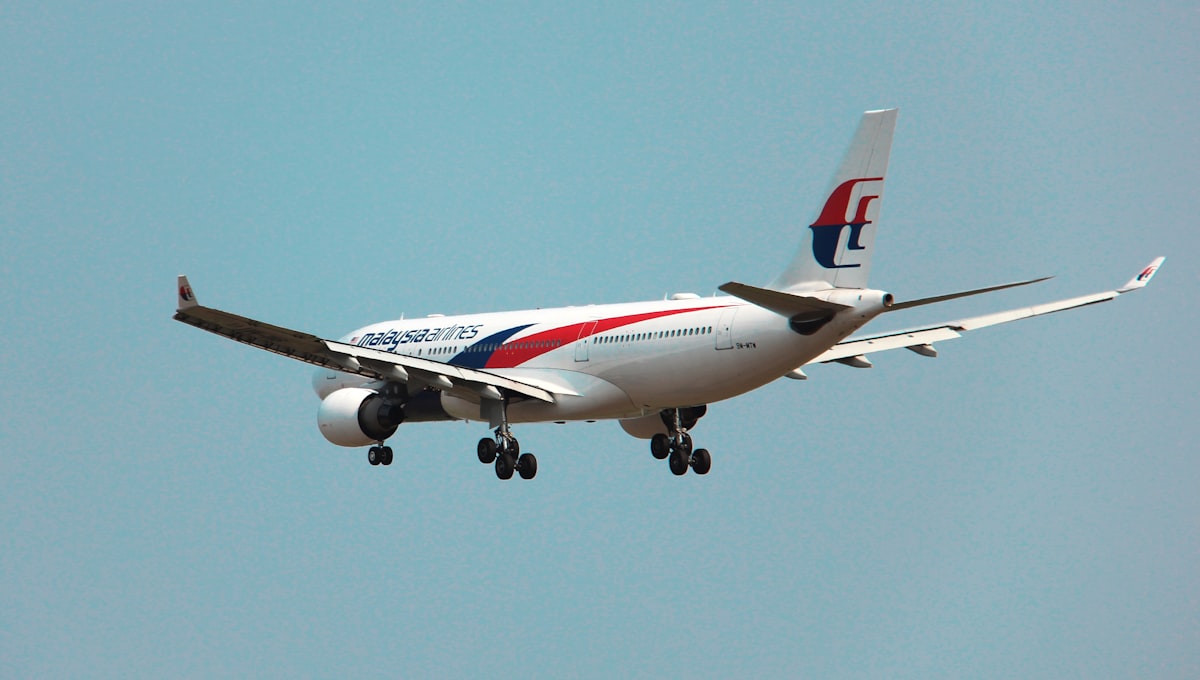
Cheapest Flights to Kuala Lumpur: Asia's Most Underpriced Hub
June 7, 2026
Kuala Lumpur International Airport (KLIA) is one of the great aviation bargains on the planet. It's Malaysia Airlines' (MH) home hub, AirAsia's (AK) regional base, and a connecting point for dozens of Southeast Asian routes that are among the most competitively priced in the world. The combination means fares into KUL from Europe frequently undercut comparable routes to Bangkok (BKK), cheapest flights to Singapore (SIN), or Jakarta (CGK) by 15–25%. And once you're there, onward connections across Southeast Asia via AirAsia's extensive network are among the cheapest available anywhere.
The KUL Fare Advantage
Malaysia Airlines competes aggressively on the London–Kuala Lumpur corridor, which it operates direct from Heathrow with A350-900 aircraft. Fares on this route are noticeably competitive — economy returns from £480–£650 in off-peak months — partly because Malaysia Airlines uses London as a flagship market that it wants to defend against the Gulf carriers, and partly because Singapore Airlines, Emirates, and Qatar Airways all offer connecting itineraries via their respective hubs that provide meaningful competition on price and quality.
The direct flight matters not just for convenience but for total journey time. London to KUL direct takes around 13 hours. Via Dubai it's 15–16 hours. Via Singapore it's similar. For travellers who prefer a single long sector to two shorter ones, the Malaysia Airlines direct is the obvious choice at equivalent or near-equivalent prices.
From continental Europe, the pricing is even more striking than from the UK. Frankfurt, Amsterdam, and Paris to KUL via Doha (Qatar), Dubai (Emirates), or Singapore (SQ) regularly drops to €480–€600 return in the right months. That's comparable to many transatlantic fares and represents exceptional value for 12–14 hours of long-haul travel time. The Gulf carriers' hub-and-spoke model means their European fares into KUL are subsidised, in economic terms, by the density of their regional networks feeding the same hubs.
From Australia, KUL is naturally a short hop — just 7–8 hours from Sydney or Melbourne on Malaysia Airlines or AirAsia X (D7). Return fares from Sydney to Kuala Lumpur in the AUD 500–700 range are common outside Australian school holidays and school holidays are the primary driver of price spikes on this route. The December–January and June–July school holiday windows are reliably the most expensive.

Which Carriers to Watch
Malaysia Airlines is the obvious starting point and is frequently the cheapest on the direct London–KUL route. The carrier went through painful restructuring in the mid-2010s after two devastating incidents and has rebuilt its product and operational reliability to a genuinely high standard. Economy fares include 30 kg checked baggage — significantly more generous than the 23 kg norm — and the long-haul experience on A350-900 equipment is well-regarded for the price point. The MH economy seat has solid recline and a reasonable IFE system.
Qatar Airways via Doha (DOH) is a consistent competitor and frequently matches or undercuts MH on the London–KUL route while routing via Doha with minimal layover time. Qatar's product is superior at equivalent pricing — the Boeing 787 Dreamliner cabin on the DOH–KUL sector has notably better seat pitch than the airline average — and is worth booking if the price difference is less than £40. If Qatar is more than £50 above MH, the direct flight wins on both price and simplicity.
Emirates via Dubai (DXB) offers similar pricing competitiveness and the DXB–KUL segment has very high frequency — Emirates operates multiple daily services on the route — meaning morning departures from London can connect comfortably into the evening for an afternoon KUL arrival. Emirates' A380 cabin to KUL via Dubai, in economy, is genuinely comfortable if you can secure a window seat in the lower deck.
Cathay Pacific via Hong Kong (HKG) is less obvious but sometimes produces the cheapest options, particularly for travellers who want a long layover in Hong Kong as part of the itinerary. CX's economy product is reliable and HKG layovers on the way to KUL can be structured to include transit hotel accommodation for a very long transfer.
AirAsia X (D7) is the budget long-haul option but doesn't fly direct to Europe from KUL — it operates from KUL to destinations including London Gatwick (LGW), Paris CDG, and Tokyo NRT. For travellers connecting within backpacking Southeast Asia, AirAsia X fares from KUL to regional destinations are genuinely remarkable: KUL to Bali, KUL to Bangkok, KUL to Colombo on D7 can all come in under £60 one way including luggage if booked early.
Best Time to Fly
Malaysia has a tropical climate with monsoon patterns that differ by coast and region. The west coast (Kuala Lumpur, Penang, Langkawi) is driest from November through February and again in June and July. The east coast (Perhentian Islands, Tioman, Redang) reverses this pattern and is wettest November through January.
For Kuala Lumpur itself, the city is entirely livable year-round. Rain falls in short intense bursts rather than all-day drizzle, and temperatures hold around 28–32°C throughout the year with minimal seasonal variation. That means flight pricing rather than weather drives timing decisions far more than for most destinations.
The cheapest windows from Europe have clear patterns. February through March is frequently the cheapest period of the year for KUL flights. Post-Chinese New Year demand drops sharply, European Easter travel hasn't started, and the weather in KUL is at its best. Prices from London can touch £460 return on Malaysia Airlines in a genuine off-peak sale window. May through June is the next cheapest tier — low demand before European summer and good weather on Malaysia's west coast. Prices typically sit at £480–£560. September through October represents another quiet period before year-end holiday demand rebuilds. Mid-September through mid-October is often when the best shoulder-season fares of the year appear.
Avoid late January (Chinese New Year, when Malaysian domestic demand peaks), August (European summer demand drives up international seat competition), and December (Christmas and New Year on both markets). Those windows push prices 20–35% above the shoulder season baseline.

Market Pricing Differences
The same KUL itinerary is frequently priced differently across national booking markets, and this effect is stronger for KUL than for many other Asian destinations. Malaysia Airlines, in particular, has historically offered lower fares on its home market (MY) for some routes — the Malaysian market prices certain buckets at rates that, when converted to GBP, undercut what the UK market shows for the same flight. The Australian market sometimes prices differently from the UK for the same flights on carriers like Cathay Pacific or Singapore Airlines.
These aren't consistent patterns — they shift with airline yield management strategies and currency hedging — but on long-haul routes to KUL, the spreads can reach £50–£90 per person in the right circumstances. RegionFare is built specifically for finding these differences. It scans the same flight across multiple national Skyscanner markets simultaneously and flags where the cheapest booking market is for your specific itinerary and dates. For a route as internationally priced as London–KUL, checking this before booking is straightforward and occasionally produces meaningful savings.
Using KUL as a Regional Hub
One of KUL's greatest structural strengths is AirAsia's domestic and regional network out of KLIA2 (the adjacent low-cost terminal, connected to KLIA by a free shuttle). From KLIA2, you can reach Bangkok (BKK), Ho Chi Minh City (SGN), Hanoi (HAN), Bali/Denpasar (DPS), Phuket (HKT), Colombo (CMB), Dhaka (DAC), Manila (MNL), and Yangon (RGN) for prices that routinely fall between £25–£80 each way, even when booked only a few weeks in advance.
This makes KUL a natural hub for a multi-country Southeast Asia itinerary. The pattern works like this: fly from Europe into KUL, spend 2–3 days in the city, then fan out to the region via AirAsia at prices that are a fraction of booking separate long-haul connections from Europe to each destination. A week in Bali after KUL, then a flight to Bangkok, then back to KUL for the Europe connection, can all be stitched together for £100–£150 in regional flights with AirAsia.
The critical practical note: KLIA (Malaysia Airlines international arrivals) and KLIA2 (AirAsia) are separate terminals connected by a 3 km shuttle service. Budget at least three hours for any connection between international arrivals at KLIA and AirAsia departures at KLIA2. The KLIA Ekspres train connects both terminals to KUL Sentral city station in 28 and 33 minutes respectively and runs from 5am to midnight. The trip into the city costs RM55 (around £10) one way.

Practical Notes
British, European, and US passport holders don't need a visa for Malaysia for stays up to 90 days. Entry on arrival is typically fast at KLIA, which has efficient immigration processing for most major passport holders. Currency is the Malaysian Ringgit (MYR); at current rates MYR 5 buys approximately £0.90, which means KUL is substantially cheaper than Singapore or Bangkok for food and accommodation once you're there.
A full meal at a hawker centre — char kway teow, nasi lemak, or roti canai with dhal — costs MYR 8–12 (£1.50–£2.20). A four-star hotel in the KLCC district runs MYR 250–400 per night (£45–£75), significantly below what equivalent accommodation costs in Bangkok let alone Singapore. Even the Petronas Twin Towers observation deck — KUL's primary tourist attraction — costs only MYR 100 (£18).
Kuala Lumpur as a Destination in Its Own Right
KUL functions so well as a hub that many travellers pass through it without spending meaningful time in the city itself, which is a genuine mistake. Kuala Lumpur's attractions are varied and, at Malaysian prices, essentially free relative to Western European equivalents. The Petronas Twin Towers — 452 metres, the world's tallest buildings from 1998 to 2004 — are worth visiting for the observation deck on the 86th floor and the sky bridge on the 41st. Entry costs MYR 100 (£18) and the view over the KLCC park and city is striking, particularly at dusk.
Batu Caves, 13 km north of the city centre, hosts one of the largest Hindu shrines outside India inside a dramatic limestone cave complex. The 272-step climb is free to visit at any hour and the light inside the cavern is extraordinary in the late morning. Chinatown's Petaling Street is worth an evening walk for the street food and the atmosphere; the stalls on Jalan Alor in Bukit Bintang — the city's main entertainment district — run until 2am with hawker food at MYR 10–15 per plate.
The KLCC area around the Petronas Towers also contains excellent shopping in the Pavilion, Suria KLCC, and Lot 10 malls — globally priced goods but also entry points to local brands and food courts. Spending two full days in the city before fanning out to the region via AirAsia is the right allocation for a first visit.
Kuala Lumpur is one of Southeast Asia's most undervalued travel destinations and almost certainly its most underpriced aviation hub. The combination of low fares in from Europe, cheap prices once you're there, and AirAsia's regional network for onward exploration makes it the most efficient starting point for building a Southeast Asia itinerary. If you're planning a trip to the region, start your routing calculations here before anywhere else.
 Cheapest Flights to Bali from Europe: Routes, Airlines & Prices (2026)
 Cheapest Flights to Bangkok: A Season-by-Season Breakdown
 Cheapest Flights to Delhi: Gulf Hubs, Seasonal Windows, and Market Tricks