
Best Time to Visit South Africa: Safari, Cape Town, and the Garden Route
June 7, 2026
South Africa is effectively three countries contained within one trip: the wildlife reserves and bushveld of the north, the vineyards and beaches of the Western Cape, and the coastal road between Port Elizabeth and Wilderness along the Garden Route. Each region has its own distinct seasonal logic, and trying to optimise all three simultaneously requires understanding where those patterns agree and where they pull in opposite directions.
The Core Seasonal Structure
South Africa's summer runs from November through February — hot, wet, and lush in Johannesburg and Kruger, busy and expensive in cheapest flights to Cape Town. The winter runs from June through August — dry and cool inland, mild and rainy on the Cape peninsula. Those two foundational facts define almost every timing decision for a South Africa trip.
For wildlife: winter is clearly better. For Cape Town beaches: summer is better. For the Garden Route: autumn (March–May) and spring (September–November) are the sweet spots. A trip that covers all three regions — the standard three-week itinerary — is usually timed around either the spring or autumn shoulder seasons, taking the best conditions available from each region rather than optimising perfectly for any one.
Kruger and Safari: June–September Is the Definitive Window
In the Kruger National Park and the private reserves immediately adjacent to it — Sabi Sand, Timbavati, Thornybush, Klaserie — June through September is the unambiguous best period for wildlife viewing. The reasoning is purely ecological: South Africa's bushveld vegetation dries out and thins dramatically in winter, stripping the dense cover that makes predators and shy animals difficult to spot during the wet summer months. Water sources contract to predictable permanent waterholes and the major rivers — the Olifants, the Sabie, the Letaba — and animals concentrate around these points. Lion, leopard, elephant, buffalo, and rhino are all dramatically more visible in dry season than in the lush summer months when grass can exceed 1.5 metres and animals disappear into the vegetation entirely.
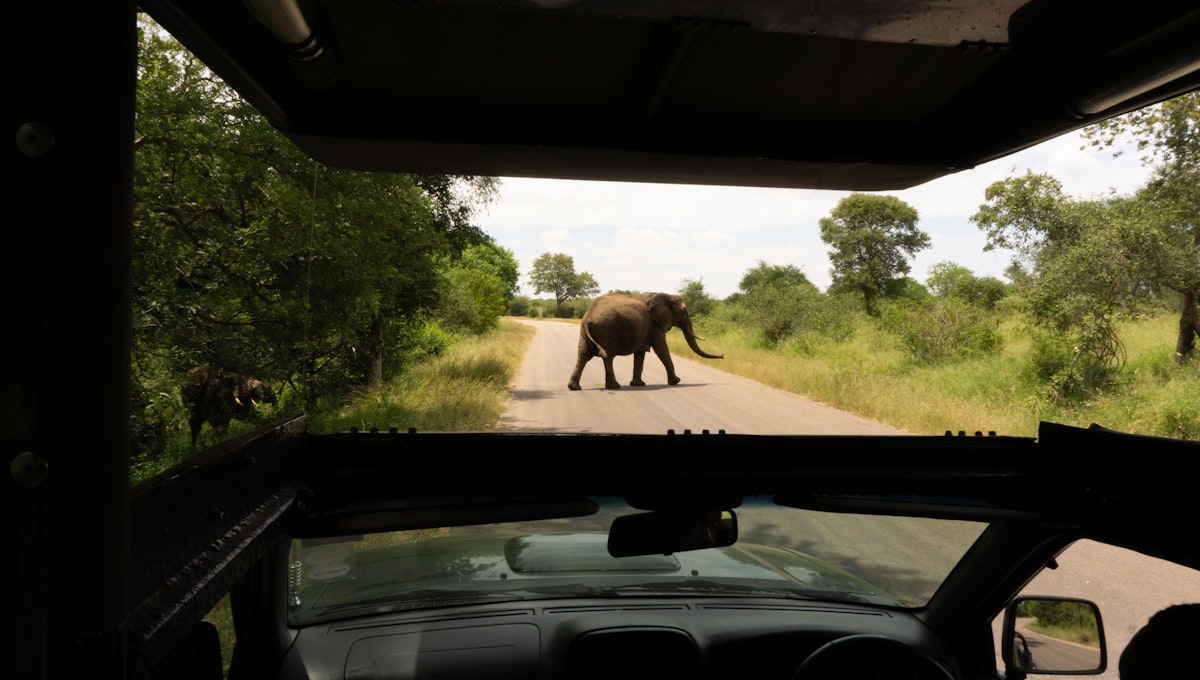
July and August are peak season for Kruger and the private reserves, which means lodge prices at their annual maximum. A mid-range private lodge in the Sabi Sand that charges $350 per person per night in October might cost $480–$500 in July. Budget public Kruger camps — Skukuza, Berg-en-Dal, Satara, Lower Sabie — are significantly cheaper at R2,000–R4,000/night for a chalet, but require booking six to twelve months in advance for the June–August window. SANParks bookings for peak season frequently sell out within hours of opening.
May and September are the shoulder safari months and represent excellent value relative to peak. Vegetation is still reasonably thin in May after the dry season has been building since March. By September the grass has fully dried and the landscape is at its most open. Both months offer very good wildlife viewing at 15–25% lower lodge prices than the July–August peak. September has one particular advantage: newborn animals — impala fawns, zebra foals, wildebeest calves — begin appearing as the rainy season approaches, which generates extraordinary predator activity around the new mothers and their young.
October has one specific problem worth noting: the first summer rains often begin in Kruger during October, which brings mosquitoes, dense vegetation, and significantly higher malaria risk. The landscape changes rapidly and game viewing becomes harder within weeks. October can be exceptional in early weeks but deteriorates. November through February is genuinely difficult for safari: dense vegetation, regular afternoon storms, and the highest malaria transmission risk of the year. Take prophylaxis extremely seriously if visiting the Lowveld in this window.
Cape Town: November–March for Beaches, But at a Price
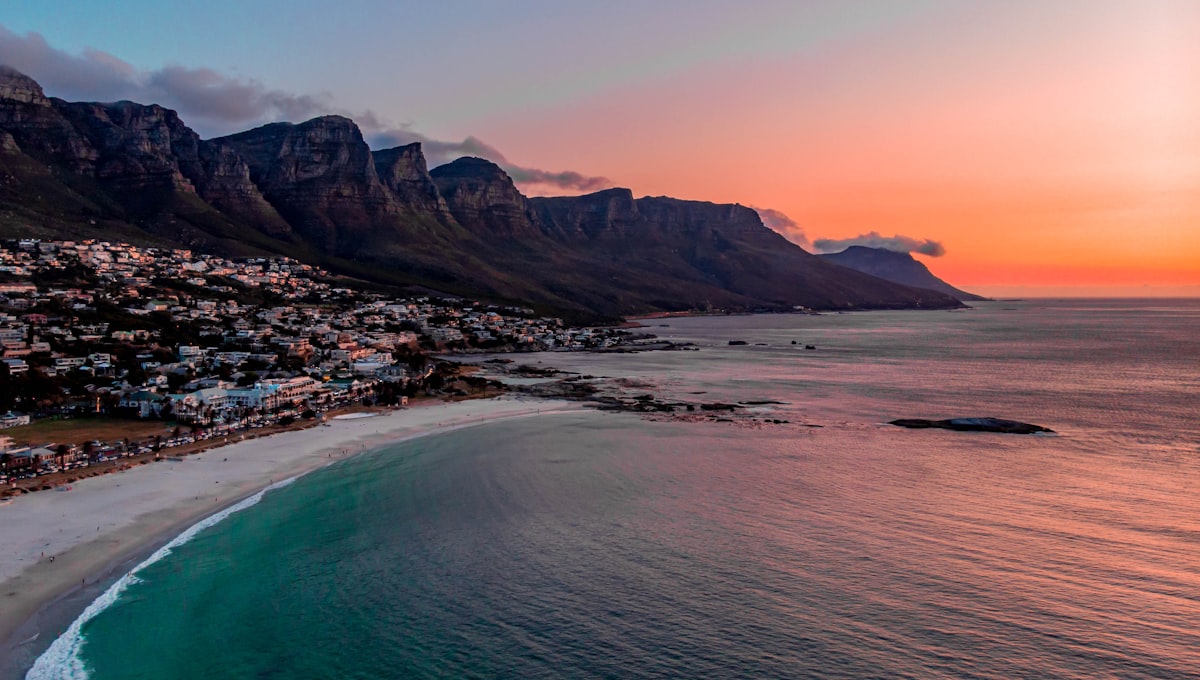
Cape Town's summer (November–March) is when the city is at its most photogenic and livable: warm days consistently at 25–30°C, calm Atlantic waters at Clifton and Camps Bay, and fully operational wine country in the Winelands. The Cape Winelands — Stellenbosch, Franschhoek, Paarl, and the valleys between them — are harvesting from February through April, which adds the specific pleasure of tasting new vintages directly from producers at the source.
The problem is demand and pricing. Cape Town in December and January is expensive across all categories. Return flights from London to Cape Town (CPT) spike to £900–£1,100 as both European winter-sun seekers and South African domestic visitors escaping the Johannesburg heat compete for the same capacity. Cape Town hotel rates in December can double or triple their May prices. Self-catering accommodation in Clifton that costs R2,800/night in May might charge R7,000 in January.
The best Cape Town window for value is March. The summer crowds have started to thin after February, weather remains warm and stable with lower humidity than January, wine harvests are in full swing in the Winelands, and prices begin to drop noticeably. April is even cheaper and the weather is still very good — the Cape's autumn is genuinely pleasant, with warm days, lower humidity than summer, and the beginning of the extraordinary wildflower season in the Namaqualand to the north.
May through August brings Cape Town's "winter" — cooler temperatures (14–18°C), more frequent Cape storms, and rough Atlantic seas that make swimming impossible at Clifton and Camps Bay. This is when the city is cheapest and least crowded. The dramatic coastal scenery along Chapman's Peak Drive and the Cape Point peninsula is arguably at its most impressive on a stormy winter day — the Atlantic battering the cliffs, the light sharp and clear after rain. If your Cape Town visit centres on food (the restaurant scene is superb year-round), wine, architecture, and the city rather than the beach, winter is substantially underrated and offers the same cultural experience at dramatically lower prices.
The Garden Route: April–May and September–October
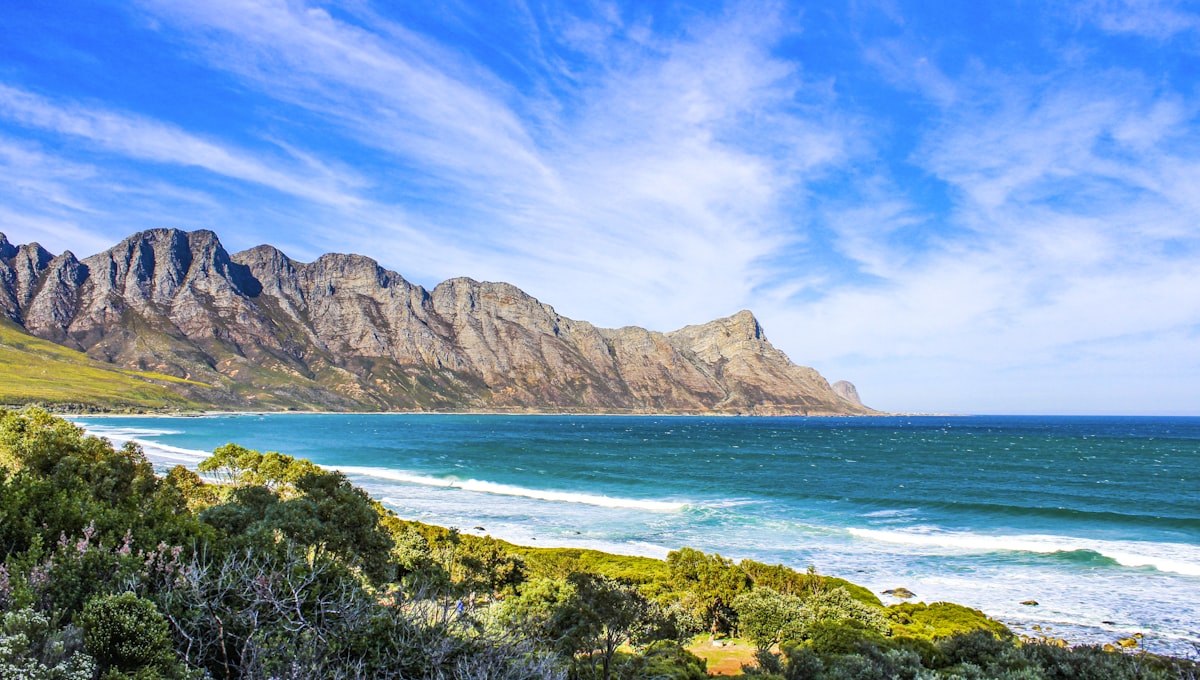
The Garden Route — the coastal stretch from Mossel Bay in the west to the Storms River gorge in the east, taking in Wilderness, Knysna, and Plettenberg Bay — benefits most from the shoulder seasons. March through May delivers warm days at 22–26°C, calm seas for boat-based whale and dolphin watching from Plettenberg Bay, and relatively low visitor numbers. The Knysna Lagoon at high tide, the Tsitsikamma forest boardwalks, and the beaches at Nature's Valley near Storms River mouth are stunning with minimal crowds in April.
The Garden Route in summer (December–January) is crowded. It's one of South Africa's most popular domestic holiday destinations and the road between George Airport and Plettenberg Bay backs up significantly. Self-catering prices in Knysna spike dramatically for the Christmas and New Year period. If you're self-driving the Garden Route — by far the best way to experience it — the shoulder season is not just cheaper but qualitatively better.
September and October bring whale watching's peak. Southern right whales calve and nurse their young in the sheltered bays from July through November, with September and October consistently providing the best land-based sightings. Hermanus, two hours east of Cape Town, is world-famous for this — whales are visible from the cliff paths above the town without a boat at all. But the entire stretch of coastline from Cape Agulhas east to Plettenberg Bay sees whales during this period.
The September wildflower season also overlaps with the Garden Route visit for travellers who extend their itinerary northwest. The Cape Floral Kingdom — the smallest but richest plant biodiversity region on Earth — blooms spectacularly from Darling and Langebaan in the west through Citrusdal and Clanwilliam in the Cederberg mountains. September is when this bloom peaks, and the combination of whale watching on the coast and wildflowers inland during the same week is one of the world's underappreciated nature experiences.
Combining a Full South Africa Itinerary
A 21-day South Africa trip that covers Johannesburg for orientation, Kruger for safari, the Garden Route for coastal driving, and Cape Town for the finale, is best built around May or October as the structural spine. Both months offer good wildlife viewing in Kruger (dry season in May, thinning vegetation again in October before the first rains), manageable Garden Route conditions, and acceptable Cape Town weather without paying peak-season prices at any single destination.
May is the slightly better safari month — Kruger is drier and vegetation is thinner. October is the better whale watching and wildflower month on the coast. The choice between them depends on your priorities. For most itineraries, either works.
Flight pricing aligns with this seasonal logic. Return flights from London to Johannesburg in May typically run £550–£680, substantially below the December–January peak of £900–£1,100. The saving on a two-person return trip at these prices is £500–£900 — money that can fund several nights of better accommodation in the reserves or an extra activity.
Practical Notes
Malaria risk is confined to the Lowveld region — Kruger National Park, Limpopo, northern KwaZulu-Natal — and increases significantly in summer (November–April). Cape Town, the Winelands, the Garden Route, and the Cape Winelands are all malaria-free and require no prophylaxis. Consult a travel health clinic about prophylaxis if visiting Kruger in November–April; the risk is real and the prophylaxis is straightforward.
Self-drive is viable and popular throughout South Africa. Roads in the main tourist circuits are well-maintained by African standards, driving is on the left (familiar to UK visitors), and car hire is affordable at R400–R700/day (£55–£100) for a reasonable vehicle from the major international agencies at OR Tambo or Cape Town airports. The Garden Route particularly suits self-drive — it's a linear coastal road with good signage, manageable daily distances, and the flexibility to stop wherever you want is central to the experience.
Currency and Spending
The South African Rand (ZAR) has depreciated significantly against major currencies over the past decade, which directly benefits international visitors. The purchasing power of GBP or USD in South Africa is substantially higher than in any European destination at equivalent quality levels. A mid-range private Kruger lodge that charges $300–$400 per person per night sounds expensive until you consider that it typically includes all meals, two game drives per day (each lasting three hours with a qualified ranger and tracker), all non-alcoholic drinks, and sometimes a full open bar.
Cape Town restaurant meals at quality establishments run ZAR 250–400 per person for a full dinner with wine — approximately £35–£55 — at restaurants that would charge £80–£120 in London. South African wine, particularly from the Franschhoek and Stellenbosch appellations, is priced at a fraction of equivalent quality European wine. A bottle of Kanonkop Pinotage or Springfield Estate Methode Ancienne at a Cape Town restaurant costs ZAR 350–500 (£47–£67) for wine that would be £100–£150 in London.
The practical implication is that South Africa rewards spending on experiences rather than cutting costs. The budget saved on flights (by travelling in May rather than December) is often best reinvested in a night or two at a better-quality Kruger lodge, a helicopter flight over the Cape Point peninsula, or a private Winelands tour with tasting. The value-for-experience ratio at the upper end of South Africa's hospitality sector is genuinely exceptional by world standards.
South Africa is one of the world's most complete travel destinations at a genuinely accessible price point. The combination of world-class wildlife, dramatic and diverse landscapes, serious wine and food culture, and meaningful price competitiveness versus European alternatives is hard to match anywhere. Time the visit right and the value proposition is extraordinary.
 Best Time to Visit Egypt: Pyramids, Red Sea, and Nile Cruises Without the Heat