
Best Time to Visit Portugal: Lisbon, Porto, Algarve, and Azores
May 26, 2026
Portugal is one of Western Europe's most climatically varied countries for its size. The Algarve in August and the Azores in November are experiencing entirely different worlds. Even within the mainland, 48 hours in Lisbon's microclimate differs noticeably from Porto's, and the interior Alentejo plains bake in a way neither coastal city does. Getting the timing right means understanding which Portugal you're trying to visit.
Lisbon: The Long Sweet Spot
Lisbon's best months are May, June, September, and October. In these windows you get consistent sunshine (6–8 hours daily), temperatures in the 20–26°C range, and a city that is busy but not overwhelmed. The Atlantic position moderates heat relative to Madrid or Seville — even in July and August, when temperatures can reach 38°C during heat events, the evenings drop to 20–22°C and most days have a sea breeze from the west.
July and August are Lisbon at its most tourist-dense. The city's capacity has not kept up with visitor growth: the trams are standing-room-only by 10am, the major museums queue 45 minutes in, and accommodation prices in the historic centre (Alfama, Bairro Alto, Chiado) reach their annual peak. If you visit in August, arrive early (before 9am at major sights), book restaurants three to four days ahead, and consider staying in Belém, Alcântara, or Intendente rather than the tourist core.
December through February is when Lisbon is quietest, cheapest, and often authentically itself. It rains — roughly 10–12 rainy days per month — but temperatures rarely drop below 10°C and often reach 15–17°C in the afternoon. Museum queues disappear. Restaurant prices fall. The city feels more Portuguese than European-tourist-destination. For a short city break focused on food, architecture, and culture rather than beach time, winter Lisbon is genuinely underrated.
Porto: Different Climate, Different Calendar
Porto is wetter and cooler than Lisbon, and significantly more so. The city sits at the mouth of the Douro, 350 km north, and receives Atlantic weather systems more directly. Annual rainfall in Porto is around 1,200mm, versus 725mm in Lisbon. This shapes the calendar meaningfully.
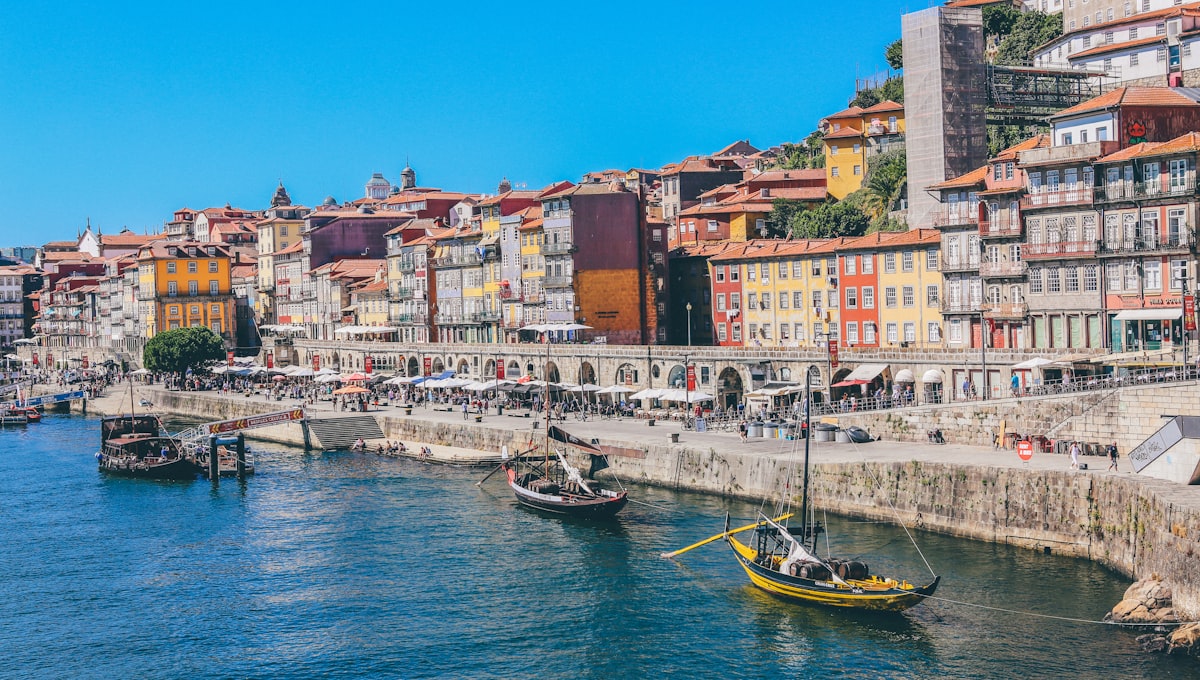
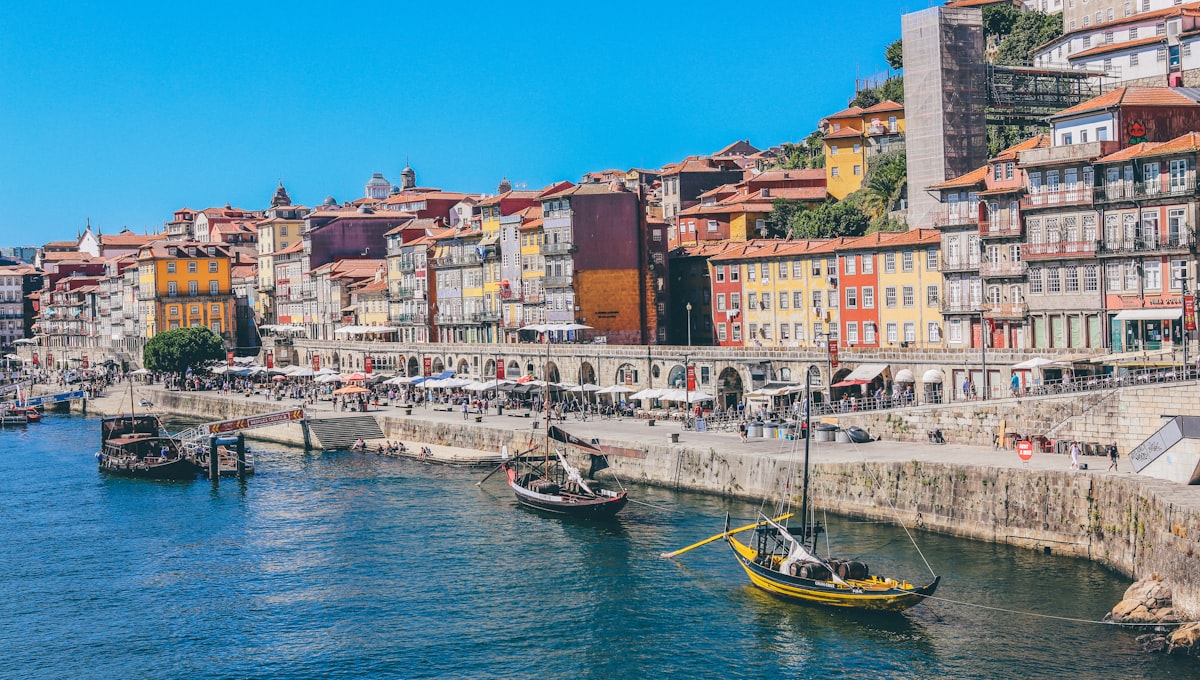
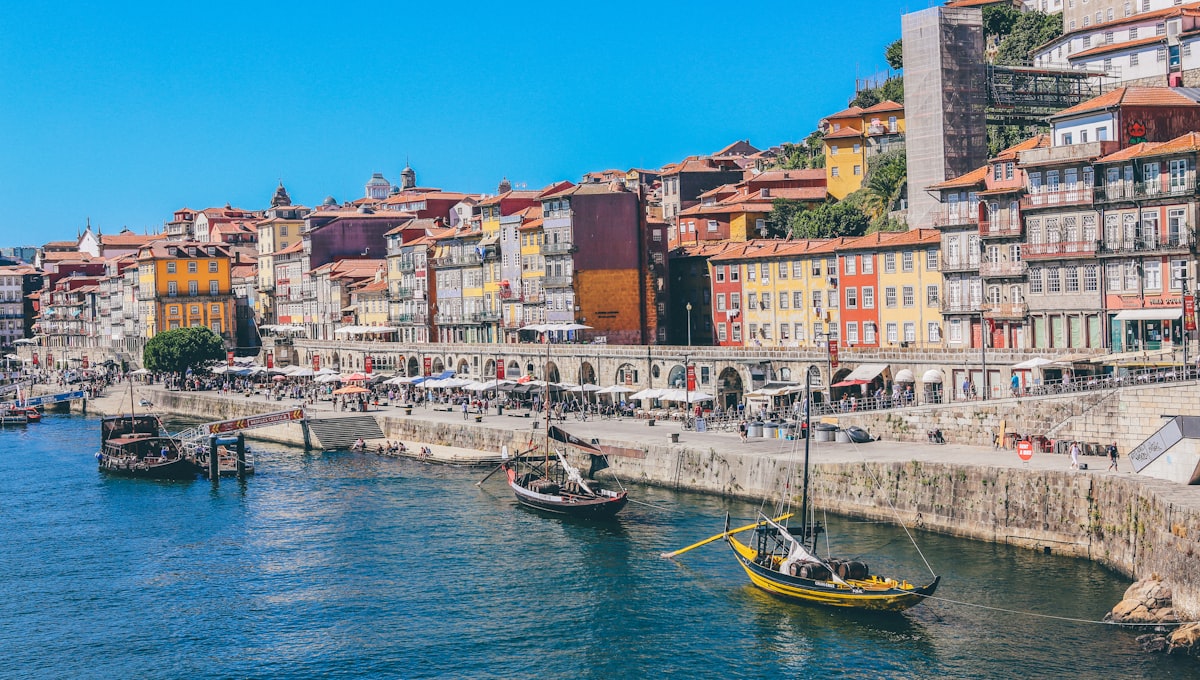
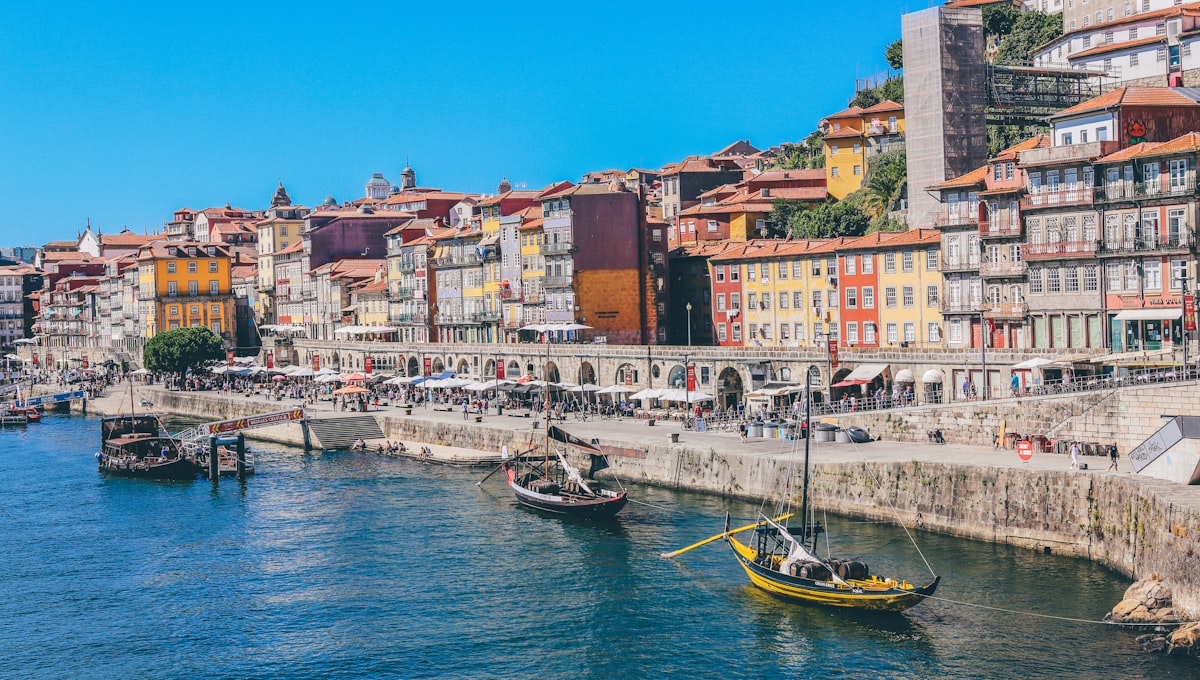
Porto's best months are June, July, and September. July is actually drier than August in Porto — August can see brief but intense rain events — and the city doesn't suffer the extreme heat that occasionally hits Lisbon. A Porto July day is typically 25–28°C with sea breezes and clear skies. The Ribeira waterfront, the port wine lodges across the river in Vila Nova de Gaia, and the Douro Valley wine country an hour east are all at their most accessible.
October in Porto is a particular pleasure: the harvest season in the Douro (the grape harvest runs late September through October), cooler temperatures, autumn colours in the vineyards, and the beginning of the truffle and mushroom season at restaurants. Visitor numbers drop from the August peak but the infrastructure — restaurants, tours, accommodation — is still fully operational. If the Douro Valley is part of your trip, October is the single best month to visit.
Winter in Porto is genuinely cold by Iberian standards. January averages a high of only 13°C with significant rain. The city is beautiful in the rain — the granite buildings darken, the azulejo tiles gleam, the cafés fill with locals — but you need to adjust expectations accordingly. Late February through March can surprise with warm dry spells that feel like early spring.
The Algarve: Beach Season and Its Limits
The Algarve's beach season runs June through September, with July and August as the absolute peak. Water temperatures reach 22–24°C, sunshine is essentially guaranteed, and the golden limestone cliffs of the western Algarve (between Lagos and Sagres) are at maximum photogenic. This is also when prices are highest, roads are crowded, and the beach towns of Albufeira and Vilamoura have a resort-package atmosphere that some travellers love and others find oppressive.
Shoulder season — May and October — is the Algarve sweet spot for most independent travellers. May is particularly good: temperatures in the low-to-mid 20s°C, sea temperature around 18°C (cold for swimming but manageable), wildflowers across the coastal cliffs, and prices 30–40% below August. October continues warm into its second half (often 22–25°C in early October) and the sea retains summer warmth long after the calendar turns.
The western Algarve around Sagres and Cape St. Vincent (the southwestern tip of continental Europe) deserves special mention: it is wilder, windier, and less developed than the central coast. Surfers go to Sagres in autumn and winter when the Atlantic swells build. For anyone seeking dramatic coastal scenery rather than beach resort infrastructure, the western Algarve in May or October is one of the finest settings in Europe.
The Azores: A Completely Different Problem
The Azores archipelago in the mid-Atlantic operates on its own calendar. The islands are green year-round — they receive significant rainfall even in summer — and the trade-off is a mild, oceanic climate without extreme heat or cold. Summer temperatures on São Miguel (the main island) hover around 24–26°C; winter temperatures rarely drop below 14°C.
The practical consideration for Azores travel is wind and cloud, not temperature. The best months for outdoor activities — whale watching (April–October), canyoning, hiking the volcanic calderas, swimming in geothermal pools — are June through September. The worst months are November through February, when persistent cloud cover, high winds, and intermittent heavy rain can make outdoor activities unreliable. This doesn't make winter impossible — Furnas Valley and Sete Cidades are accessible year-round — but manage expectations.
Spring (April–May) is when the Azores explodes with hydrangeas. The blue flowering hedgerows that line every road on São Miguel reach peak bloom in May and early June, creating one of the more striking rural landscapes in Europe. April whale watching season begins — sperm whales are resident year-round, blue whales and sei whales pass through in spring. Flight prices from Lisbon to Ponta Delgada (PDL) are lower in spring than summer, typically €80–130 return.
Budget Considerations by Season
Portugal across its regions shows a predictable seasonal price pattern. Peak season (July–August): flights from the UK and Northern Europe cost 40–60% more than off-peak; hotels in Lisbon's historic centre average €180–280 per night for a decent mid-range property; the Algarve resort hotels can reach €250–400. Shoulder season (May–June, September–October): flights drop to manageable levels (London–Lisbon typically £80–160 return in shoulder season versus £180–280 in August), and accommodation comes down proportionally.
Winter (November–March, excluding Christmas week) is consistently the cheapest window, with some excellent properties in Lisbon and Porto available for €80–130 per night. Flight deals proliferate — airlines that pile on capacity in summer need to fill seats in winter. Ryanair (FR), easyJet (U2), and TAP Air Portugal (TP) all run periodic winter sales on routes from the UK, Germany, and the Netherlands to LIS and OPO.
Month-by-Month Quick Reference
January–February: Porto and Lisbon off-season charm, rain expected, best prices. Avoid Algarve.
March: Transitional. Wildflowers begin in the Algarve. Warming in Lisbon. Porto remains cool.
April–May: Azores peak (whale watching, hydrangeas). Algarve perfect. Lisbon and Porto increasingly pleasant. Easter crowds in the last week of March or April.
June–September: Beach season in full force. Lisbon and Porto crowded but functional. Algarve excellent but expensive. Azores busy.
October: Douro Valley harvest. Porto autumn. Algarve shoulder. One of the best overall months to be in Portugal.
November–December: Quiet everywhere except Christmas week. Best prices. Genuine local experience in urban centres.
Portugal rewards the traveller who goes slightly against the grain. The country's infrastructure — transport, accommodation, restaurants — operates at high quality year-round. The main things that change are crowd levels, prices, and weather. Time it right and you get one of Western Europe's most rewarding countries at a fraction of the high-season cost.
 Best Time to Visit Japan: Cherry Blossoms, Autumn, or Cheap Season?