
Best Time to Visit Indonesia: Bali, Java, Komodo, and Raja Ampat
June 17, 2026
Best Time to Visit Indonesia: Bali, Java, Komodo, and Raja Ampat
Indonesia is the world's largest archipelago — 17,000 islands spread across an oceanic area wider than the continental United States, straddling the equator and spanning three time zones. Its four principal traveler destinations (cheapest flights to Bali, Java, Komodo, and Raja Ampat) don't share a single climate pattern, which means there is no universally "best" time to visit Indonesia. Instead, the ideal month depends entirely on which part of the country you're targeting and what you want to do when you get there.
The travelers who plan Indonesia well are those who understand that this country operates as a collection of distinct destinations with different seasons, each requiring its own timing logic. The ones who plan poorly arrive in Komodo in February wondering why the seas are so rough, or visit Raja Ampat in August wondering why the visibility isn't as spectacular as they expected.
Bali: The Island the World Knows
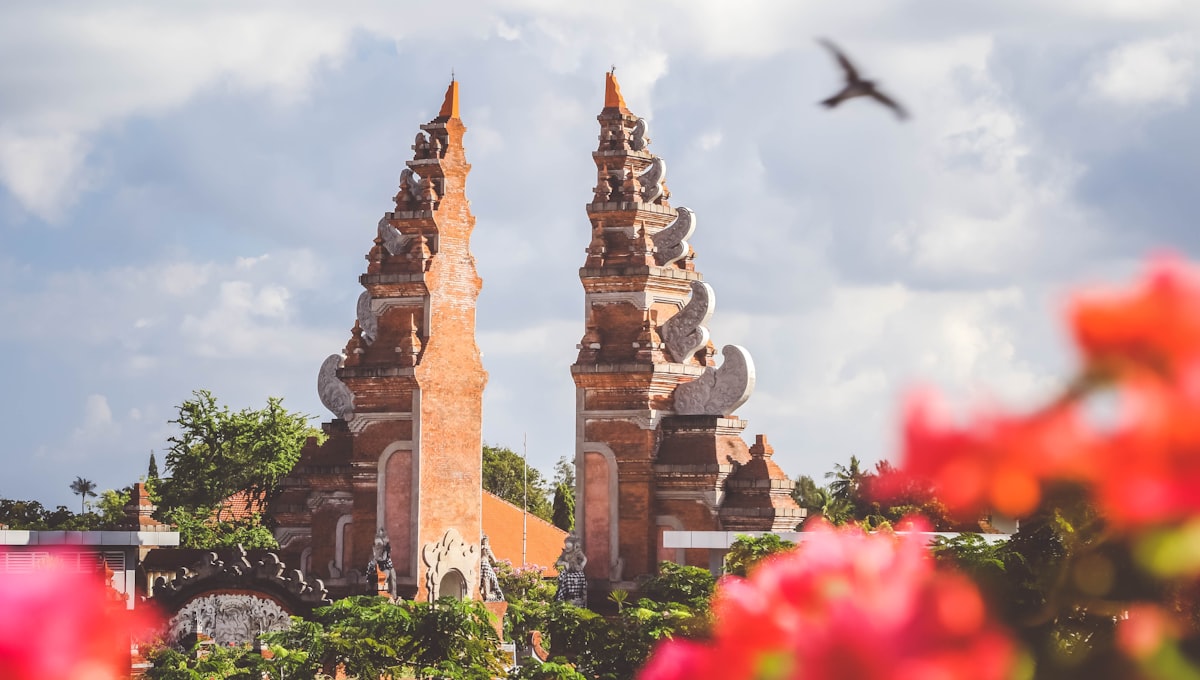
Bali's climate is shaped by the southwest monsoon, which delivers a distinct wet season from October to April and a clear dry season from May to September. The dry season — particularly June, July, and August — is when Bali sees its peak international tourist traffic. Temperatures hover around 26–30°C, humidity drops noticeably, and the likelihood of an afternoon downpour minimal enough for reliable beach days and outdoor activities.
The reality, though, is that even the wet season in Bali is entirely manageable for most visitors. Rain falls intensely but usually in short, sharp bursts — a dramatic one-hour tropical storm that clears entirely to sunshine by 4pm is the typical pattern from November through March. The rice paddies, terraced hillsides, and jungle are at their most spectacularly green and atmospheric from November to March. Balinese Hindu temple festivals, which occur on a complex 210-day Balinese calendar cycle, happen year-round and are often more accessible during the quieter off-peak months when foreign visitor numbers don't create crowds at ceremonial sites.
For budget travelers, Bali's cheapest months are January–February and October–November. Hotels in Seminyak or Ubud that cost $120/night in August can be had for $65–80 in November, and family guesthouses (losmen) drop proportionally. Flight prices to Denpasar (DPS) also dip — connections via Singapore, Kuala Lumpur, or Hong Kong can be found for under £500 return from London during these periods.
Java: Temples, Volcanoes, and Cultural Depth
Java is Indonesia's most populated island and contains two of Southeast Asia's greatest archaeological achievements: Borobudur (the world's largest Buddhist monument, a 9th-century mandala of stone rising from the Kedu Plains) and Prambanan (an extraordinary 9th-century Hindu temple complex of over 200 temples, the spires of the three main Trimurti shrines rising 47 metres). Both are within easy day-trip or overnight distance of Yogyakarta, the cultural capital of Java.
Yogyakarta is a city of batik workshops producing intricate hand-drawn cloth, wayang kulit puppet performances that last through the night, and a street food culture centered on gudeg (young jackfruit curry) and nasi goreng that rivals anything in the country. The royal Kraton palace still functions as a living royal household, with the Sultan of Yogyakarta serving simultaneously as the hereditary Governor of the Special Region of Yogyakarta under Indonesia's unique constitutional arrangement.
Java shares Bali's basic wet/dry cycle — dry from May to September, wet from October to April. For visiting Borobudur and Prambanan, the dry months are clearly preferable for comfort and photography. Sunrise at Borobudur in June or July, with mist rising from the surrounding rice fields as the stone stupas catch the first light, is one of Southeast Asia's most photographed and genuinely extraordinary travel experiences.
For the active volcanoes — most famously the Ijen plateau (famous for its electric-blue sulfuric flames, visible only before dawn in the crater below) and the Bromo–Tengger caldera (a vast ancient crater containing a smoking active cone) — the dry season wins on access, safety, and visibility. However, Ijen's blue fire requires a 3am start and a steep 3km hike into the crater in any season. The rainy months make the crater rim paths slippery and the blue flames less visible through sulfuric cloud.
Komodo: Dragons and World-Class Diving
Komodo National Park, in the island chain between Sumbawa and Flores in the Lesser Sunda Islands, is one of the world's genuinely great wilderness destinations. The giant Komodo dragons — the world's largest lizard, reaching 3 metres in length and 70kg in weight, a living relic of Pleistocene megafauna — are the headline attraction. But the diving and snorkeling in the surrounding waters is frequently described by marine biologists as among the most biodiverse on earth.
The convergence of the Indian and Pacific Oceans creates powerful currents through the Komodo Strait that drive an extraordinary upwelling of nutrients, supporting reef ecosystems of astonishing density. Manta rays aggregate here year-round at specific cleaning stations; reef sharks, pygmy seahorses, rare nudibranchs, and massive schools of bumphead parrotfish are standard sightings for divers.
The best time to visit Komodo is from April to December, with the clearest conditions and calmest seas in July and August. Liveaboard dive boats operate year-round, but the currents in the Komodo Strait are notoriously strong and unpredictable in the wet season (January–March). Visibility drops significantly and sea conditions become genuinely challenging. The dragons themselves are present year-round on Rinca and Komodo islands and can be tracked on guided walks through the dry savannah landscape.
Raja Ampat: The Most Biodiverse Waters on Earth
Raja Ampat, in the Bird's Head Peninsula of West Papua, is for serious divers and snorkelers — and increasingly for eco-travelers and photographers who simply want to experience one of the last truly wild ocean environments. The island chain contains more species of marine life per square kilometre than anywhere else on earth: over 1,300 species of reef fish and 700 species of coral have been recorded in these waters. Diving here is not just good — it's genuinely unlike anywhere else on the planet.
Getting to Raja Ampat is not simple, and that is part of what has preserved it. Most travelers fly to Sorong in West Papua (via Jakarta, Makassar, or Manado — multiple hops, a full day of travel), then take a 2–3 hour speedboat across open water to Waisai on Waigeo Island. The journey is demanding. The reward is extraordinary.
The best time to visit Raja Ampat is October to April — the season when seas are calm, visibility reaches 20–30 metres, and the famous manta rays concentrate in the shallows of the Manta Sandy and Arborek dive sites. The peak of January–March sees the largest aggregations of mantas and the highest probability of whale shark encounters off the outer reefs.
The dry season (May–September) offers more comfortable surface conditions and is still excellent for diving, but certain sites experience stronger surge and reduced visibility depending on the swell direction. The endemic walking sharks (epaulette sharks that literally walk between rock pools on their pectoral fins) and wobbegong carpet sharks are present year-round on the reef flats.
Accommodation in Raja Ampat is limited and fills fast. Most guesthouses (homestays) are small, family-run operations with 4–8 rooms, built on stilts over the water. Book at least 3–4 months ahead for any visit between November and April, and at least 2 months ahead for the shoulder seasons.
Practical Notes for the Whole Country
Visa: Most nationalities can enter Indonesia visa-free for 30 days under the Indonesia e-VOA (electronic Visa on Arrival) available at major entry points for approximately $35. A 60-day visa is available for longer stays at $50. Extend locally at immigration offices in major cities.
Health: Dengue fever is present across all Indonesian islands year-round — use a DEET repellent consistently. Malaria risk is elevated in Papua and the Maluku islands and lower in Bali and Java. Consult your travel health clinic for current recommendations.
Domestic flights: Indonesia's domestic air network is extensive. Garuda Indonesia (the flag carrier) is the most reliable. Lion Air and Batik Air are cheaper but have higher delay rates. Book domestic legs through Indonesian portals where prices are typically 15–25% lower than purchasing through international booking platforms.
Building a Multi-Region Itinerary
A classic three-week Indonesia itinerary for July–August (optimal for Bali, Java, and Komodo):
Week 1 (Bali): Arrive Denpasar. Ubud for rice terraces, temples, and cooking classes. Seminyak for beach and restaurant scene. Day trip to Tanah Lot sea temple.
Week 2 (Java): Fly Yogyakarta. Borobudur and Prambanan day trips. Night train to Surabaya. Pre-dawn hike to Ijen crater (blue sulfur flames). Sunrise at Bromo caldera.
Week 3 (Komodo): Fly Labuan Bajo via Bali. Liveaboard or island-hopping boat. Dragon trekking on Rinca Island. Diving Batu Bolong and Manta Alley. Return via Bali.
Indonesia is immense, linguistically diverse (over 700 languages), and endlessly rewarding for travelers willing to navigate its logistical complexity. Time your visit right for the region you're targeting, and this country will redefine what you think travel can be.
Getting to Indonesia: Flights and Entry
Return flights from London to Bali (Denpasar) run through Singapore, Kuala Lumpur, Hong Kong, or Doha depending on the carrier. Singapore Airlines via Changi is the premium option at approximately £700–900 return. Malaysia Airlines via Kuala Lumpur typically runs £550–700. Cathay Pacific via Hong Kong is consistently competitive at £580–720. Emirates via Dubai is among the cheapest at £520–680 and runs frequent services.
From Australia, the options multiply dramatically. Jetstar and AirAsia X fly direct from Melbourne and Sydney to Bali in under 7 hours, with sale fares frequently below AU$350 return. This proximity is one reason Bali's tourism infrastructure is so strongly shaped by Australian visitor culture — Kuta and Seminyak have developed largely around Australian demand and expectations.
For Jakarta as an alternative gateway (to Java, Sumatra, or direct Komodo connections), fares from London are generally slightly cheaper than Bali by £30–80 given Jakarta's higher traffic volume and greater route competition. Garuda Indonesia's direct London–Jakarta service is the only non-stop option from Europe.
Indonesia's e-VOA (electronic Visa on Arrival) is available at all major entry points. For Raja Ampat and other remote areas, ensure your Indonesian visa allows the internal travel you need — regional permits (Surat Jalan) are required for some parts of Papua province and should be obtained in Manokwari or Sorong before heading into the national park.
Sustainable Tourism Considerations
Indonesia faces significant overtourism pressure in its most visited areas. Bali's water table is critically stressed in Seminyak and Kuta from hotel and villa development. The Gili Islands' reef systems have degraded substantially from snorkeler and diver impact over the past decade. Raja Ampat operates a community-based conservation fee system — the Raja Ampat Conservation Fee, currently approximately $100 per visit — that directly funds reef protection and local ranger patrols. Pay it without complaint; it's one of the most directly effective marine conservation mechanisms in the world.
Choosing accommodation owned and staffed by local Indonesians rather than international hotel chains keeps money in the community more effectively. In Bali, this means favoring family-run homestays (losmen) in Ubud's outlying villages over the resort hotels of Seminyak. In Raja Ampat, the homestay system is the only viable accommodation model anyway — there are no large international hotels in the national park, by design.
 Best Time to Visit Japan: Cherry Blossoms, Autumn, or Cheap Season?
 Best Time to Visit Sri Lanka: Two Monsoons, One Perfect Window