
48 Hours in Athens: Ruins, Rooftops, and Souvlaki
May 27, 2026
Athens is a city that rewards an early start and resists a rigid plan. The ancient sites are non-negotiable but shouldn't consume the whole trip. The neighborhoods — Monastiraki, Psyrri, Exarcheia, Koukaki — each have a distinct character and are part of what makes Athens more than a monument destination. Here is how to spend 48 hours well.
Arrival and Getting Oriented
Athens International (ATH, also called Eleftherios Venizelos) is 35 km east of the city centre. The metro line 3 (blue line) runs directly from the airport to Monastiraki in the centre — 40 minutes, €10.50 one-way, €18 return, valid for 48 hours including all metro, tram, and bus travel. It's almost always better value than a taxi unless you have a large group. The metro itself is worth examining for its own sake: several stations display archaeological finds unearthed during construction, and Syntagma station in particular has a glass-enclosed display of the excavation layers.
The central area for first-time visitors is the triangle formed by Monastiraki, Syntagma, and Koukaki. Monastiraki is the ancient market and flea market district immediately below the Acropolis; Syntagma is the constitution square with the parliament building and changing of the guard; Koukaki is the quieter, more residential neighbourhood south of the Acropolis that has become the city's best area for independent restaurants and design hotels in the past five years.
Day 1 Morning: The Acropolis at Opening Time
Book your Acropolis tickets online in advance (€20, €10 for EU students under 25, acropolisofathens.gr). The site opens at 8am. Arrive at 7:50am. This is not optional advice — by 10:30am the site is carrying thousands of visitors and the heat on the exposed limestone plateau is fierce in any month from May onwards. The morning light on the Parthenon before the crowds arrive is genuinely one of the great travel experiences available in Europe.
The Acropolis complex includes the Parthenon, the Erechtheion with its Caryatid porch, the Temple of Athena Nike, the Propylaea gateway, and a sweeping view over the city in every direction. Allow two hours. The new Acropolis Museum (ground level, five minutes' walk south) is essential and often underestimated — its top floor displays the original Parthenon friezes (those not in the British Museum) at eye level in a glass room that aligns with the Parthenon itself. Museum entry is €15, and it has excellent air conditioning.
Day 1 Midday and Afternoon: Ancient Agora and Monastiraki
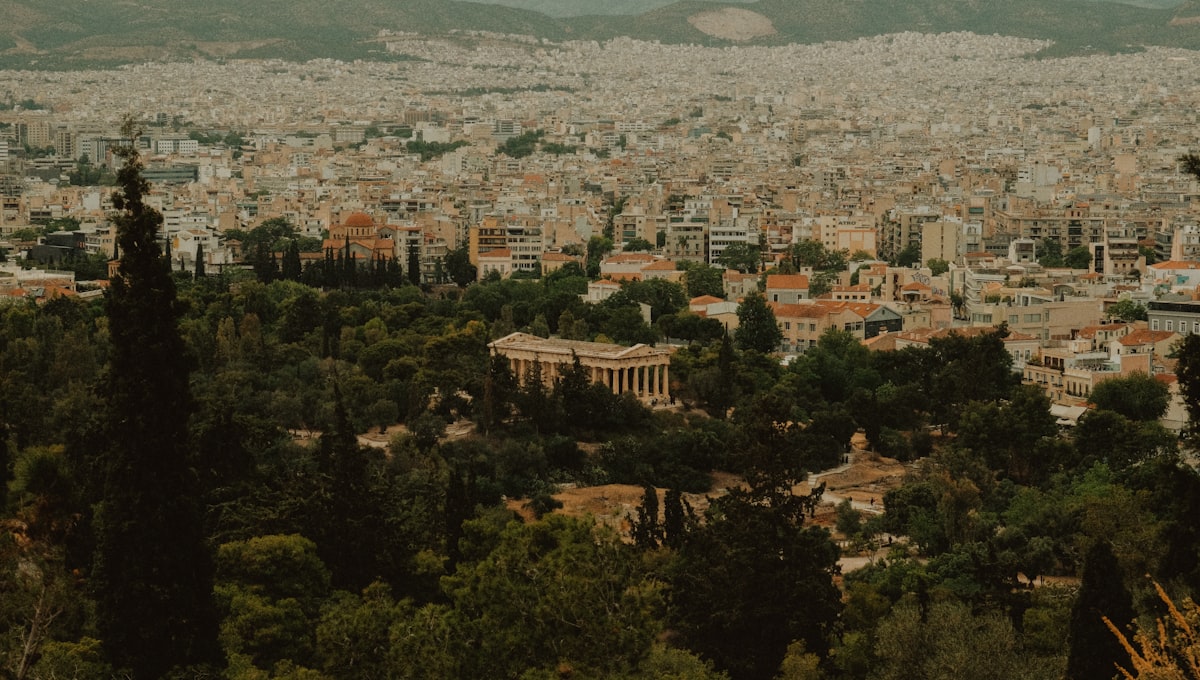
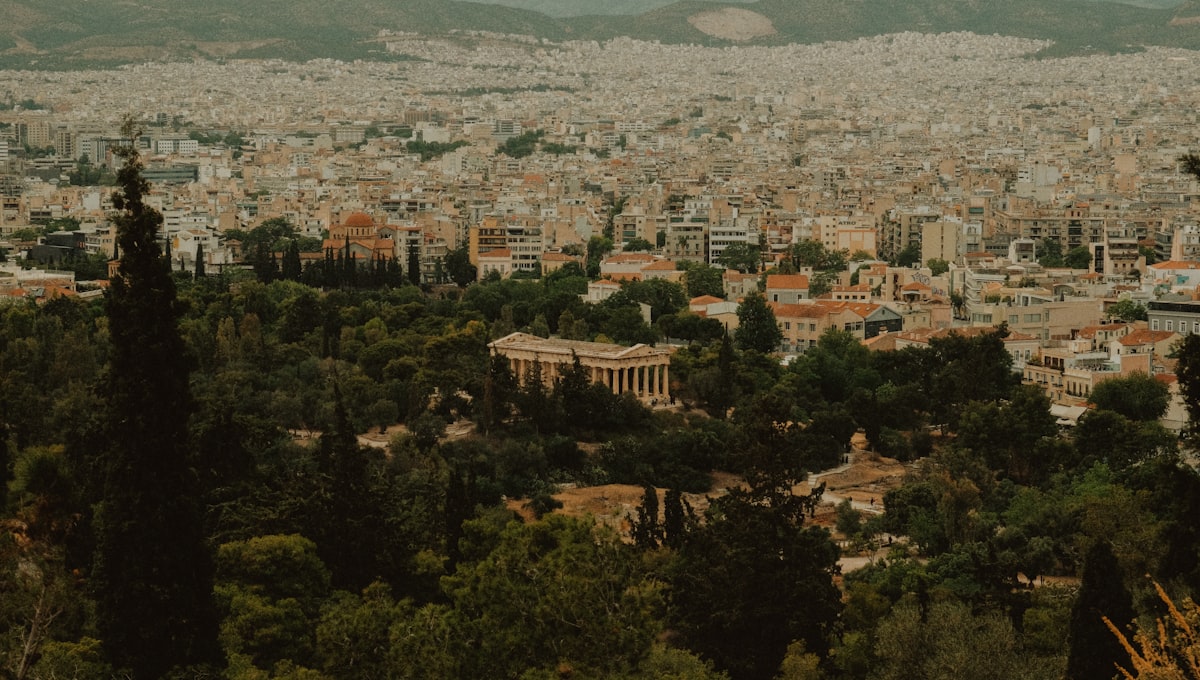
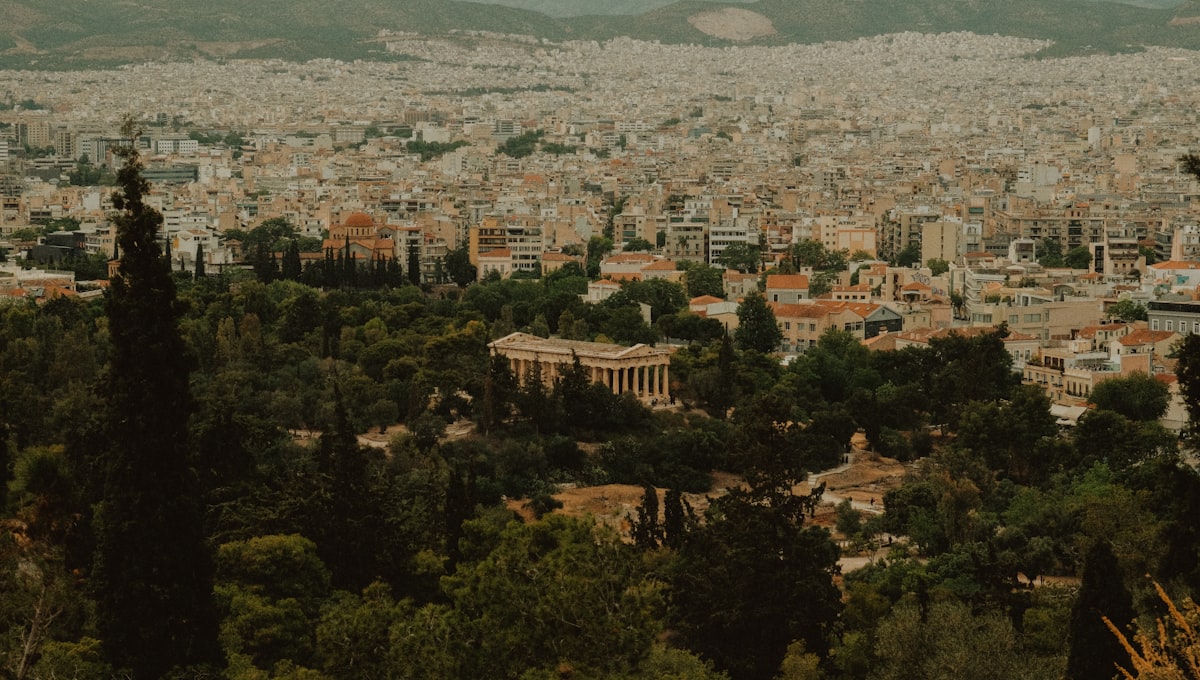
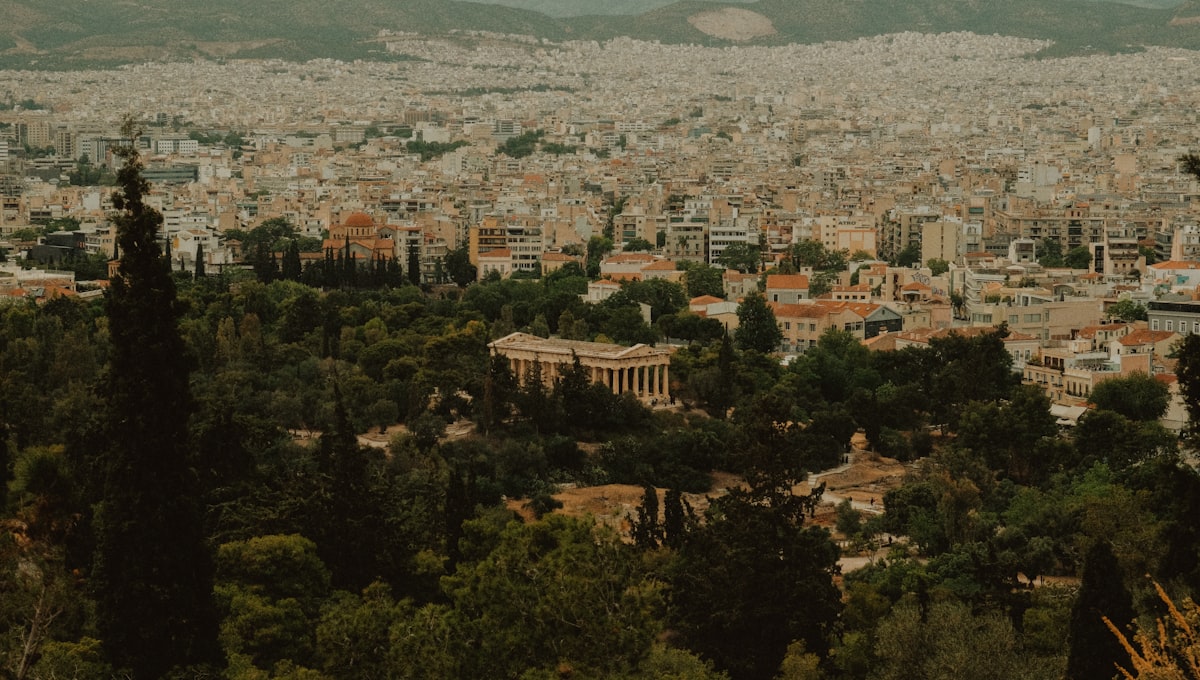
Walk down from the Acropolis via the Areopagus rock (Mars Hill) — you can scramble up the slippery marble steps for a city view that the crowds at the Acropolis overlook. Below is the Ancient Agora (€10, or included in the €30 multi-site pass that also covers the Acropolis, National Archaeological Museum, and three other sites). The Agora was the civic heart of classical Athens — market, law courts, philosophical schools. The Temple of Hephaestus at the north end is the best-preserved classical Greek temple in the world, more complete even than the Parthenon, and almost always half-empty compared to the Acropolis.
Lunch in Monastiraki. The neighbourhood around Monastiraki Square and the flea market (Avyssinias Square) is dense with restaurants ranging from tourist traps to brilliant hole-in-the-wall tavernas. Avoid anywhere with a laminated photo menu and a tout at the door. Seek out Bairaktaris (Monastiraki Square 2) — a 120-year-old taverna doing grilled meat, tzatziki, and fried aubergine in a tiled interior that hasn't changed since the 1950s. The souvlaki stands on Mitropoleos Street (the pedestrian strip between Monastiraki and Syntagma) offer arguably the best street souvlaki in Athens — pork or chicken, €3.50, wrapped in pita with tomato, onion, and tsatsiki.
Spend the afternoon in Psyrri, the neighbourhood immediately north of Monastiraki, which has the city's best concentration of design shops, record stores, independent galleries, and excellent coffee. The Athens coffee scene has genuinely evolved — the Greek iced coffee tradition (freddo espresso, freddo cappuccino) produced a culture of outdoor café sitting that feels categorically different from the northern European rush-coffee model.
Day 1 Evening: Rooftop Bars and Dinner in Koukaki
Athens has a remarkable number of rooftop bars with direct Acropolis views. The most accessible are clustered along Apostolou Pavlou (the pedestrian walkway around the Acropolis) and in Monastiraki. The terrace at A for Athens hotel (Miaouli 2, Monastiraki) is consistently cited as having the best Acropolis view and the most civilised atmosphere. Arrive for drinks at 7pm (before sunset); book ahead for sunset slots in summer.
Dinner: go to Koukaki, a 20-minute walk south of the Acropolis. This neighbourhood has replaced Psyrri as Athens' most interesting dining area for anyone not looking for the tourist-menu experience. Mani Mani (Falirou 10) specialises in the cuisine of the Mani peninsula in the southern Peloponnese — strong flavours, mountain greens, slow-cooked lamb, local olive oil. It's one of the best regional Greek restaurants in Athens, booking essential, mains around €18–22. Alternatively, Seychelles (Kerameikou 49) is a creative natural wine bar and kitchen in a beautifully converted old house with a garden, beloved by local chefs and wine importers.
Day 2 Morning: National Archaeological Museum
The National Archaeological Museum (Patission 44, €15, €12 for multi-site pass) is one of the great museums of the world and needs three to four hours to do properly. The Cycladic figurines collection, the gold Mask of Agamemnon, the Antikythera Mechanism display, the Thira frescoes — the concentration of significant objects is staggering even by world-museum standards. Go on the morning of day 2 rather than day 1 because your brain will absorb it better after seeing the sites themselves.
The museum is in the Exarcheia neighbourhood, which is worth a morning walk-through. Exarcheia has a long history as Athens' anarchist and intellectual quarter — book shops, political murals, experimental cafés, a city square that has functioned as an outdoor gathering point for alternative culture for decades. It's changed significantly since the late 2010s gentrification wave but retains more authentic local character than Monastiraki.
Day 2 Afternoon: Cape Sounion or the Athens Riviera
If the weather cooperates (and from April through October it almost always does), the afternoon of day 2 is an argument for getting out of the city. The Temple of Poseidon at Cape Sounion (75 km south, accessible by KTEL bus from the Pedion Areos stop, €7 one way, 1.5 hours) is a clifftop Doric temple at the southernmost tip of Attica with a view across the Aegean that ranks among the great landscape experiences in best time to visit Greece. Byron carved his name in one of the columns in 1810. The sunset here is spectacular. Buses return until late evening.
Alternatively, the Athens Riviera — the coastline between Piraeus and Vouliagmeni — is accessible by tram from Syntagma (€1.40). The beach at Vouliagmeni is one of the best accessible urban beaches in Europe, with clear Aegean water, a brackish lake fed by geothermal springs (€15 entry, beloved by locals for its alleged therapeutic properties), and a collection of beach bars and tavernas that stay busy until midnight in summer.
Practical Athens Notes
Getting around: The metro is clean, modern, and extensive. Syntagma is the central hub for lines 2 and 3; Monastiraki connects lines 1 and 3. Single tickets are €1.40; a 24-hour pass is €4.50. Taxis and Bolt/Uber are available and cheap by European standards (€6–10 for a cross-city ride).
Heat: Athens in July and August reaches 35–40°C regularly. Start outdoor activities before 10am and return to air-conditioned spaces (museums, restaurants) from noon to 4pm. Carry water. The Acropolis plateau has no shade and no water fountains.
Language: English is universal in the tourist areas and very common across the city. Greek signs often include transliteration. The phonetic alphabet issue that slows down navigation in other Greek cities is minimal in Athens.
Costs: Athens is substantially cheaper than Northern European capitals. A full sit-down restaurant lunch with wine runs €15–20 per person. A souvlaki street lunch is €4. Metro ticket €1.40. Museum coffee €3. Midrange hotel in Koukaki €90–130 per night in shoulder season. Budget perhaps €80–100 per person per day for accommodation, food, transport, and entrance fees in shoulder season — more in July–August when accommodation prices rise by 30–50%.
 3 Days in Dubrovnik: Old Town, Islands, and the Best Sunset Spots
 3 Days in Marrakech: Riads, Souks, and the Atlas Mountains