
Best Time to Visit Greece: Islands, Mainland, and Shoulder Season Secrets
May 7, 2026
Greece is one of the most visited countries in Europe, and the pattern of that tourism is extremely concentrated. July and August account for a disproportionate share of annual arrivals, pushing up hotel prices, crowding beaches, and making some island experiences genuinely unpleasant. What most visitors don't realise is that the shoulder seasons — late April through June and September through mid-October — offer substantially better conditions across almost every dimension: price, weather, and the ability to actually experience the place.
Understanding Greek Tourism Seasons
Greece's tourism seasons fall into roughly four categories. High season runs from the second week of July through August. This is when Santorini (JTR), Mykonos (JMK), and Rhodes (RHO) are operating at near-total capacity. Hotels at popular spots charge peak rates, the Acropolis sees queues of two hours or more, and ferry timetables are stretched to cope with demand.
Shoulder season spans May–June and September–October. Temperatures are still excellent for most purposes, ferry services run on close to their full schedule, and prices drop substantially. A hotel that costs €350 per night in Oia in August might be €140 in May or €120 in late October.
Low season covers November through March. Many island facilities — restaurants, boat tours, smaller hotels — close entirely during this period, particularly on the smaller Cyclades. 48 hours in Athens, Thessaloniki, and the mainland can be visited year-round, but island travel in deep winter requires planning and tolerance for limited services.
May and Early June: The Best Month for Most Visitors
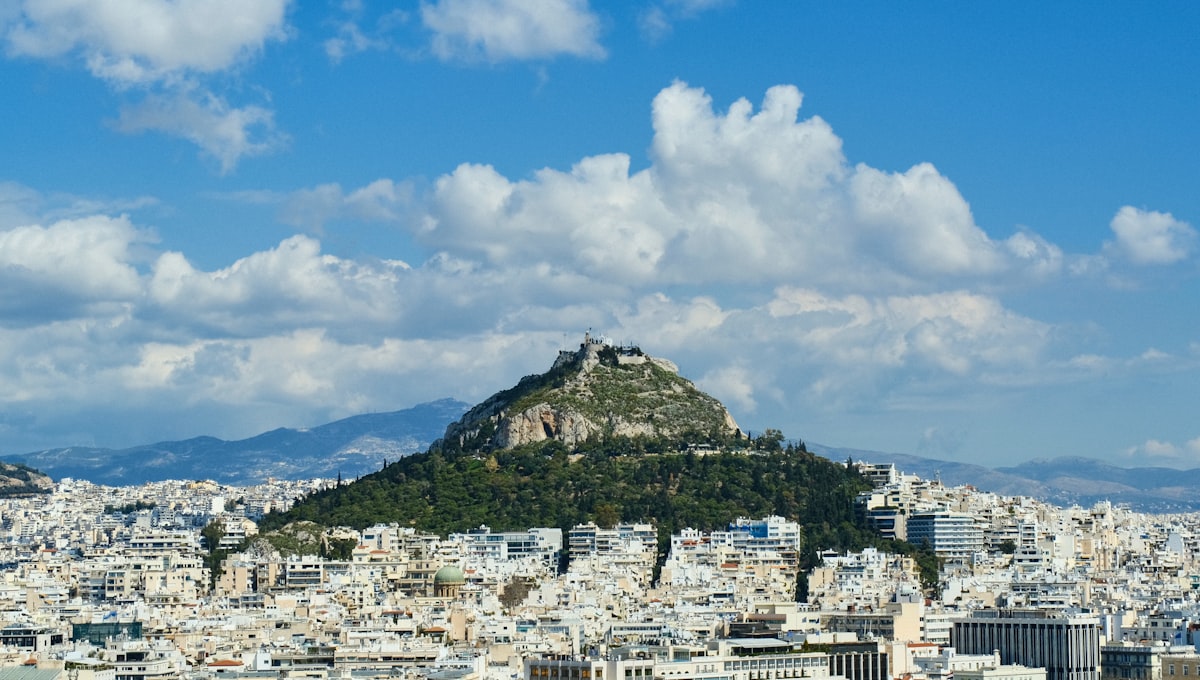
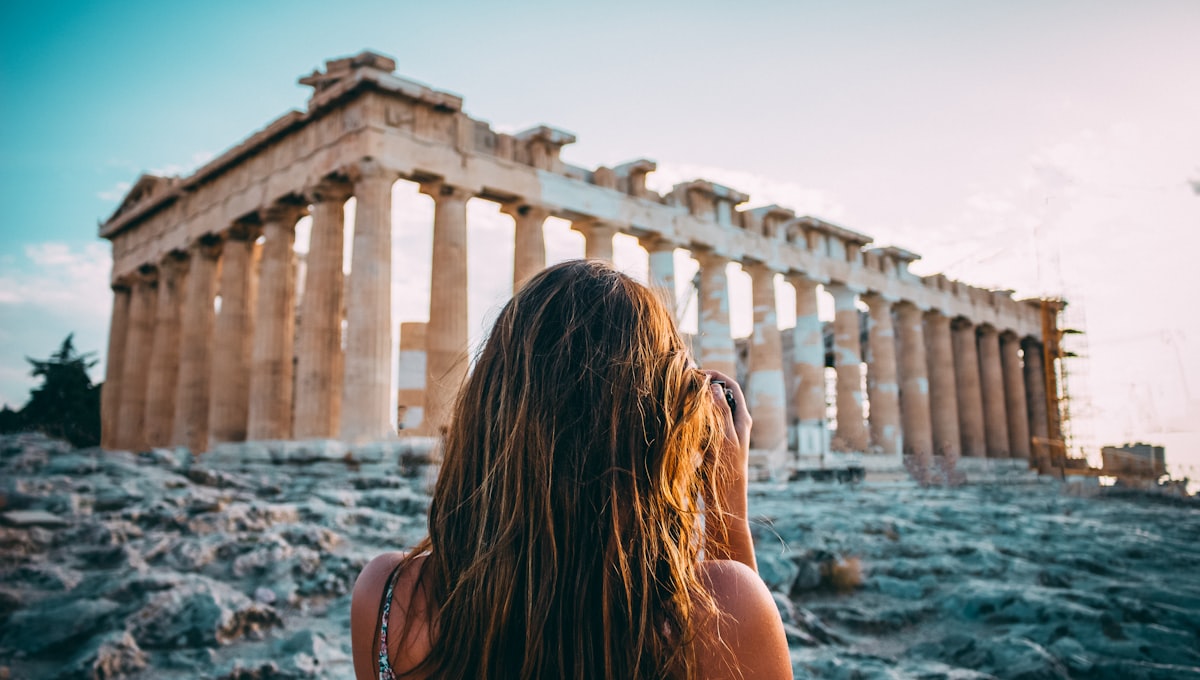
May is the month that frequent visitors to Greece often cite as their favourite. The wildflowers are still present in the mountains and on drier islands, sea temperatures have warmed enough for swimming (around 20–21°C in the Aegean), and tourism infrastructure is fully open but not yet overwhelmed. The Acropolis in Athens can be visited in the morning with manageable crowds. The Delphi archaeological site, set into the hillside of Mount Parnassus, is at its most atmospheric in the clear spring light.
For island-hopping, May gives you open tavernas, available ferry connections, and hotel prices that are often 40–50% below August levels. Crete (CHQ/HER) in May combines warm evenings with the ability to hike the Samaria Gorge without the summer heat making it dangerous.
Airfares to Athens (ATH) from the UK and US reflect this pattern. May and June fares are typically £80–£150 return from London on carriers like easyJet (U2), Ryanair (FR), or British Airways (BA). August fares on the same routes commonly run £200–£320.
September and October: The Secret Shoulder Season
If May is the best-kept secret for first-time visitors, September and October are the territory of repeat visitors who've learned from experience. The sea in September is the warmest it will be all year — Aegean waters hit 25–26°C in late August and retain warmth through September, making for the best swimming conditions of the entire year. Yet the summer crowds have departed and schools have returned, leaving a calmer, more local feel to even popular islands.
October extends the season well. Northern islands and higher-altitude mainland areas get cooler evenings, but the Dodecanese — Rhodes, Kos (KGS), Symi — remain warm. Crete is excellent in October: the crowds are minimal, temperatures hover around 24°C during the day, and the light has the low golden quality that characterises Mediterranean autumn.
Island Choices by Season
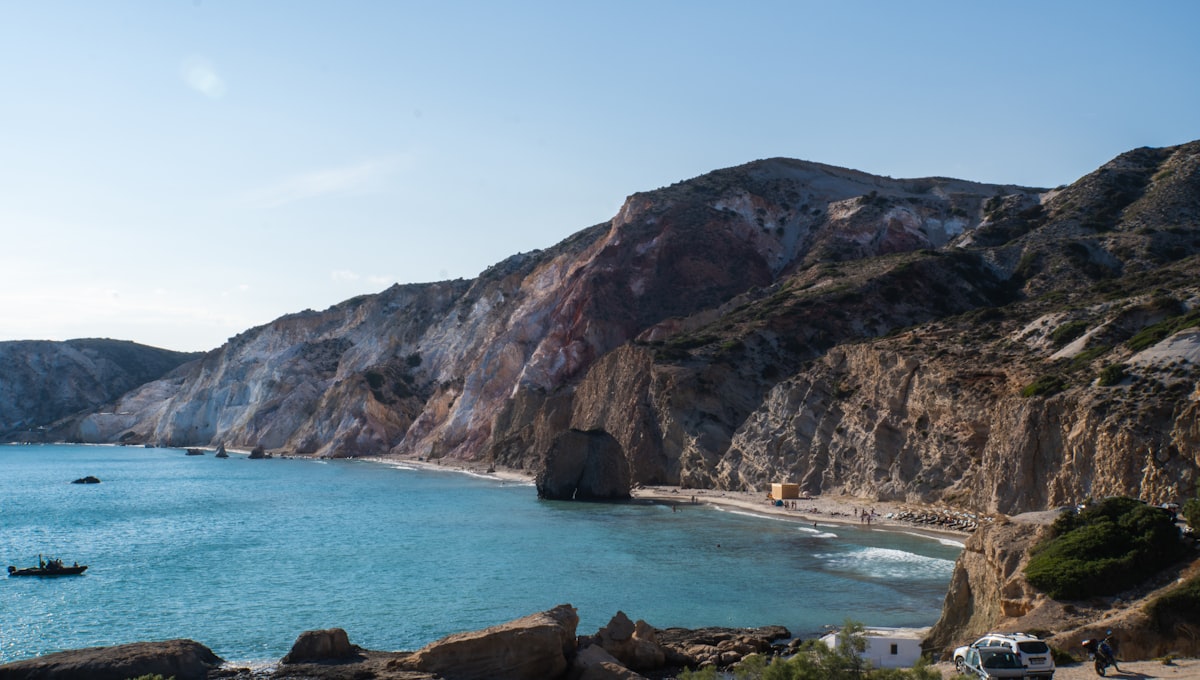
Different islands suit different seasons. Santorini and Mykonos are at their worst in August (genuinely overwhelming) and their most enjoyable in May or October. Corfu (CFU) and Kefalonia have greener, more lush landscapes in May before the summer dries them out. The Dodecanese — particularly Rhodes and Kos — have a longer season and good infrastructure that makes them viable from May through October.
The Mani peninsula in the southern Peloponnese is a mainland secret: stark, arid landscapes dotted with Byzantine tower houses, best visited in spring (March–May) when it has wildflowers and avoiding the heat that makes summer walking punishing. Nafplio, a short bus ride from Athens, is perhaps the most charming town in Greece and worth visiting any time outside of peak summer.
Athens Year-Round
Athens (ATH) stands apart from the seasonal pattern. The Acropolis and Acropolis Museum, the Agora, and the National Archaeological Museum can all be visited year-round. November through February brings cool temperatures (10–15°C during the day), very thin crowds, and hotel prices that drop dramatically. The Plaka neighbourhood below the Acropolis feels most authentic in winter when it functions as a residential area rather than a tourist zone.
For summer visitors determined to include Athens, arrive or depart from Piraeus by ferry to the islands rather than spending more than a day or two in the capital — August urban heat in Athens can reach 38–40°C, which makes extended sightseeing unpleasant.
Flight and Ferry Logistics
Athens (ATH) is the main international gateway, though Thessaloniki (SKG), Heraklion (HER), Rhodes (RHO), and Corfu (CFU) receive direct European flights during the summer and shoulder seasons. Flying directly to your island destination where possible saves a ferry connection and sometimes money.
Greek domestic flights on Aegean Airlines (A3) and Sky Express (GQ) connect Athens to most major islands year-round, though ferries remain the preferred option for island-hopping for their flexibility and ability to carry luggage without restrictions.
Comparing Prices Across Markets
It's worth noting that flights to Greece can vary in price depending on which booking market you use. Greek domestic carriers and international partners sometimes price differently on .gr, .de, .uk, and .us booking platforms. Aggregator tools that check multiple regional markets simultaneously — RegionFare is built for exactly this — can identify when the same Athens flight is cheaper booked through a different national version of the booking site.
For most visitors, the simplest advice is this: book Greece for May, early June, September, or October. You'll pay less, see more, and actually enjoy it. The difference between Greece in high season and Greece in shoulder season is not subtle — it can define whether the trip is the holiday of a lifetime or an expensive exercise in crowd management.
Island-by-Island Timing Guide
Each major Greek island group has its own rhythms, and the single-season model of "Greece is best in June" flattens distinctions that matter in practice.
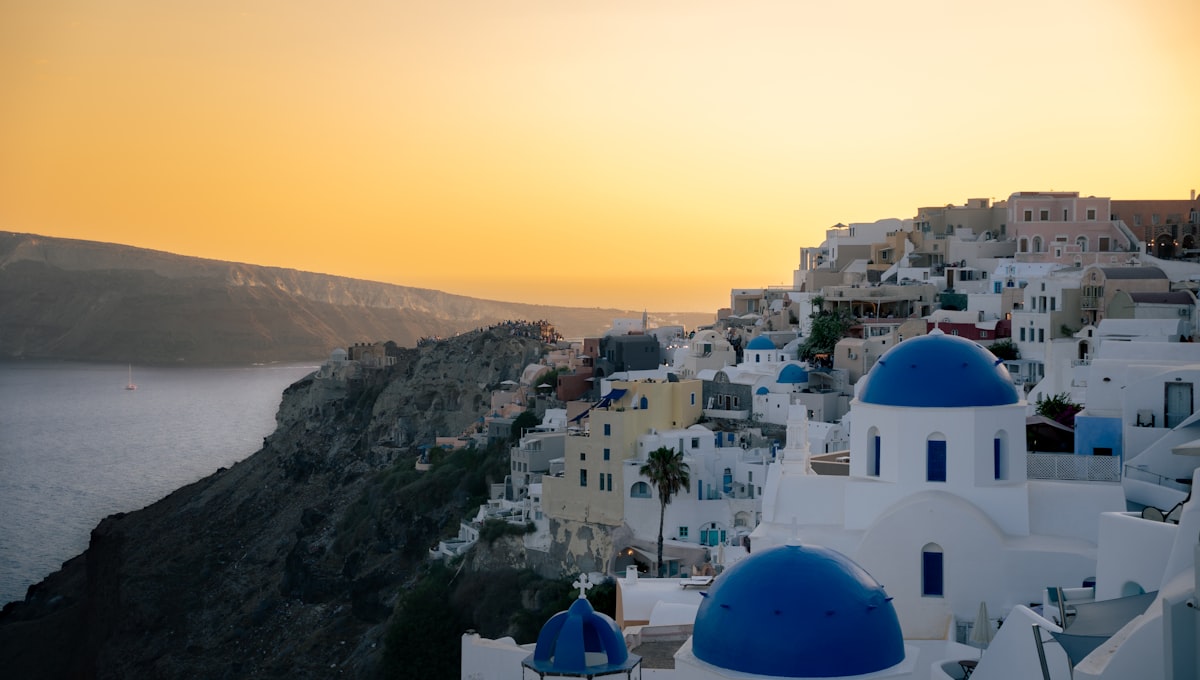
Santorini (JTR) peaks harder than any other island. The caldera view from Oia in August involves 40-minute waits for a restaurant table, shoulder-to-shoulder paths along the rim, and accommodation prices that routinely hit €600–€900 per night for a cave hotel with a caldera view. The same property in May costs €200–€350. The view is identical. The number of people in front of you in the sunset photograph is not.
Mykonos (JMK) operates on a similar late-summer-crowd model but with a different character — the island is primarily a party destination and its high-season behaviour reflects that. Visit in June for the beach clubs before they reach full summer capacity, or in late September when the season winds down and prices follow. Mykonos in October is quieter, cheaper, and most facilities remain open through mid-month.
Crete (CHQ/HER) has the longest effective season of the major islands, partly because of its size and partly because its geography — mountains, gorges, archaeological sites — provides reasons to visit beyond beach access. May on Crete gives you the Samaria Gorge before summer heat makes the hike taxing, wildflowers on the Lassithi Plateau, and Knossos Palace without the 9am tour-group rush. October remains warm and most infrastructure stays open.
Rhodes (RHO) and the Dodecanese operate at the eastern edge of the Aegean with a longer warm season than the northern Cyclades. Rhodes Town's medieval old city (a UNESCO World Heritage Site) is best explored in April–May or October when the stone streets are navigable without August's crowds. The island receives direct flights from most major European hubs from May through October.
The Ionian Islands — Corfu (CFU), Kefalonia, Zakynthos (ZTH) — are greener and lusher than the Aegean islands, thanks to higher winter rainfall. They peak in July–August and quieten into October. Kefalonia's Myrtos Beach is consistently ranked among Europe's finest; visit in late May or September and the water is warm, the beach accessible, and the car parks manageable.

Ferry Schedules and Island-Hopping Logistics
Greek ferry services follow a clear seasonal pattern that directly affects which island combinations are practical in which months.
The main operators — Blue Star Ferries, Hellenic Seaways, Aegean Speed Lines, and SeaJets — run approximately 60% of their full schedule in winter and expand to full capacity by mid-May. Infrequent connections in winter mean that some multi-island itineraries require days between sailings. By May, the same circuit can often be completed in 48 hours on high-speed catamarans.
The main Piraeus–Cyclades spine (Athens to Santorini, Mykonos, Naxos, Paros) runs multiple daily sailings in high season. Thinner routes — Astypalaia, Ikaria, Alonissos — remain twice or three-times weekly even at peak. Ferry booking 2–4 weeks ahead is generally sufficient for most routes in shoulder season; high-season sailings on the Piraeus–Santorini run on public holiday weekends can sell out a month ahead.
The overnight Piraeus–Santorini ferry (departing around 20:30, arriving approximately 04:00) effectively replaces a hotel night — worth considering if you are island-hopping on a budget. A deck-class ticket runs €40–55 compared to €70–90 for the high-speed catamaran, and you lose no daylight hours.
Festival Calendar
Greece's cultural calendar provides genuine reasons to visit beyond weather optimisation.
The Athens and Epidaurus Festival runs June through August, using ancient theatres — the Odeon of Herodes Atticus on the Acropolis slope and the 2,300-year-old theatre at Epidaurus — for ancient Greek drama, opera, and contemporary theatre. Tickets for major productions sell out weeks ahead. Epidaurus is 2 hours from Athens by car and seeing Sophocles performed in a stone theatre under stars has no metropolitan equivalent.
Easter (Páscha) is the most important event in the Greek Orthodox calendar. The midnight resurrection service on Holy Saturday — when congregations emerge holding candles into the dark and bells ring simultaneously across the city — is one of the most atmospheric events in European religious culture. Dates vary by year; Greek Orthodox Easter often differs from Western Easter by 1–5 weeks. Experiencing it on a quieter island or in a small village is recommended over central Athens.
The Thessaloniki International Film Festival in November (served by SKG airport) is one of southeastern Europe's most respected cultural events. It falls in a month when city prices are low and the Byzantine monuments attract almost no queues.
Mainland Greece: The Underrated Alternative
Visitors focused on islands sometimes overlook a mainland offer that is equally compelling and considerably less crowded.
The Peloponnese contains some of the finest classical and Byzantine sites in the country: Ancient Olympia, the theatre at Epidaurus, and the Byzantine ghost town of Mystras near Sparta. Nafplio — a Venetian old town beneath a clifftop castle — is a strong short-break destination in its own right, with an excellent restaurant scene and accommodation at €80–150 per night in shoulder season.
Thessaloniki functions as an excellent base for northern Greece. The White Tower, the Roman Forum, and a remarkable concentration of Byzantine churches are the headline attractions, but the city's food culture — its bougatsa pastry shops and the covered Modiano Market — rewards equally. Less than an hour's drive brings you to Vergina, where the royal Macedonian tombs (including that of Philip II, father of Alexander the Great) are displayed beneath a remarkable underground museum. The golden burial objects are among the finest artefacts to survive from antiquity and are displayed with a quality of curation that rivals any major European museum.
 Best Time to Visit Japan: Cherry Blossoms, Autumn, or Cheap Season?