
A Weekend in Porto: Wine, Tiles, and the Douro
May 29, 2026
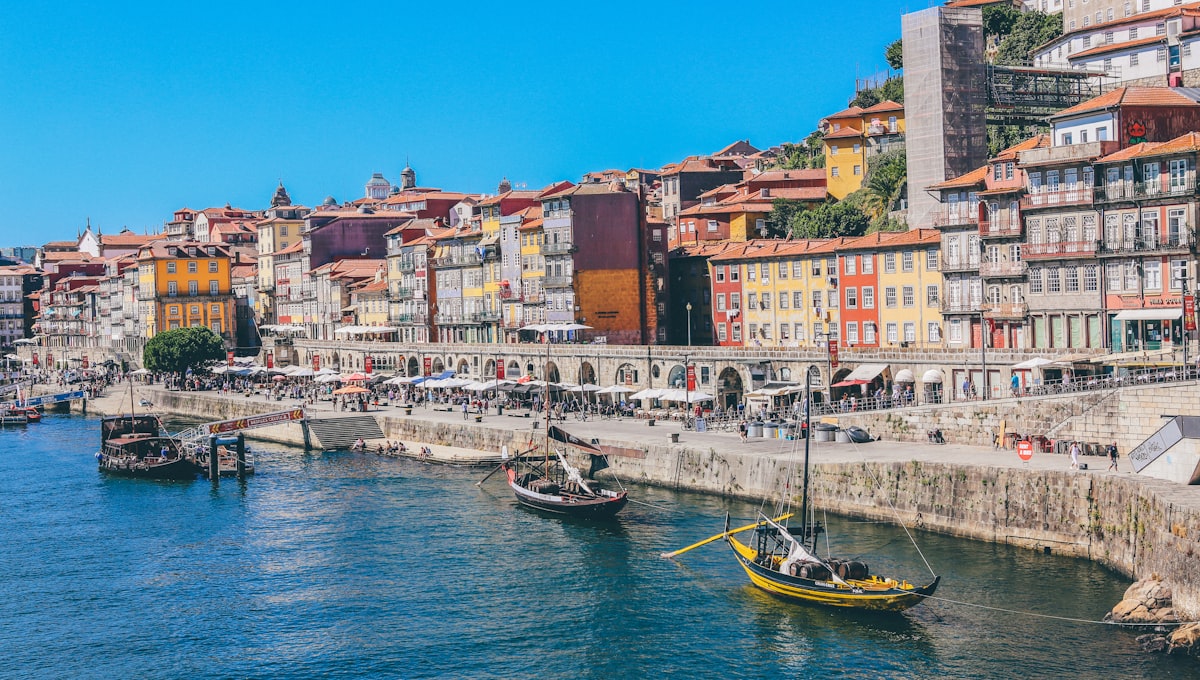
Porto is a city that grips you on arrival in a way that's difficult to explain before you've been. The descent into the Ribeira — the ancient waterfront where the port wine barges once docked — is one of the most visually striking urban approaches in Europe: terraced granite buildings rising in tiers from the river, laundry lines between balconies, blue-and-white azulejo tiles on every surface. It looks like a 19th-century painting that forgot to stop existing.
Arrival and Where to Stay
Porto's Francisco Sá Carneiro Airport (OPO) is 11 km north of the centre. The metro line E (violet) runs from the airport to downtown in 30 minutes for €2.00 (buy a rechargeable Andante card, €0.60, at the airport machines). The final stop, Trindade, is the main interchange hub. The metro is Porto's best-value transport — a 24-hour pass costs €7.65.
For a weekend, the best base is the Ribeira waterfront district or the Miragaia neighbourhood immediately west of it — both within walking distance of the major sights and along the river. Alternatively, Cedofeita or Bonfim (the more residential, eastward-looking neighbourhoods) have better restaurants and calmer streets, at the cost of a 20-minute walk or quick metro ride to the river. Mid-range boutique hotels in the Ribeira and Cedofeita run €90–150 per night in shoulder season. In August, expect to add 30–50%.
Day 1 Morning: Ribeira and the Bridges
Start at the Ribeira and walk west toward the Dom Luís I Bridge, the iconic double-deck iron bridge designed by a student of Gustave Eiffel and completed in 1886. The upper deck (pedestrian accessible, 45 metres above the Douro) carries the metro line from Porto to Vila Nova de Gaia; the lower deck carries vehicles and pedestrians and is the most photographed point in the city. Both levels are walkable. Walk the lower deck across into Vila Nova de Gaia for the wine lodge visit.
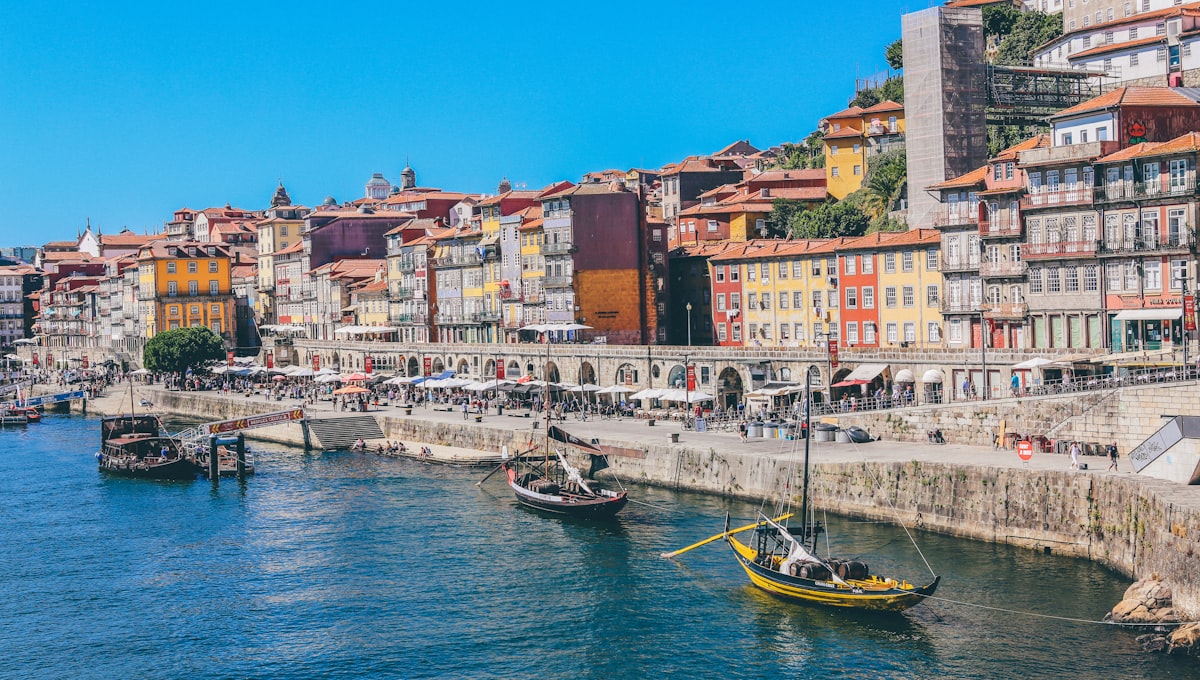
The Douro from the bridge in morning light, with the multi-coloured rabelo boats (traditional flat-bottomed port wine barges) moored below and the terraced city rising on both banks, is as good as tourist photography gets in Portugal. Arrive before 9am for the best combination of light and crowd levels.
Day 1 Morning: Port Wine Lodges in Vila Nova de Gaia
Vila Nova de Gaia, directly across the river from Porto, is where all the major port wine lodges are located. The DOC regulations require that port wine be aged here rather than in the Douro Valley where it's produced — the coastal climate moderates the ageing. The result is a hillside lined with lodge buildings bearing names like Sandeman, Graham's, Taylor's, Quinta do Crasto, and Ramos Pinto.
Most lodges offer 45–60 minute tours followed by a tasting (usually 2–3 wines, €10–16 per person). Graham's Lodge (Rua Rei Ramiro 514) is considered one of the best tours — the vintage room is extraordinary and the tasting included is genuinely educational. Taylor's (Rua do Choupelo 250) has the best terrace view of Porto across the river. Arrive before 11am to avoid queues; the lodges fill from noon onwards with cruise passengers and coach tours.
The practical note on port wine: ruby port (young, fruit-forward, typically 3–5 years old) is the entry level; tawny port (aged in wooden casks, oxidative, nutty and complex) is the more sophisticated style; vintage port (declared in exceptional years, aged in bottle for decades) is the collector tier. A 10-year tawny tasting at Graham's costs €14 and will re-define your expectation of what port wine can be.
Day 1 Afternoon: Bolhão Market and Cedofeita
Return to Porto's side of the river via the upper Dom Luís I deck (the metro goes free-ish if you tap out — just walk across). The Mercado do Bolhão, the 1914 cast-iron covered market in the downtown core, reopened after a major renovation in 2022 and is now worth visiting again — fish stalls, vegetable vendors, cheese merchants, and a ground-floor restaurant row serving good, honest Portuguese lunches (bacalhau com broa, arroz de pato, caldo verde) for €9–13 per main.
Walk north through Cedofeita, Porto's artisan and independent retail neighbourhood. The street Rua Miguel Bombarda is the design gallery axis — contemporary Portuguese ceramics, illustration, jewellery, and textiles that reflect the city's active creative economy. Coffee in Cedofeita: Moustache (Rua Cândido dos Reis 86) makes excellent espresso in a white-tiled space that's been influential on the city's café aesthetic since it opened. Afternoon coffee in Porto is a serious business; the francesinha (a Port speciality: layered sandwich with various meats, covered in melted cheese and a beer-tomato sauce) is the afternoon fuel that divides visitors cleanly into devotees and the unconvinced.
Day 1 Evening: Sunset from Jardim do Morro and Dinner
The Jardim do Morro in Vila Nova de Gaia (accessible from the upper metro bridge) is the best sunset viewpoint for Porto across the river — a garden terrace looking north at the entire stacked façade of the Ribeira. Arrive by 8:15pm in summer, 6:30pm in winter. The quality of light as the sun sets over the Atlantic to the west and the warm tones hit Porto's granite is consistently exceptional.
For dinner, the best options have moved away from the Ribeira (increasingly tourist-menu dominated) into Bonfim and Cedofeita. DOP Restaurant (Largo de São Domingos 18, Old Town, Chef Rui Paula) is the formal dining option — updated Portuguese cuisine in a beautiful historic building, €35–55 per main. For something less formal: Tasca do Chico (Rua da Alegria 114, Bonfim) is a no-reservation local taverna, wood-tabled, with a blackboard menu that changes daily based on market availability. It's the single best combination of quality and value in the city for genuine Portuguese food.
Day 2 Morning: Livraria Lello and São Bento Station
Livraria Lello (Rua das Carmelitas 144) is the bookshop that, by some measure, has the most photographed staircase in Portugal. The neo-Gothic interior, the sinuous red staircase, the stained glass ceiling — it was built in 1906 and is a genuine architectural achievement. Its fame (partly from a dubious J.K. Rowling connection) means the queue can be significant; a €5 entry voucher (redeemable against book purchases) is required and can be bought online. Go at 9am when it opens and you'll have the interior largely to yourself.
São Bento railway station, a 5-minute walk east, has one of the great interior spaces in Portugal: 20,000 azulejo tile panels depicting Portuguese historical scenes, completed in 1930 and covering every surface of the main hall. Entry is free (it's a working train station). Allow 20 minutes.
Day 2: Matosinhos and the Atlantic
Porto faces the Atlantic 5 km west, but the city's actual beach is in Matosinhos — a fishing town now absorbed into Porto's metro area. Metro line A (red) from Trindade to Matosinhos Sul takes 18 minutes and costs €1.85. Matosinhos has a long sandy beach, excellent for walking and swimming (water temperature 17–20°C in summer, refreshing rather than warm), and the country's most concentrated collection of excellent seafood restaurants.
The Rua Heróis de França in Matosinhos is a pedestrianised seafood restaurant row — grilled fish and shellfish, priced by weight, served with roasted peppers and boiled potatoes. Cervejaria Marisqueira Antiga (Rua Heróis de França 52) and the surrounding establishments all operate to the same format. A lunch of charcoal-grilled dourada (gilt-head bream), amêijoas (clams), and pão with olive oil runs €18–25 per person with a shared bottle of Vinho Verde. This is the Porto meal that most visitors to the Ribeira tourist restaurants don't find.
Practical Porto Notes
Porto can be done cheaply. The average cost of a meal at a good local restaurant (tasca or cervejaria, not a tourist-facing menu restaurant) is €10–15 per person. A port wine tasting is €10–16. Museum entry is €5–12. Public transport is €2 per journey or €7.65 for a day pass. A long weekend of 3–4 nights including flights from London (Ryanair, easyJet, and TAP all fly OPO), good food, accommodation in a mid-range hotel, and all activities typically comes in at £400–600 per person total — and regularly less if you search for fares a few weeks out. Porto consistently ranks among the best-value city breaks in Western Europe for the quality of the experience relative to cost.
 3 Days in Dubrovnik: Old Town, Islands, and the Best Sunset Spots
 3 Days in Marrakech: Riads, Souks, and the Atlas Mountains