
A Weekend in Gdańsk: Amber, Shipyards, and the Baltic Coast
June 16, 2026
A Weekend in Gdańsk: Amber, Shipyards, and the Baltic Coast
Gdańsk is one of those European cities that consistently surprises visitors who don't expect much from it. Travelers arrive expecting a post-communist Baltic port and find instead a spectacularly restored medieval city of Renaissance merchant houses and Gothic churches, a compelling modern history layered over centuries of Hanseatic trading wealth, a craft beer scene that punches well above its weight, and a Baltic coastline of white sand dunes stretching north through the twin cities of Sopot and Gdynia. A long weekend here — three nights, ideally — is one of Central Europe's very best-value city breaks.
Getting to Gdańsk
Gdańsk Lech Wałęsa Airport is named after the Solidarity leader who was born and worked in this city, and it is served by Ryanair, Wizz Air, easyJet, and LOT Polish Airlines from dozens of European cities. From London, return flights typically run between £60 and £140 depending on how early you book — one of the cheapest routes to any comparable European city of this cultural richness and historical depth.
The airport is 15 minutes from the city centre by tram (line 210, which runs directly from the terminal to Gdańsk Wrzeszcz district and onwards) or around PLN 50 (approximately £10) by taxi. Avoid the unmetered fixed-rate taxi operators at arrivals — take the tram or use the Bolt or FreeNow apps for reliable metered rides.
The best time to visit is May to September, when the Baltic coast is warm enough to enjoy the beach and the city centre is lively with outdoor terraces filling the historic squares. July and August get busy with domestic Polish tourists and increasingly with international visitors discovering the city; May and early June offer pleasant temperatures (17–22°C) with notably smaller crowds and the full hotel inventory available at off-peak rates.
Day One: The Long Lane and the Waterfront
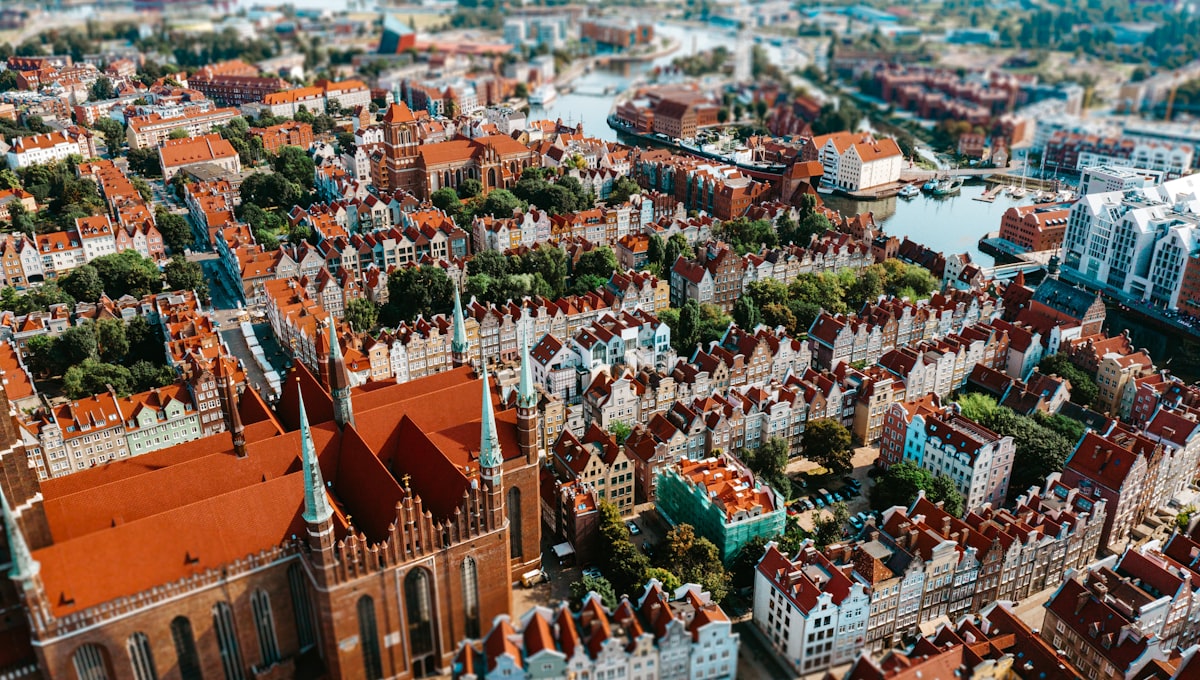
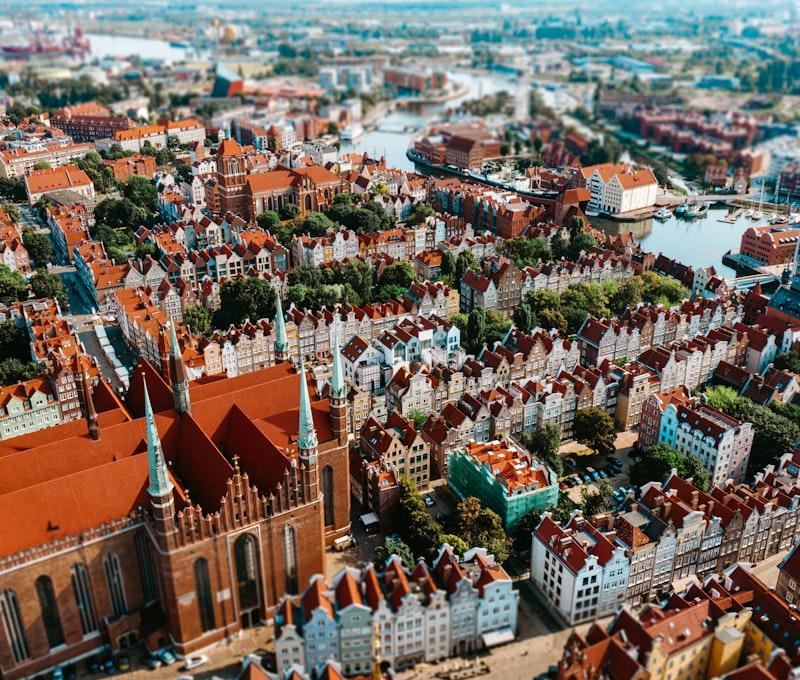
Start at Długi Targ — the Long Market — the heart of Gdańsk's Hanseatic Old Town. The colourful merchant houses that line this wide ceremonial street were meticulously rebuilt after their near-total destruction in World War II, and the reconstruction is so faithful that first-time visitors often struggle to believe the buildings are post-war restorations rather than original 16th-century structures. The project involved matching original brick types, replicating carved facades from historical photographs, and in some cases rebuilding interiors that no longer existed in any archive.
The Neptune Fountain at the end of the square is the city's most photographed landmark, a 17th-century baroque bronze sculpture surrounded by merchant townhouses. Walking north along the waterfront (the Motława riverbank), you'll find the restored crane — the Żuraw — one of the largest medieval port cranes in Europe, now part of the National Maritime Museum. The museum's interiors detail Gdańsk's remarkable role as a trading hub connecting Baltic grain supplies to Western European markets for over 500 years, accumulating the wealth that built the ornate houses you just walked past.
For lunch, head to Piwna or Szeroka streets for pierogi or żurek — sour rye soup served in a hollowed bread bowl, thick with sausage and hard-boiled egg. The Old Town has plenty of tourist-facing restaurants, but the price difference between the central strip and streets two blocks back is significant. A full meal drops from PLN 70 to PLN 45 within a 200-metre walk. Bar Turystyczny on Szeroka is a canteen-style milk bar (bar mleczny) — a surviving relic of communist-era state-subsidized dining — serving enormous portions of traditional Polish food at prices that seem impossible by Western standards.
In the afternoon, take a water tram along the Motława to Granary Island (Wyspa Spichrzów), where the derelict warehouses are being converted into a mixed cultural and residential quarter. The new Granary Island development has a string of waterfront bars and restaurants that compete well on quality without the Old Town premium.
Day Two: Solidarity and Shipyard History
No visit to Gdańsk is complete without the European Solidarity Centre — one of the most thoughtfully designed and emotionally powerful museums in Europe. Built adjacent to the iconic Gdańsk Shipyard gates (Gate No. 2, with the famous 21 Demands of the Solidarity trade union still etched on wooden boards exactly as they were posted in August 1980), the museum documents the strikes, the Solidarity movement's extraordinary decade-long resistance, and the eventual collapse of communism across Eastern Europe with remarkable archival material and first-person testimonies.
The building itself is clad in rusted Corten steel that deliberately echoes the shipyard aesthetic — an architectural statement about the industrial setting from which the movement emerged. Allow at least three hours for the permanent exhibition, which is extensive, multilingual, and genuinely moving in a way that museum exhibitions rarely achieve. The section on martial law (1981–1983), told through personal diaries, underground newspapers, and recordings, is particularly remarkable.
After the museum, take the SKM commuter rail north to Sopot (10 minutes from Gdańsk Główny station, PLN 6). Sopot is the Baltic's most celebrated resort town — a place of wide wooden pier promenades, Jugendstil and Art Nouveau villas lining shaded avenues, and a pedestrianised high street (Monte Cassino Street) lined with cafés, amber shops, and ice cream stands. The pier is the longest wooden pier in Europe at 511 metres, extending far out into the Baltic. On a clear summer afternoon, with the sea glinting blue and windsurfers skimming the surface, it offers one of Poland's most expansive and genuinely beautiful views.
For the evening, return to Gdańsk and explore the craft beer scene. Brovarnia Gdańsk, housed in a converted granary on the waterfront, brews its own beers on-site and serves them alongside elevated Polish pub food in a vaulted brick interior. The Günter's Porter, a dark Baltic porter in the traditional style, is exceptional. For a more compact bar crawl, the streets around Plac Solidarności have developed a cluster of excellent independent bars over the past five years.
Day Three: Amber, Markets, and the Oliwa Cathedral
Gdańsk is the amber capital of the world — Baltic amber, known as złoto północy (northern gold), has been traded here for over 3,000 years. The Old Town is full of amber shops ranging from high-quality artisan pieces to tourist-grade synthetic trinkets. For genuine quality, look for shops displaying the Amber Guild certificate and choose pieces with visible inclusions — insects, air bubbles, and plant material trapped millions of years ago — which authenticate natural amber versus pressed or synthetic alternatives. Simple pendants in genuine amber start around PLN 80–150 (£16–30); statement pieces with rare inclusions command far higher prices.
The Dominican Fair — Jarmark Dominikański — runs every August and transforms the Old Town and surrounding streets into one of Europe's largest outdoor markets, drawing vendors from across Poland, Lithuania, Latvia, and the Baltic states. Amber, linen, woodwork, ceramics, traditional food, and folk art fill hundreds of stalls. If your visit coincides with this fair (it runs for several weeks around late July to mid-August), set aside most of a day for it.
Take the tram to the Oliwa district, a quieter residential suburb of Gdańsk, to visit the magnificent Oliwa Cathedral and its extraordinary Baroque organ — one of the finest in all of Central Europe, with 7,876 pipes and a series of moving figurines and star-shaped sun motifs that emerge during performances. Free organ concerts are held several times daily throughout the summer, and the acoustics in the elongated Gothic nave make even a brief recital genuinely impressive. The adjacent Oliwa Park is a formal French-style garden that slopes from the cathedral down to an artificial pond — perfect for a quiet walk before heading back into the city.
Eating and Drinking in Gdańsk
Gdańsk has leveled up its restaurant and bar scene considerably over the past decade. Beyond the standard Polish classics (bigos hunter's stew, pierogi, kotlet schabowy breaded pork cutlet), you'll find excellent fish restaurants serving fresh Baltic cod, herring, and eel. Bar Rybny near the Old Town fish market is the best value option for casual seafood done properly — try the śledź po kaszubsku, a marinated herring in a cream and apple sauce that's unique to the Kashubian region around Gdańsk.
For coffee, the independent cafés along Piwna and Szafarnia streets rival anything in Warsaw or Kraków. Drukarnia on Targ Rybny is a design-forward cultural venue-slash-café housed in a former printing works, with excellent single-origin coffee and a programme of events and exhibitions.
One drink you must try before leaving: Goldwasser, a herb and gold-flake liqueur that has been produced in Gdańsk since the 16th century. Originally made for the apothecary trade, it's sold in distinctive octagonal bottles at the Goldwasser restaurant and multiple shops around the Old Town. A small bottle makes a perfect and genuinely local souvenir.
Where to Stay and Budget Snapshot
The Old Town has a concentration of boutique hotels in converted merchant houses and repurposed granaries. Hotel Hanza on the Motława waterfront is the most photographed option, but Aparthotel Neptun and the various holiday apartments along Długie Pobrzeże offer better value for families or groups who want more space. Sopot has its own accommodation scene if you'd rather base yourself at the coast — the Grand Hotel Sopot, restored to its 1920s resort-hotel glory, is one of Poland's most beautiful historic hotels and prices surprisingly reasonably outside peak summer weeks.
Budget snapshot for a three-night Gdańsk trip from London: return flights approximately £90, three nights in a central 3-star hotel £180–270, food and drink for three days £40–55, museum entries and transport £25. Total for a comfortable, culturally rich long weekend: approximately £335–440 per person — making Gdańsk one of the most compelling value propositions in Europe for the depth of history and quality of experience it delivers.
Gdynia: The Third City of the Tri-City
Gdańsk, Sopot, and Gdynia form the Trójmiasto (Tri-City) — a conurbation of 750,000 people linked by the fast SKM commuter rail. Gdynia, the northernmost of the three, is the most modernist and least-visited by international tourists, but it offers a compelling complement to the historical Gdańsk experience. Built almost entirely in the 1920s and 1930s when Poland needed a new seaport after Gdańsk became a Free City under League of Nations administration, Gdynia is a unified Art Deco and Modernist architectural statement — wide boulevards, streamlined public buildings, and a working commercial port that still receives container ships and ferries to Scandinavia.
The Gdynia Modernism Days festival (held in summer) celebrates this architectural heritage with open-house events, guided tours of normally closed buildings, and film screenings in the city's original cinemas. Outside the festival, the Naval Museum on Nabrzeże Francuskie houses the destroyer ORP Błyskawica — one of the fastest warships of World War II, which participated in the Dunkirk evacuation and is now a museum ship accessible for tours.
The 20-minute SKM train from Gdańsk Główny to Gdynia Główna costs PLN 6, making it a trivially easy half-day addition to a Gdańsk weekend. Walk the Bulwar Nadmorski waterfront promenade, visit the Modernist streets of the Świętojańska district, and eat lunch at one of the fish restaurants on Skwer Kościuszki before returning to Gdańsk for the evening.
How to Plan Your Visit
The SKM day ticket (PLN 22) gives unlimited travel across Gdańsk, Sopot, and Gdynia for one day — excellent value if you plan to visit all three cities. The Gdańsk Tourist Card (available for 24, 48, or 72 hours at PLN 49–99) adds free or discounted entry to most museums, including the European Solidarity Centre, free public transport, and discounts at selected restaurants. For a three-night stay covering the main sights, the 72-hour card pays for itself comfortably.
Gdańsk is one of the few European city-break destinations where a visitor can simultaneously learn something profound about 20th-century European history, eat exceptionally well on a modest budget, enjoy a Baltic beach, and buy a genuinely meaningful local souvenir — all within a 30-minute walk of a single accommodation base. That density of quality experience per pound spent is rare and worth celebrating.
 3 Days in Dubrovnik: Old Town, Islands, and the Best Sunset Spots
 3 Days in Marrakech: Riads, Souks, and the Atlas Mountains