
A Weekend in Bruges: Chocolate, Beer, and Medieval Calm
May 19, 2026
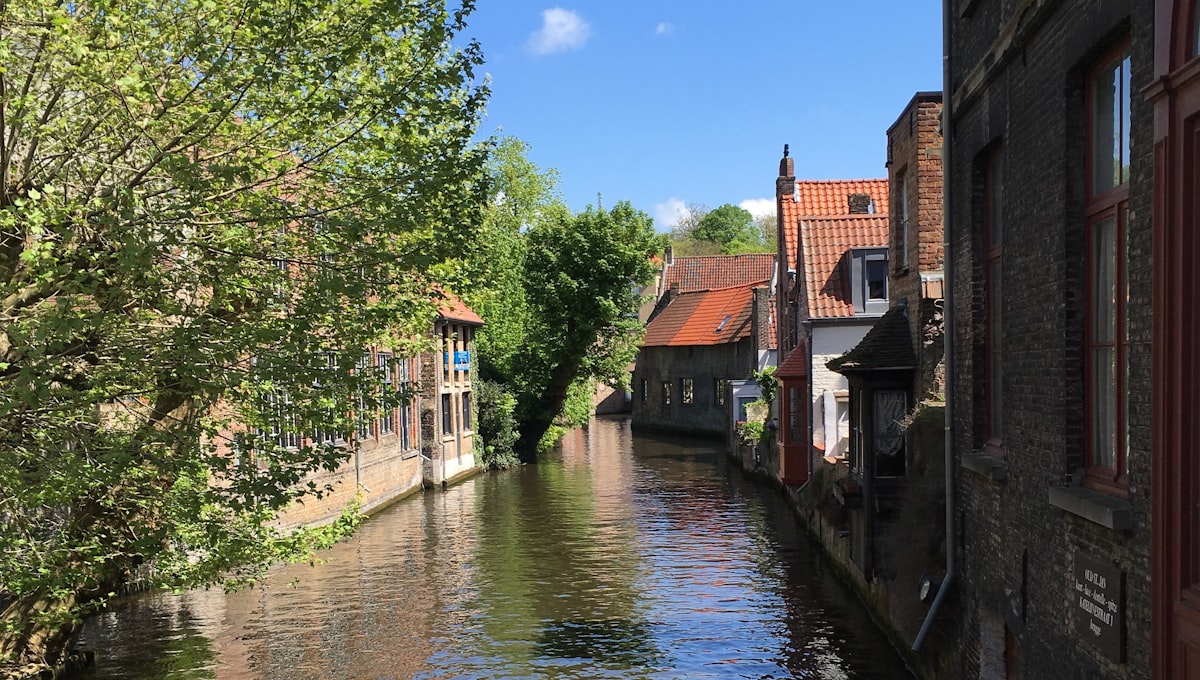
Bruges (BRU region, served by budget European cities Airport or direct Eurostar to Brussels + train) is small enough to cross on foot in 30 minutes but dense enough with architecture, breweries, and chocolate shops to fill a weekend without repetition. It is also the most perfectly preserved medieval city in Northern Europe, which means the centre looks essentially unchanged from the 15th century — minus the smartphones and the waffles-on-sticks vendors.
Getting There
From London, the most pleasant option is the Eurostar to Brussels (2 hours), then a direct IC train to Bruges Centraal (1 hour). Total journey time from St Pancras: about 3.5 hours. A return Eurostar costs £80–180 depending on how early you book; the Brussels–Bruges rail leg costs €6–12. Flying to Brussels Zaventem (BRU) or Charleroi (CRL) and renting a car or taking a bus is a valid alternative but rarely faster city-to-city.
From elsewhere in Europe, Brussels is extremely well connected by rail (Paris, a weekend in Amsterdam, Cologne all under 2 hours), and most low-cost carriers serve BRU.
Day 1: The Medieval Core
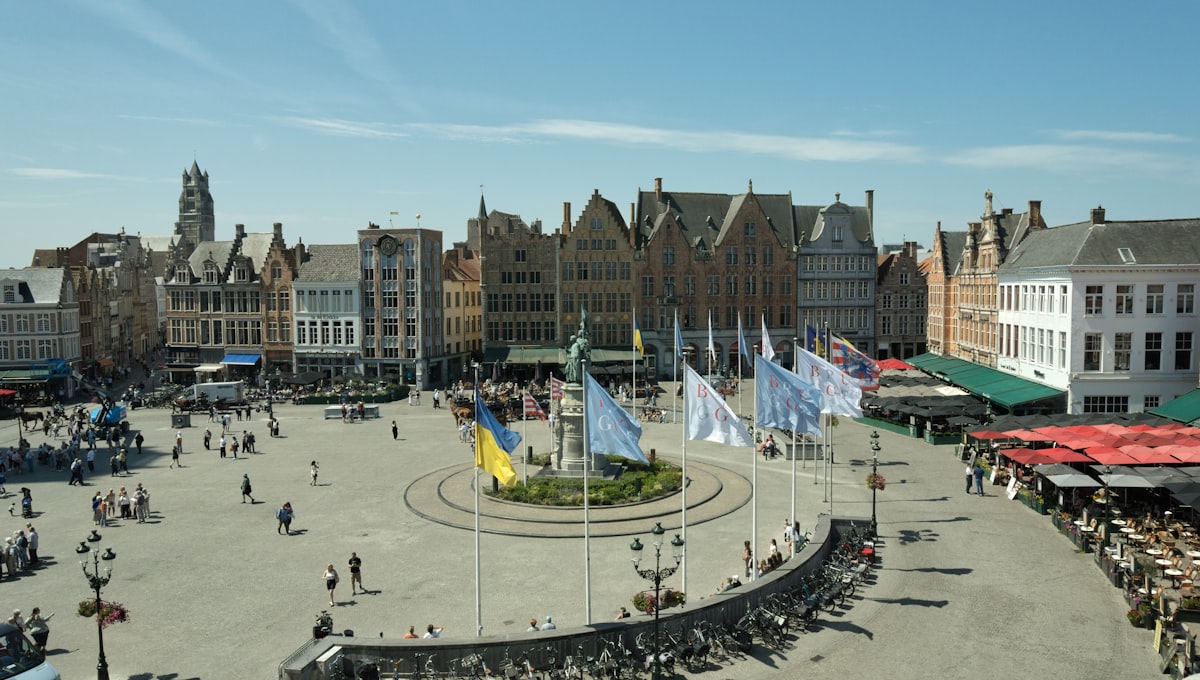
Drop your bags and walk to the Markt, the central market square. The 13th-century Belfry (Belfort) dominates the east side — the 366-step climb is worth it for the view over the Flemish plain and the canal network below. Admission is €14; go first thing in the morning to avoid queues.
From the Markt, walk south through the Burg (the adjacent civic square with the Basilica of the Holy Blood — free entry to the lower Romanesque chapel) and continue to the Begijnhof, a 13th-century religious community that still houses Benedictine nuns. The walled garden in the centre is one of the quietest and most affecting spaces in the city.
The Groeninge Museum holds Flemish Primitive paintings — Jan van Eyck, Hans Memling, Hugo van der Goes — in a small but exceptional collection. Allow 90 minutes. Admission €14.
Evening: eat well. Bruges has excellent Belgian classics — waterzooi (cream-based chicken or fish stew), carbonnade flamande (beef and beer stew), moules-frites in season. Restaurant Den Dyver is a reliable mid-range option with a beer-pairing menu (Belgian ales matched to each course). Budget €35–50 per person for dinner with drinks.
Beer
Bruges has two active in-city breweries. De Halve Maan (the Half Moon) is the most accessible and runs English-language tours (hourly, €20 including a beer). Their Brugse Zot and Straffe Hendrik are both excellent; the "pipeline" — a 3.2km underground beer pipe connecting the brewery to the bottling plant — is a genuine engineering curiosity. The basement of the Bierbrasserie Cambrinus has over 300 Belgian beers on the menu and knowledgeable staff. For quieter drinking, the Bruges Beer Museum on the Breidelstraat has a tasting format (€16 for three beers and a flavour card) that beats a standard bar for understanding what you're drinking.
Day 2: Chocolate, Canals, and the Surrounding Area
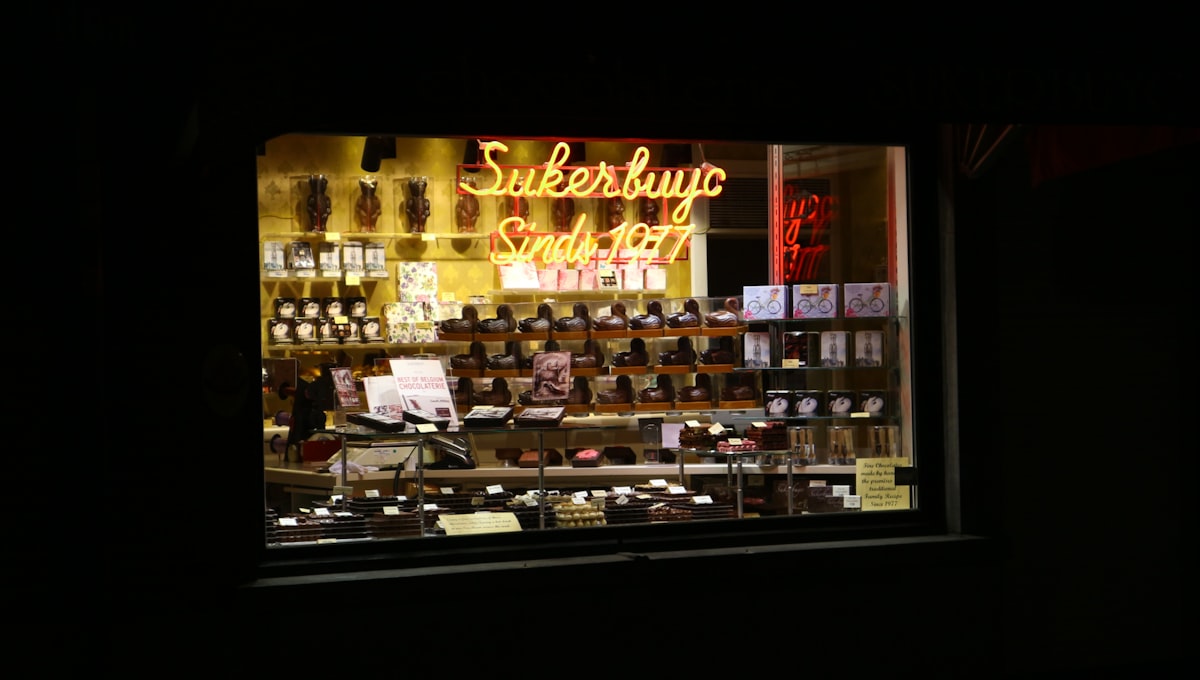
Bruges produces some of the finest artisan chocolate in Belgium. The concentration of praliniers in the centre is genuinely staggering — on some streets you encounter three or four in 200 metres. The quality variation is significant. The tourist traps (large shops with glossy packaging near the Markt) are fine but generic. The worthwhile stops: The Chocolate Line (flavour innovation, unusual infusions), Dumon (traditional technique, excellent ganaches), and De Kok (small operation, made daily). Allow 30 minutes and €10–20 per shop.
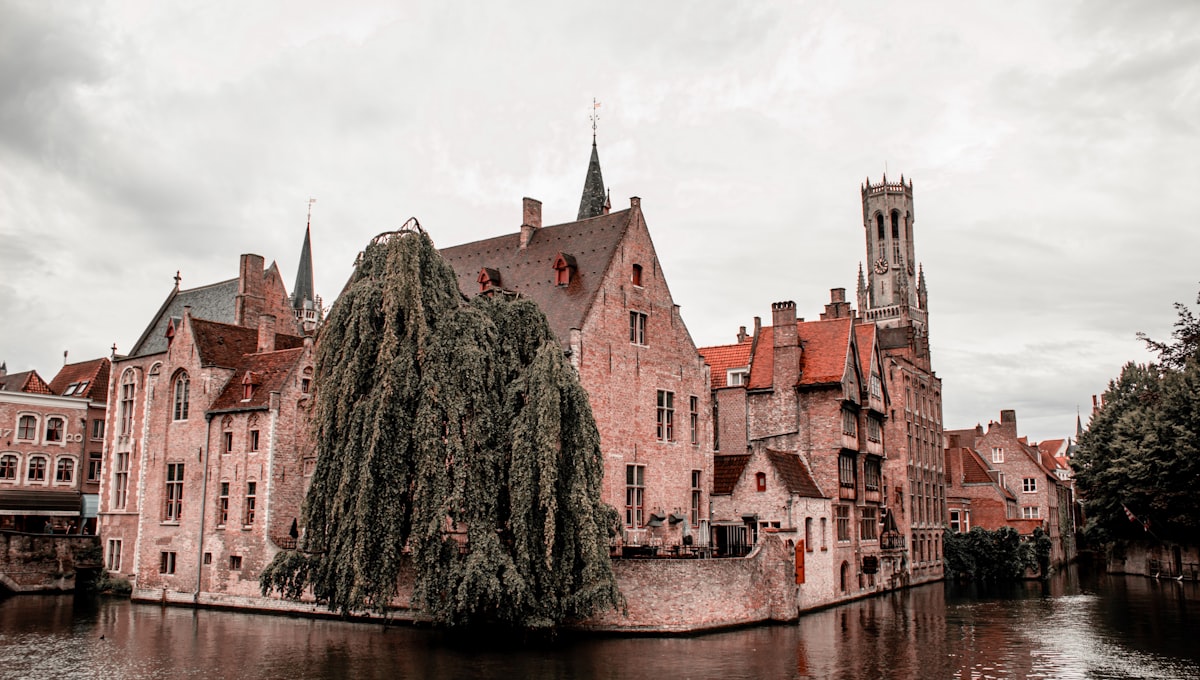
The canal boat tours (Bootjes, operated by several competing companies from near the Rozenhoedkaai) last 30 minutes and cost €10. The boats are small and low-slung — the city's bridges are engineered for canal clearance from a medieval era — and the perspective from the water makes the architecture make sense. Worth doing once. Book a morning slot to avoid long waits in peak season.
Beyond the city, the medieval battlefield of Kortrijk (30 minutes by train) and the coastal town of Ostend (15 minutes) make easy day extensions if you have an extra afternoon. Ostend in shoulder season — seafood, North Sea light, and a relative lack of visitors — is quietly excellent.
Practical Notes
Bruges is 35,000 people and its historic centre is extremely compact. You do not need a car and should not bring one — the centre is mostly pedestrianised or cobblestoned. Walking is the only sensible mode.
Accommodation: stay in the centre if budget allows — the experience of being in the medieval core after the day-trippers have returned to Brussels is significantly different from staying outside it. A clean hotel room in the centre runs €100–160/night on weekends. Weekdays are consistently €30–50 cheaper.
The city is extremely busy from April to September and on Belgian public holidays. An October or March visit offers better prices, better light for photographs, and fewer queues at the Belfry. The Christmas market in December is atmospheric but prices surge accordingly.
Restaurant and Bar Recommendations
Beyond Den Dyver, Bruges has a deeper food scene than its tourist-market reputation suggests. The concentration of waffles-and-frites stalls near the Markt is genuine tourist territory — step one street back and the quality improves substantially.
De Karmeliet (Langestraat) has held three Michelin stars for years and is among the finest formal dining experiences in Flanders — book weeks ahead. For a more accessible splurge, Heer Halewijn on the Walplein serves beautifully executed modern Belgian cuisine at around €55–75 per person for a full meal, with an excellent natural wine list.
Bistro de Schaar (Hooistraat) is the reliable neighbourhood option that locals actually use — carbonnade flamande that has been slow-cooked correctly, mussels from the Zeeland boats, and a beer list that extends well beyond the tourist standards. Budget €30–40 per person.
For lunch, De Proeverie is a teahouse attached to a chocolate shop (The Chocolate Line) that serves open sandwiches, soup, and pastries in a room that feels genuinely Flemish rather than staged. The adjacent chocolate counter is also the best place in the city for unusual infusions.
Bar Highlights
The beer bar situation in Bruges is better than in most Belgian cities, despite its tourist volume. 't Brugs Beertje (Kemelstraat) is a legend among Belgian beer enthusiasts — over 300 labels, including many rare lambics and aged gueuzes that you will not find elsewhere. The staff know the list and are happy to guide. Expect to pay €4–7 per glass for the interesting bottles.
De Garre is harder to find — the entrance is through an unmarked alley off the Breidelstraat — but worth the search. Its house beer (De Garre Tripel, 11.5%) is served in the traditional Bruges coupe glass with a cheese cube and is one of the defining beer experiences of the city. The room is narrow, medieval, and always full by 7pm.
Duvelorium Grand Beer Café on the Markt is the tourist-facing option operated by Duvel Moortgat — more commercial than the above two, but the range is genuinely good and the location is unbeatable for people-watching.

Chocolate Shops: Where to Actually Shop
The three-tier system of Bruges chocolate is worth understanding before you spend money:
Tourist-trap tier (large shops near the Markt, glossy packaging, high throughput): Leonidas and similar large-format shops produce decent product but nothing that couldn't be bought in a Brussels airport.
Mid-range artisan tier: Dumon (Eiermarkt) is the benchmark for traditional pralines done correctly — their marzipan-based and ganache fillings are made fresh daily, and the shop is small enough that you are buying from people who actually make the chocolate. Spegelaere on the Katelijnestraat is another solid option in this tier.
Top-tier innovation: The Chocolate Line (Simon Stevinplein) is the most famous and most photographed chocolate shop in Bruges, run by Dominique Persoone — a chocolatier who has made truffles for the Rolling Stones and fills bonbons with blue cheese, olive oil, or wasabi. Some flavours are genuinely extraordinary; others are curious experiments. Buy a mixed selection box (€2.50–4 per piece) and taste before committing to a large purchase.
De Kok (Mariastraat) is the smallest and least-visited of the serious operations — a single-room shop where the proprietor makes everything visible from the counter. Worth seeking out for unpretentious quality.
Allow €15–30 per person across two or three serious shops for a meaningful tasting experience.
Beer Culture: What to Know
Belgian beer is categorised differently from almost any other beer tradition in the world. Understanding the basic families improves the experience significantly:
Trappist ales (brewed by or under supervision of Trappist monks) include the famous Westvleteren XII (the world's most-rated beer, virtually impossible to buy in shops — the brewery near Bruges occasionally opens its gatehouse to visitors). Chimay, Orval, Rochefort, and Westmalle are more accessible and range from blonde to dark quad-style.
Belgian Strong Ales (Duvel being the archetype) are golden, deceptively strong (8–9%), and effervescent — very easy to drink too many of.
Lambics and Gueuze are spontaneously fermented beers using wild yeast from the Zenne valley near Brussels — sour, complex, and an acquired taste that rewards patience. Cantillon is the benchmark producer; try their kriek (cherry lambic) if you encounter it.
Bruges-specific: Brugse Zot (blonde, 6%) from De Halve Maan is the obvious local choice. Straffe Hendrik (9%) from the same brewery is richer and more interesting. Both are available on draught throughout the city.
Day Trip to Ghent: The Case For and Against
Ghent is 30 minutes by direct IC train from Bruges Centraal (every 30 minutes, €7 each way). It is a larger city (260,000 people versus Bruges's 35,000) with a functioning university, a more diverse food scene, and a different relationship with its tourism — Ghent is a working city that also happens to have spectacular medieval architecture, whereas Bruges is a medieval city that now functions partly as a museum.
The Ghent Altarpiece (The Adoration of the Mystic Lamb by Jan van Eyck, 1432) in St. Bavo's Cathedral is arguably the most important early Flemish painting in existence and was recently restored to exceptional condition. The Graslei and Korenlei canal quays rival Bruges visually, and the street art in the Patershol neighbourhood is excellent.
The case against: if you only have two days in Bruges, the city itself justifies the full time. Ghent as a day trip works best with three nights in Bruges — use the morning of day 3 (most accommodation is cheaper Sunday night than Saturday) to catch the Ghent Altarpiece and return to Bruges for a final evening.
Transport Tips
Train from Brussels: Brussels Midi/Zuid to Bruges Centraal runs every 30 minutes (IC direct, 55–60 minutes, €7–10). Brussels Airport (Zaventem) to Bruges requires changing at Brussels Centraal or Gent Sint-Pieters (total journey: 1h15–1h30, €12–16). Do not take the slow Sprinter service — check the board for the IC (InterCity) or ICE designations.
Car: Do not drive into central Bruges. The historic centre has extremely limited and expensive parking (€20–35/day in the centre), and the cobblestone streets mean the driving experience is poor. Park at the P+R facilities on the outskirts (P+R Katelijne, P+R Bruges Station) at €3–4/day and take the free shuttle or walk.
Cycling: Bruges is extremely flat and cycle paths are comprehensive. Bike rental is available at the train station and several points in the centre (€12–16/day). Cycling the canal ring around the city (the Ringvaart) is an excellent 2-hour loop that puts the city's layout in perspective.
From the UK direct: There is no direct Eurostar to Bruges — the Brussels-Bruges train leg is necessary. Eurostar Advance tickets to Brussels from London St Pancras start around £35 one-way if booked 6–8 weeks ahead; return fares of £80–£120 are achievable with reasonable lead time. The total Eurostar + Belgian rail cost for a Bruges weekend from London is typically £100–£160 return per person including both legs.
 3 Days in Marrakech: Riads, Souks, and the Atlas Mountains