
Istanbul on a Budget: Where Locals Eat, Shop, and Stay
April 30, 2026
Istanbul is one of the most visited cities in the world, and the tourist industry knows it. The moment you step out of the airport, there are forces conspiring to separate you from your money — overpriced taxis, menus without prices, carpet shops with friendly strangers who just happen to speak your language. But underneath all of that, Istanbul is an extraordinarily affordable city if you know where to look. Locals eat well for $5, sleep for $20, and commute across a continent for the price of a coin. This guide shows you how to do the same.
Where Locals Actually Eat
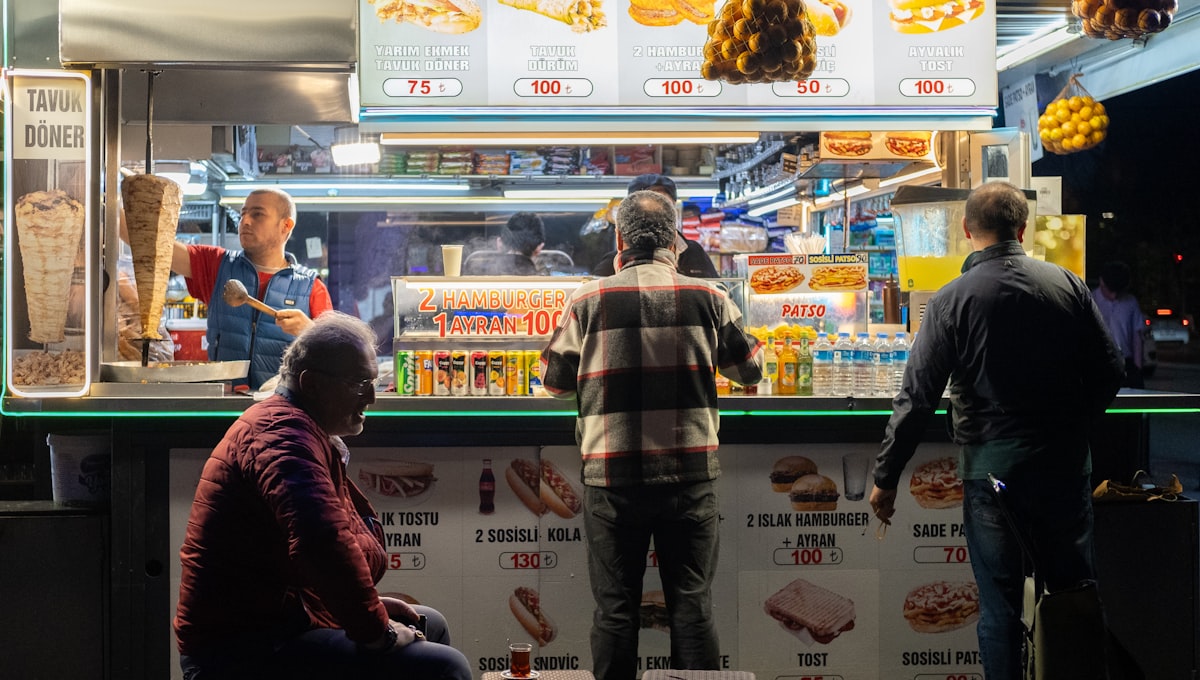
The best food in Istanbul is sold out of tiny counters, street carts, and family-run lokanta spots that don't have TripAdvisor pages. Your first lesson: if the menu has photos and is printed in four languages, you're already paying a 50% tourist surcharge.
Start your mornings with a simit — the sesame-crusted ring bread that vendors hawk from red carts on every major street corner. It costs about 10-15 lira (under $0.50) and keeps you full for hours. Pair it with a glass of cay (tea) from a tea house and you've had an authentic Istanbul breakfast for pocket change.
For lunch, seek out pide and lahmacun. Pide is the Turkish flatbread topped with cheese, minced meat, or egg — baked in a wood-fired oven and served piping hot. A full pide runs 80-150 lira ($3-5). Lahmacun is thinner, crispier, topped with spiced minced lamb, and eaten rolled around fresh parsley and a squeeze of lemon. You'll find it for 25-40 lira at local spots in Fatih or Kadikoy.
One meal you absolutely cannot skip: balik ekmek at Eminonu. These grilled fish sandwiches are made on rocking boats moored right at the Galata Bridge — whole mackerel grilled to order, stuffed into crusty bread with onions and salad. It's around 100 lira ($3-4) and one of the great street food experiences anywhere in the world.
For a sit-down budget meal, look for a lokanta — a steam-tray cafeteria where you point at dishes behind glass: lentil soup, stuffed peppers, lamb stew, bulgur pilaf. A full plate with soup runs $3-6.
End with borek (flaky pastry stuffed with cheese or spinach from a bufe) or kunefe if you find it fresh — shredded wheat pastry soaked in syrup with melted cheese, best in Fatih's Syrian sweet shops. Dessert for $2.
Realistic food budget: $10-15/day eating like a local. $20-25/day if you're mixing in sit-down meals.
Affordable Neighborhoods to Stay
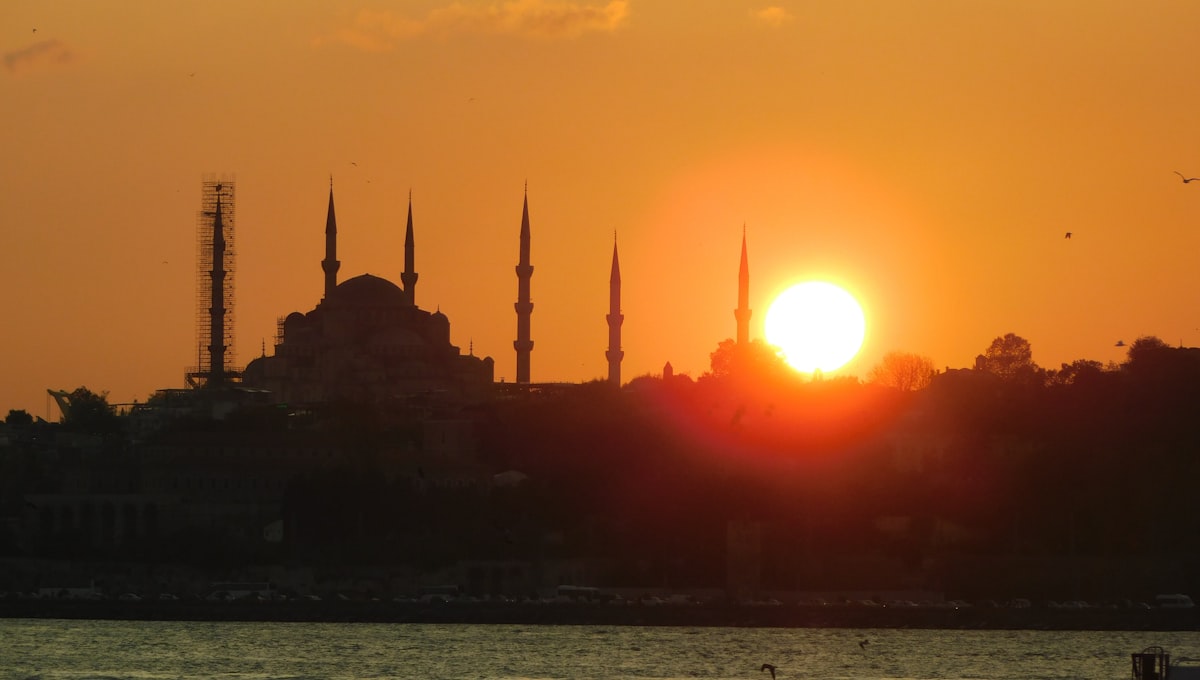
Where you sleep determines how much you spend on food, transport, and whether you get ripped off on anything. Avoid booking hotels right in the Sultanahmet tourist core unless you specifically want the Blue Mosque as your window view — you're paying a 2x premium for it.
Kadikoy (Asian side) is the best-value base in the city. It's a real neighborhood — fishmongers, produce markets, independent coffee shops, a thriving bar scene on Moda Caddesi, and zero tour groups. Hostels run $15-25/night, guesthouses and small hotels $35-60. The ferry to the European side takes 25 minutes and costs 15 lira.
Beyoglu and Cihangir (European side, north of the Golden Horn) are hip, slightly bohemian neighborhoods built on steep hills. This is where younger Istanbullus live, work in galleries, and drink wine in tiny rooftop bars. Prices are moderate — guesthouses $35-60, boutique hotels $60-90.
Fatih is the most traditionally Ottoman neighborhood — mosques, covered markets, conservative in character, and extremely cheap. You'll find budget hotels for $25-40 and some of the best lahmacun and soup kitchens in the city.
Realistic accommodation budget: $15-25/night in a hostel dorm, $40-80 for a private double in a good guesthouse outside the tourist core.
Free and Cheap Things to Do
Istanbul's greatest attractions are either free or cost almost nothing. The city itself is the spectacle.
Suleymaniye Mosque is arguably more beautiful than the Blue Mosque — Sinan's 16th-century masterpiece sits on a hilltop above the Golden Horn with views that reach to the Asian shore. It's free, less crowded, and more serene than Sultanahmet. Come outside of prayer times and spend an hour inside.
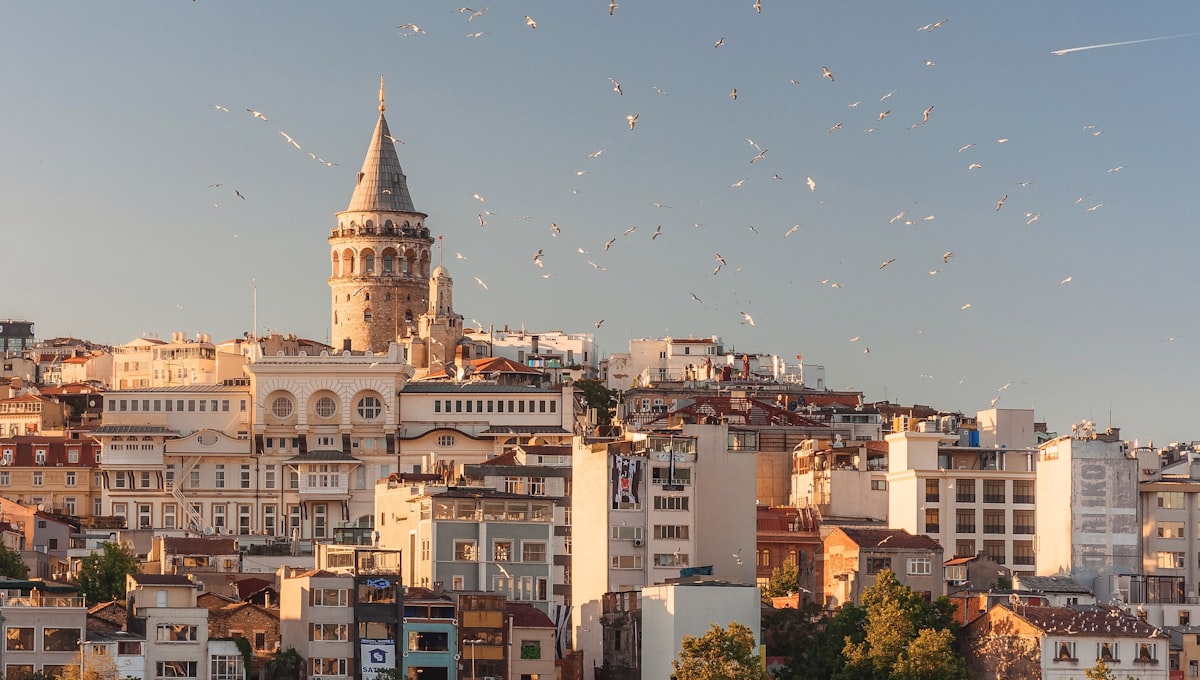
Walk the Galata Bridge at dusk. Fishermen line both railings with their rods and the lower deck fills with lokanta restaurants. Cross it, climb up to the Galata Tower neighborhood and wander the backstreets toward Karakoy.
The Spice Bazaar (Misir Carsisi) in Eminonu is free to enter and endlessly entertaining — towers of dried fruit, saffron, spices, Turkish delight, and the smell of everything blended together.
Take a Bosphorus ferry. The city ferries run scheduled public routes across the strait for the price of a transit token — about 15-20 lira. The tourist Bosphorus cruise boats charge $20-30 for essentially the same views. Take the public commuter ferry to Uskudar or Kadikoy instead and save your money.
The Asian side neighborhoods of Kadikoy and Moda are free to walk, and the Moda coastline promenade on a Sunday morning — locals running, kids on bikes, tea sellers, old men playing backgammon — is one of the most pleasant urban scenes in Europe.
Getting Around for Less
Get an Istanbulkart the moment you arrive. This rechargeable transit card works on the metro, trams, buses, and ferries. A single ride costs 15-20 lira (under $0.60) with the card, versus 40+ lira for a paper ticket.
The tram line T1 (Kabatas to Bagcilar) is one of the most useful routes — it runs along the Golden Horn, through Sultanahmet past the Hagia Sophia and Grand Bazaar, across the Galata Bridge, and up through Beyoglu. With your Istanbulkart, this entire journey costs one fare.
Ferries are your friend. Istanbul has dozens of ferry routes and they are uniformly cheap, scenic, and run on time.
Avoid taxis where possible, especially from airports or tourist areas. Use the metro from Sabiha Gokcen (SAW) airport, and use IETT buses or the metro from Istanbul Airport (IST).
Avoiding Tourist Traps
Istanbul is a magnificent city and the overwhelming majority of its residents are hospitable and honest. But in the concentrated tourist zones, there are well-established scams worth knowing about before you arrive.
The restaurant menu switch: in Sultanahmet, some restaurants have two menus — one shown outside with prices, and one brought to the table. Always confirm prices before ordering anything not on the printed menu.
The Grand Bazaar carpet invitation: a friendly stranger strikes up a conversation, offers you tea, and guides you to his cousin's carpet shop. The tea is free. The social obligation to politely consider a $3,000 carpet is the product.
The shoe shine drop: a shoe shiner "accidentally" drops his brush as you pass. When you pick it up and hand it back, he insists on shining your shoes as thanks, then demands payment.
Balat and Besiktas: Two Neighborhoods Worth Knowing
Most itineraries skip Balat entirely, which means you get it to yourself. This is the old Jewish and Greek quarter on the European shore of the Golden Horn — a steep hillside of crumbling 19th-century wooden houses painted in faded pinks, yellows, and blues. The neighborhood has attracted a small wave of cafes and antique shops without yet tipping into tourist overload. Walk from the Fener Greek Orthodox Patriarchate down through the narrow lanes toward the waterfront. Balat's Sunday flea market spills across several streets with old books, vinyl records, Soviet kitchenware, and Ottoman lamp parts for a few lira. Budget $8-12 for a proper breakfast at one of the corner cafes.
Besiktas sits on the Bosphorus shore between Kabatas and Ortakoy and is the closest thing Istanbul has to a normal, functioning European city neighborhood without the tourist overlay. The morning fish market off the main square is one of the best in the city — mounds of fresh hamsi (anchovies), lufer (bluefish), and palamut (Atlantic bonito) arranged by the fishermen themselves. The square fills with street vendors selling simits, corn, and roasted chestnuts by afternoon. At night, the side streets around Sinanpasa Mosque have a dense concentration of meyhanes (traditional Turkish taverns) where local office workers eat meze and drink raki — the national anise spirit that goes cloudy white when you add water. A full meyhane dinner with raki runs $15-25.
Istanbul Street Food: A Practical Guide
Beyond simit and balik ekmek, Istanbul has a street food culture deep enough to structure several days around.
Midye dolma — stuffed mussels. Vendors push carts along the waterfront at Besiktas, Eminonu, and Kadikoy with trays of mussels filled with spiced rice. You pick them up one at a time, squeeze lemon over each one, eat it from the shell, and pay per mussel — about 5-8 lira each. A snack of ten mussels costs under $3. Eat them where vendors are selling fast and the turnover is high; avoid any mussel that smells off.
Kumpir in Ortakoy. The Ottoman-era neighbourhood of Ortakoy has a pedestrian square famous for one thing: kumpir, the Turkish stuffed baked potato. Vendors load enormous potatoes with butter, kasar cheese, and a build-your-own selection of toppings — corn, pickles, olives, russian salad, sausage — for 80-120 lira ($2.50-4). It's a short walk from the baroque Ortakoy mosque right on the Bosphorus.
Kokore — grilled offal wrapped in intestine, cooked on a rotating spit. This is a late-night street food eaten by Istanbullus after bars close. The texture is crisp, smoky, and rich. It costs about 40-60 lira a portion and will not appeal to everyone; it absolutely will appeal to some. Find it around Taksim or Besiktas after midnight.
Borek from a pastane (pastry shop). Pastane culture is serious in Istanbul. A su boregi (water pastry with feta and dill) or kiyma borek (minced meat) from a good pastane runs 30-50 lira and is best eaten warm at the counter with a glass of ayran.
Hammam Recommendations
A hammam visit is worth fitting in — but the price range is extreme and depends almost entirely on which hammam you choose. The grand tourist hammams in Sultanahmet (Cemberlitas, Ayasofya Hurrem Sultan) charge €50-80 for the basic package. They're beautiful historic buildings and perfectly competent hammams. They're also full of tourists and the service can feel rushed.
For a fraction of that price and a more genuine experience, the neighborhood hammams in Fatih, Balat, or Kadikoy charge 150-250 lira ($5-8) for a basic session with kese (exfoliation mitt scrub) included. Kadi Hammam in Kadikoy and Tarihi Gedikpasa in Beyazit are two reliable options — both functional, historic, and used by local residents rather than tourists. The experience is quieter and you won't be upsold a full body massage at every turn. Tip the attendant separately — 50-100 lira is appropriate.
The important practical note: most hammams are gender-separated, or have men's and women's sessions at different times. Confirm the schedule before you go, particularly at smaller neighborhood hammams.
Day Trip to the Princes' Islands
The Princes' Islands (Adalar) sit in the Sea of Marmara about 20 km southeast of the city, and they are one of the most pleasant half-day escapes from Istanbul. The islands were historically used as a place of exile for Byzantine royals and later became summer retreats for Istanbul's Greek, Armenian, and Jewish communities. The result is a collection of late 19th-century wooden mansions on pine-covered hillsides, entirely free of motor vehicles — on the islands, you walk, cycle, or take a horse-drawn phaeton carriage.
The four main islands are Buyukada (the largest and most visited), Heybeliada, Burgazada, and Kinaliada. Buyukada has the most to see: rent a bicycle from one of the shops at the ferry pier ($5-8 for half a day) and pedal to the hilltop Greek Orthodox monastery of Aya Yorgi, which has views across the sea to the Istanbul skyline on clear days. Heybeliada is quieter and more residential, with the ornate wooden buildings of the old Turkish Naval Academy along the waterfront.
Ferry service runs from Kabatas and Eminonu on the European side and from Bostanci on the Asian side. The journey takes 75-90 minutes from Kabatas, costs one Istanbulkart fare, and the ferries are comfortable enough to eat and drink on board. Go on a weekday to avoid weekend crowds from the city. A full day trip including bicycle rental, a fish lunch at one of the island restaurants, and the ferry both ways costs around $25-30.
When to Visit for Cheap Flights
Istanbul is genuinely good value year-round once you're there, but flight prices vary significantly by season. The cheapest windows are April-May (the city is at its most beautiful — tulip season in late April is legitimately spectacular) and September-October (summer crowds thin out, the heat breaks, and flights drop in price).
One thing most travelers don't know: the price you see for a flight to Istanbul depends heavily on which country's booking site you're searching from. The same flight on Skyscanner can show up 15-25% cheaper on a different regional version of the site. Airlines set different fares for different markets, and RegionFare searches all 97 of them simultaneously — so you see the cheapest fare across every market, not just the one from your home country.
The Bottom Line
Istanbul rewards the traveler who is willing to step slightly off the tourist map. The simit carts, the ferry terminals, the neighborhood lokantas and tea houses — this is where the city actually lives. Budget travelers who stay in Kadikoy or Beyoglu, eat from steam trays and street vendors, and ride the Istanbulkart everywhere can live extremely well for $40-60 a day all-in, including accommodation. That figure goes up only if you let it.
The hardest part is getting there cheap. Use RegionFare to compare flight prices across 97 markets and make sure you're not paying the most expensive version of your ticket before the trip even begins.
 Best Time to Visit Japan: Cherry Blossoms, Autumn, or Cheap Season?