
Best Credit Cards for International Flight Bookings: FX Fees, Points, and Protections
May 10, 2026
The cheapest flight fare and the right credit card are both part of the same optimisation problem. A 3% booking in local currency fee on a £800 flight costs £24. Booking the same flight on a card with no FX fee costs nothing extra, and if that card also earns 1.5 points per pound on travel spend, the difference compounds over time. This guide covers the key factors to consider and which card types tend to win.
The Three Variables That Matter
When evaluating a credit card for travel bookings, three factors dominate everything else:
1. Foreign transaction fees. The UK average credit card charges 2.75–3% on any transaction in a foreign currency. For a frequent traveller booking international flights several times a year, this adds up quickly. Premium travel cards, challenger bank cards, and most US travel cards waive this fee entirely.
2. Points or how frequent flyer miles work earn rate. Travel-branded cards typically earn accelerated points on flight and hotel bookings. The value of those points varies enormously by programme — a British Airways Avios earned on the BA Amex is worth more in premium cabin redemptions than in cash-back, but the earn structure and fees need to justify the spend.
3. Built-in travel insurance. This is the most undervalued feature of travel credit cards. Section 75 protection under UK consumer credit law already covers purchases over £100 made on any UK credit card — if an airline collapses, you can claim the cost back from your card provider. But premium travel cards go further: trip cancellation insurance, travel delay compensation, medical coverage, and sometimes missed departure protection.

No-Fee FX Cards: The Foundation
Every traveller should own at least one card with no foreign transaction fee, even if it doesn't offer rewards. These are your functional baseline.
In the UK, the Chase UK current account debit card waives all FX fees and ATM fees internationally (up to a monthly limit). It earns 1% cashback on spending for the first year. It's not technically a credit card — it's a debit card with prepaid credit functionality — but it solves the FX problem comprehensively.
Starling Bank and Monzo both offer current account cards with no FX fees on spending. These are ideal for in-destination spending and smaller overseas purchases, though they don't offer Section 75 protection on debit transactions.
For actual credit cards with no FX fees, Barclaycard Avios Plus waives foreign transaction fees while earning Avios. The annual fee (around £20/month) needs to be justified by Avios earning and the companion voucher benefit.
In the US, the landscape is even more favourable: most major travel credit cards — Chase Sapphire Preferred, Chase Sapphire Reserve, American Express Platinum, Capital One Venture X — have no foreign transaction fees as standard. US travellers booking international flights have a wide field of no-fee options.
Airline-Branded Cards: When They Make Sense
Airline credit cards (British Airways Amex, American Airlines AAdvantage, United MileagePlus, Delta SkyMiles Amex) offer accelerated earning in that airline's loyalty currency. They make sense when:
- You fly that airline often enough to reach meaningful tier status - The companion voucher or annual bonus miles offset the annual fee - The Avios or miles are redeemable for routes or cabin classes where they represent genuine value
The British Airways American Express (free tier, no annual fee) earns 1 Avios per £1 on everyday spending. Spend £12,000 in a year and receive a Companion Voucher — a two-for-one on a reward flight. For a couple who'd otherwise both pay full Avios rates on a premium cabin redemption, this can be worth hundreds of pounds annually.
The British Airways Amex Premium Plus adds a higher earn rate and a lower spend threshold for the Companion Voucher, but the fee is substantial. Calculate whether your actual spend unlocks the benefit before committing.
Points Transferability: The Most Important Long-Term Factor
Fixed airline miles are vulnerable: airline programmes change redemption charts, devalue Avios or miles, and add fuel surcharges that can make "free" flights surprisingly expensive. The safest long-term strategy is to accumulate transferable points currencies that can be moved to multiple airline programmes.
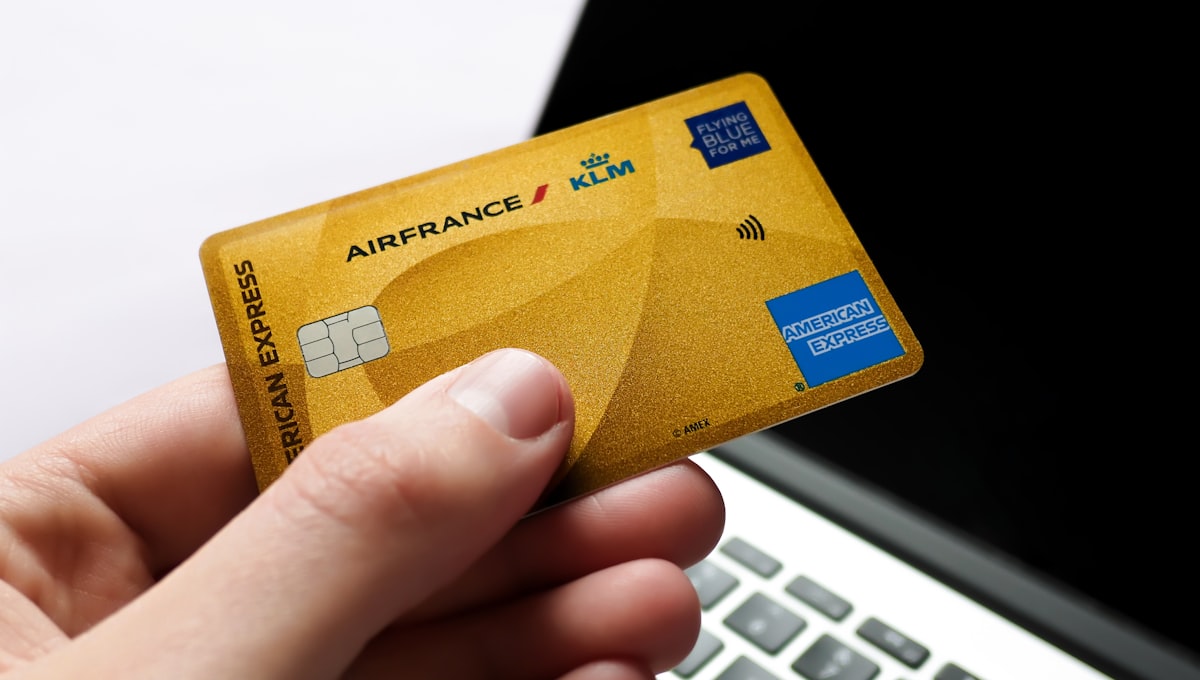
In the UK, American Express Membership Rewards points transfer to British Airways Avios, Aer Lingus, Air France/KLM Flying Blue, Singapore KrisFlyer, Emirates Skywards, and others. This flexibility preserves optionality if one programme devalues. The American Express Preferred Rewards Gold (free for the first year) earns MR points and awards 20,000 welcome bonus points after meeting a spend threshold.
In the US, Chase Ultimate Rewards (via Sapphire products) transfers to United, British Airways, Air France/KLM, Singapore, Hyatt, and others. Amex Membership Rewards transfers to Delta, British Airways, ANA, Singapore, and more. These transferable currencies are the foundation of sophisticated points strategies.
Travel Insurance as a Hidden Benefit
For travellers booking significant international trips, the travel insurance packaged with premium credit cards can represent substantial value. American Express Platinum (UK and US) includes comprehensive travel insurance: medical evacuation up to $1M, trip cancellation up to $10,000, lost luggage coverage, and travel accident insurance. The annual fee (£650 in the UK, $695 in the US) is high, but the insurance coverage alone can offset a significant portion for travellers who'd otherwise buy standalone policies.
More modest options exist: Barclays Travel Plus and various HSBC travel cards include basic travel insurance at lower annual fees. The key is to verify exactly what the coverage includes — specifically whether medical expenses, trip cancellation, and delayed departure are covered, and what the claim limits and excess amounts are.
What to Use for the Flight Booking Itself
The optimal setup for most UK travellers booking international flights is: 1. A no-FX-fee card with points earning for the flight purchase itself (Section 75 protection plus points) 2. A no-FX-fee debit card (Starling or Chase UK) for in-destination cash and small purchases 3. A travel insurance policy or premium card that covers trip cancellation and medical
For US travellers, Chase Sapphire Reserve is the most complete single-card solution: no FX fees, 3x points on travel and dining, excellent travel insurance package, Priority Pass lounge access, and a $300 annual travel credit that effectively reduces the net fee.
The Interaction with Flight Price Comparison
One final point worth making: the card you use interacts with where you find the fare. If you're using a cross-market fare comparison tool like RegionFare to find a flight booked through an international booking site (for example, a fare priced more cheaply in the German market), check whether your credit card will levy a foreign transaction fee on that booking. Many standard UK credit cards will — the booking may be in euros through a German site, triggering the FX fee. Using a no-FX card for such bookings is essential to capturing the full saving from cross-market price arbitrage.
The best travel credit card strategy is simple: never pay foreign transaction fees, earn points on every flight purchase, and ensure you have robust travel insurance coverage. The details of which specific card achieves this are secondary — the principles are what matter.
Specific Card Recommendations
Chase Sapphire Preferred (US)
The Chase Sapphire Preferred ($95 annual fee) is consistently one of the best entry-level travel cards for US travellers. It earns 3x Ultimate Rewards points on dining and 2x on all travel spending, with no foreign transaction fees. The sign-up bonus (typically 60,000–80,000 points after meeting a spend threshold in the first three months) is worth $750–$1,000 in travel when redeemed through Chase's travel portal, or potentially more when transferred to airline and hotel partners.
The key partners for flight redemptions: United MileagePlus, British Airways Avios, Air France/KLM Flying Blue, Singapore KrisFlyer, and Southwest Rapid Rewards. The BA Avios transfer is particularly useful for UK-bound US travellers booking short-haul Avios redemptions on American Airlines or Iberia.
What it doesn't offer: Priority Pass lounge access and the $300 travel credit are exclusive to the higher-tier Sapphire Reserve ($550 annual fee). The Reserve earns 3x on all travel (not just 2x) and includes comprehensive travel insurance that is among the strongest available on a consumer credit card.
American Express Gold Card (US and UK)
The Amex Gold earns 4x Membership Rewards points at US restaurants and US supermarkets (capped at $25,000 at supermarkets annually), 3x on flights booked directly with airlines or on amextravel.com, and 1x elsewhere. No foreign transaction fees.
The annual fee ($250 in the US) is partially offset by $120 in dining credits and $120 in Uber Cash annually. For travellers who spend heavily on dining and flights, the earning rate is among the best in the US market. Membership Rewards transfers to Delta SkyMiles, British Airways Avios, ANA Mileage Club, Singapore KrisFlyer, and Air France/KLM Flying Blue, among others.
UK version: The American Express Preferred Rewards Gold (free first year, then £195) earns MR points on all spending with bonus points on travel and foreign currency spend. The 20,000 welcome bonus points are equivalent to approximately £100 in travel or more in airline redemptions. This is the strongest entry-level travel card for UK Amex users.
Revolut: The FX Fee Specialist
Revolut is not technically a credit card — it's a prepaid e-money account — but it deserves mention for international travellers. The Revolut Standard account (free) offers fee-free foreign currency exchange up to £1,000 per month at interbank rates with no markup, and a physical card for spending abroad. The Revolut Premium (£7.99/month) and Metal (£13.99/month) tiers remove the monthly limit and add additional benefits including travel insurance.
The practical use case: when you find a flight priced 15% cheaper in a foreign market and need to pay in, say, Polish zloty or Israeli shekels without a foreign transaction fee, Revolut converts at the true interbank rate. This makes it the optimal card for cross-market flight purchases where you're deliberately booking through a non-home-country site.
Revolut's limitation: it offers no Section 75 protection (it's not a credit card), and the e-money protection is different from deposit guarantee schemes. For large purchases, pairing a Revolut payment with a credit card backup is wise.
Barclaycard Avios Plus (UK)
The Barclaycard Avios Plus (£20/month) earns 1.5 Avios per £1 on all spending and 3 Avios per £1 on British Airways flights booked direct. No foreign transaction fees. The headline benefit is a Companion Voucher earned each year after spending £10,000 — a two-for-one on Avios redemptions that is most valuable for premium cabin bookings where the redemption rate makes sense.
For UK travellers who fly BA or its Oneworld partners regularly, the maths work at sufficient spend volume. The companion voucher on a business class redemption to New York or Cape Town can represent £600–1,200 in value, more than justifying the annual fee.
FX Fee Comparison
For context, here's the practical cost of different card types on a £800 international flight:
Standard UK credit card (2.99% FX fee): £23.92 extra. Standard UK debit card (Visa/Mastercard, typically 2–3%): £16–24 extra. Revolut Standard (0% up to £1,000/month): £0 extra. Chase UK (0%): £0 extra. Starling/Monzo (0%): £0 extra. Any specialist travel credit card (0% FX): £0 extra.
On a single booking the difference feels minor. Across multiple bookings per year — four or five international flights — the saving from eliminating FX fees runs to £80–120 annually. That's real money, and it compounds with the value of any points earned on zero-FX cards.
Section 75 Protection: What It Actually Covers
Section 75 of the Consumer Credit Act 1974 applies to any UK credit card purchase between £100 and £30,000. It makes the card issuer jointly liable with the merchant if something goes wrong. For flight bookings, this means:
If the airline goes into administration and cancels your flight, you can claim the full cost from your credit card issuer rather than joining the queue of unsecured creditors. This applies even if you paid only the deposit on your credit card (as long as any portion of the transaction is on the card).
Section 75 applies only to credit cards, not debit cards, prepaid cards, or charge cards. It applies to the card issuer directly — American Express is both issuer and network, so Amex claims are straightforward. Visa and Mastercard-branded credit cards issued by UK banks (Barclays, HSBC, Nationwide, etc.) all carry Section 75 protection.
Practical implication: always pay at least part of any significant flight booking on a UK credit card, even if you plan to clear the balance immediately. The Section 75 protection is free insurance with no premium.

 Star Alliance vs Oneworld vs SkyTeam: Which Matters for Cheap Flights?