
Star Alliance vs Oneworld vs SkyTeam: Which Matters for Cheap Flights?
May 5, 2026
Star Alliance, Oneworld, and SkyTeam are the three global airline alliances that between them cover the majority of international scheduled aviation. Most frequent flyers know the names. Fewer people understand what the alliances actually do, why they were formed, and — most importantly from a practical standpoint — how they affect the price of your ticket. The short version: for award travel and status matching, alliances matter enormously. For finding the cheapest cash ticket on a given route, they matter much less than you'd think.
What Are Airline Alliances?
Alliances are commercial agreements between airlines that allow them to coordinate schedules, share passenger traffic, operate joint ventures on specific routes, and offer reciprocal benefits to frequent flyers. The three main alliances:
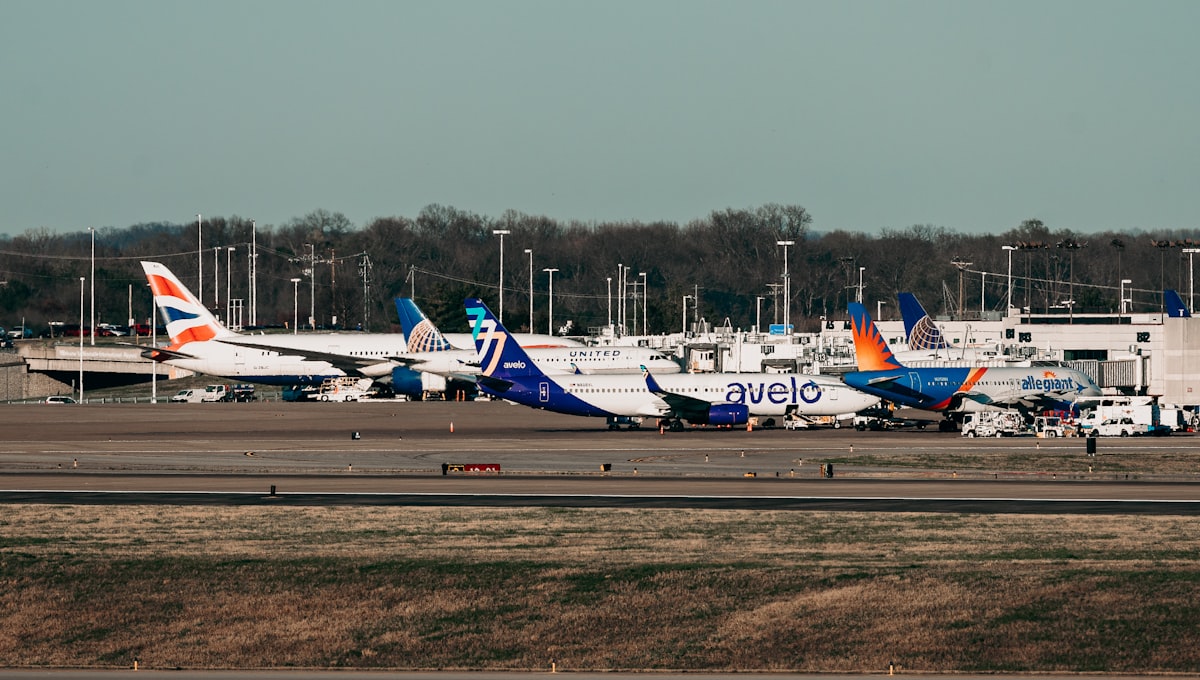
Star Alliance (founded 1997) is the largest, with 26 member airlines including Lufthansa (LH), United Airlines (UA), Air Canada (AC), Singapore Airlines (SQ), Thai Airways (TG), ANA (NH), Turkish Airlines (TK), and Swiss (LX).
Oneworld (founded 1999) has 13 members including British Airways (BA), American Airlines (AA), Cathay Pacific (CX), Qatar Airways (QR), Japan Airlines (JL), Qantas (QF), and Iberia (IB).
SkyTeam (founded 2000) has 19 members including Delta Air Lines (DL), Air France (AF), KLM (KL), Korean Air (KE), China Eastern (MU), Aeromexico (AM), and Garuda Indonesia (GA).

Where Alliances Create Real Value: Frequent Flyer Programs
The primary value of alliances for travelers is frequent flyer reciprocity. If you hold Gold status on Lufthansa how frequent flyer miles work & More, you can access Star Alliance Gold benefits — business class lounge access, priority boarding, extra baggage allowance — when flying any of the 26 member airlines. A Oneworld Sapphire card (BA Gold, AA Gold, or any Oneworld equivalent) unlocks lounge access across all 13 member airlines globally.
This matters most for travelers who: - Fly frequently enough to accumulate status on one airline but travel on multiple carriers - Need airport lounge access access during long connections (a Star Alliance Gold card can get you into the United Club in Chicago, the Lufthansa Senator Lounge in Frankfurt, and the ANA lounge in Tokyo — all with the same card) - Want to pool miles across carriers for award redemptions
Alliance award redemptions are where the real savings potential exists. British Airways Avios can be spent on Cathay Pacific, Iberia, or Qatar Airways flights (all Oneworld) at rates that sometimes produce business class tickets at substantially below cash price. Delta SkyMiles spent on Air France flights. United MileagePlus miles spent on Singapore Airlines First Class (theoretically — in practice the availability is extremely limited but the redemption value when it appears is exceptional).
Where Alliances Don't Help: Finding the Cheapest Cash Fare
For cash ticket buyers looking for the lowest price on a given route, alliance membership is largely irrelevant. The factors that actually determine the cheapest cash fare are:
Route competition: how many airlines fly the route? The London–Amsterdam route has 4–5 carriers; the London–Almaty route has 1–2. Competition determines the price floor.
Carrier type: low-cost carriers (Ryanair, easyJet, Wizz) are not alliance members and exist outside the alliance structure entirely. They have consistently set the lowest price floor on intra-European routes for 25 years, regardless of what Star Alliance or SkyTeam members do.
Regional pricing: as covered elsewhere on RegionFare, the same alliance-member carrier prices its tickets differently across regional markets. A Lufthansa fare from London to Bangkok may be 20% cheaper when purchased through a non-UK market. Alliance membership doesn't change this — regional pricing is a separate mechanism.
The Joint Venture Layer
Within alliances, a subset of members operate "joint ventures" — deeper commercial agreements on specific routes where airlines actually coordinate pricing and revenue. The major joint ventures include:
BA/AA/Iberia/Finnair on North Atlantic routes. Lufthansa/United/Air Canada on North Atlantic routes. Delta/Air France-KLM/Virgin Atlantic on North Atlantic routes.
Joint ventures require antitrust immunity — government approval to coordinate pricing that would otherwise constitute anti-competitive behavior. They're controversial for exactly this reason: by coordinating, the partners remove competitive pressure on the routes they jointly operate. This can push cash prices higher on those routes versus what pure competition would produce.
The implication: on North Atlantic routes especially, the lowest prices often come from non-joint-venture carriers (Norse, JetBlue) or from alliance members operating routes not covered by joint venture agreements.
Which Alliance Should You Align With?
If you're choosing a primary airline loyalty program (and thus an alliance), the decision depends on your primary hub and travel pattern:
Heathrow-based travelers: Oneworld via British Airways is the natural default, with strong Avios earning potential and partner access to CX, QR, and JL.
Frankfurt/Munich-based travelers: Star Alliance via Lufthansa, with the Miles & More program and the broadest Star Alliance partner network.
US-based travelers: depends on hub airline. United (Star Alliance) dominates San Francisco and Houston; Delta (SkyTeam) dominates Atlanta and Seattle; American (Oneworld) dominates Dallas, Chicago, and Miami.
What Each Alliance Actually Offers
Beyond the headline membership numbers, the three alliances differ meaningfully in what they deliver day to day.
Star Alliance, with 26 members, is the largest and the most geographically comprehensive. Its lounge access rules are straightforward: Star Alliance Gold (earned through any member's top-tier status) gets you into partner lounges worldwide, including the Lufthansa Senator Lounge network, United Clubs, and the ANA lounges in Tokyo — which rank among the best in the world. Mileage earning is reciprocal across all partners: a United MileagePlus Gold earning miles on a Singapore Airlines flight earns at partner rates, which vary by fare class but are clearly published. The breadth of Star Alliance is its core advantage — on routes that touch Africa, Central Asia, or Latin America, Star Alliance members often have the only decent connecting options.
Oneworld has 14 members (the existing article cited 13 — Qatar Airways formally joined in 2013 bringing the current count to 14) but punches above its weight on premium routes. British Airways, Cathay Pacific, and Japan Airlines together cover the three most valuable premium cabin networks for point-to-point travelers: Europe, East Asia, and trans-Pacific. Oneworld Sapphire and Emerald status tiers unlock business and first-class lounge access across all 14 members, making Oneworld arguably the best alliance for premium travelers on fewer carriers. Avios pooling between BA, Iberia, and Aer Lingus (all Oneworld) gives UK travelers unusual flexibility in how they spend points.
SkyTeam's core strength is North Atlantic and Europe–Asia connectivity via Delta, KLM, and Air France. The Delta/Air France-KLM joint venture on transatlantic routes creates genuinely coordinated schedules — if you miss an Air France connection in Paris, Delta's reciprocal rebooking rights mean you're on the next available metal without the bureaucracy of an interline agreement. Korean Air and China Eastern give SkyTeam strong penetration into Northeast Asia routes where the other alliances are thinner.

When Alliances Save You Money
Alliance structures create specific scenarios where you can extract real cash savings — or equivalent value — that wouldn't exist without them.
Connecting flights on partner airlines are the most common case. If you book a Lufthansa long-haul ticket that connects via a United domestic segment, your bags are checked through, your frequent flyer number applies, and your status benefits travel with you. Without the alliance, that would require two separate bookings, two bag fees, and no status recognition on the domestic leg. The value isn't in a lower ticket price — it's in not paying extra for what feels like a seamless journey.
Round-the-world (RTW) tickets are where alliances produce their most distinctive product. Star Alliance RTW tickets price by distance or region — a classic three-continent itinerary can be purchased for a fixed amount (typically $3,000–$5,000 in economy) that would cost significantly more if assembled from individual tickets. Oneworld's Explorer and Global tickets work similarly, with Cathay Pacific and JAL handling the Pacific segments. The catch: RTW tickets require fixed travel in one direction and are usually non-refundable. They suit gap-year travelers and specific itinerary types, not most leisure travelers.
Stopover programs within alliance frameworks are an underused tool. Turkish Airlines Miles&Smiles, operating within Star Alliance, allows stopover itineraries through Istanbul on partner redemptions that can effectively add a two-night Istanbul stop to a long-haul journey for negligible additional miles cost. ANA's Round-the-World award, also via Star Alliance, has become one of the most written-about mileage redemptions because it allows an unusually generous routing rule for premium cabin seats across Star Alliance partners. These programs require learning the specific rules of one program deeply — they don't make sense for occasional travelers, but for dedicated points hobbyists they represent genuine value.
When Alliances Don't Matter
For a significant portion of air travel, alliance membership is simply irrelevant.
Budget carriers — Ryanair, easyJet, Wizz Air, Volotea, Transavia — are not members of any alliance and have no interest in joining one. The alliance model assumes customers who value reciprocal status, lounge access, and mileage programs. Budget carriers have explicitly chosen a different model: low fares, no frills, no loyalty reciprocity. On intra-European routes, this means the cheapest option is almost always outside the alliance ecosystem entirely. A Star Alliance Gold card does not help you when the best fare from London to Warsaw is on Ryanair. A Oneworld Sapphire card doesn't earn you a single mile on Wizz.
For point-to-point leisure travel — especially on short and medium-haul routes — price consistently beats alliance loyalty every time. If you fly London to Barcelona twice a year, Vueling (technically in the IAG group but operating more like a low-cost carrier) or Ryanair will almost certainly undercut any Oneworld-affiliated option. The math only flips when you're traveling frequently enough to use status benefits, or when you're redeeming accumulated points rather than paying cash.
Long-haul leisure travelers on a budget face a similar calculation. On London–Bangkok, the cheapest cash ticket is often Turkish Airlines or Malaysia Airlines — both alliance members, but you're not choosing them for alliance reasons. You're choosing them because the fare is £100 lower than the equivalent Cathay or Singapore flight. Alliance membership in this case is incidental, not the reason for purchase.
How to Actually Find the Cheapest Flight Regardless of Alliance
Alliance affiliation tells you where mileage programs work and where your lounge card gets swiped. It doesn't tell you where the cheapest ticket is priced today.
The most effective way to find the cheapest cash fare on any route is to check what the same itinerary costs across multiple regional booking markets simultaneously. An Air France ticket from London to Tokyo might cost £780 on the UK booking site and £690 on the French market version of the same booking system. That's the same SkyTeam carrier, the same flight, the same seat — priced differently because Air France files different fares by market.
Budget carriers add a further dimension: they exist entirely outside the alliance structure, so any tool that focuses only on alliance-member inventory will miss them entirely. A genuine cheapest-fare search has to cover both alliance carriers and non-alliance carriers across all markets.
RegionFare checks all carriers — alliance members and budget carriers alike — across 97 national markets simultaneously. The result shows not just the cheapest fare for a route, but which market prices it lowest. For frequent flyer optimizers, that might mean discovering that the Star Alliance carrier you wanted to book for the miles is also cheapest when purchased through a specific non-UK market. For pure price shoppers, it means seeing the actual floor regardless of whether that floor sits with Ryanair or Lufthansa.
Alliance loyalty is a long-term strategy worth building if you travel frequently enough to benefit. Finding the cheapest cash fare is a one-transaction problem that requires checking all the variables — carrier, route, and market — not just the ones your preferred alliance covers.
The Practical Summary
Alliances matter for: status recognition across partner airlines, lounge access when traveling on multiple carriers, award redemptions on partner metal, and ensuring smooth rebooking in irregular operations.
Alliances don't determine: the cheapest cash ticket on any given route. For that, you need to check actual prices across carriers (alliance members and non-members alike) across regional booking markets. A Star Alliance Gold card has no bearing on whether Ryanair or easyJet is cheapest for your next trip to Berlin. RegionFare's approach — checking all 97 regional markets regardless of alliance affiliation — applies the correct logic: price is what matters, and price varies by market, not by alliance badge.