
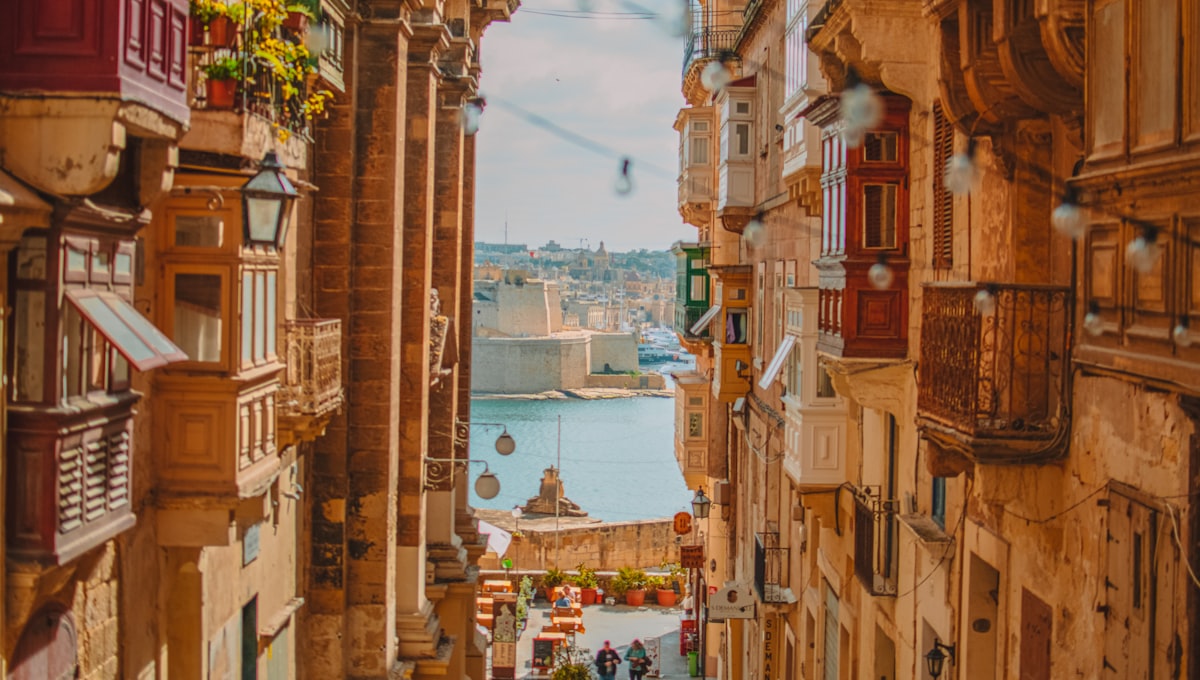
3 Days in Valletta: The Smallest Capital with the Biggest History
June 13, 2026
A Capital Built for Defense, Now Designed for Discovery
Valletta was purpose-built by the Knights of St. John after the Ottoman siege of 1565 and completed in 1571 — making it one of the earliest planned cities in Europe. Every street runs in a grid, every building serves a function, and the fortifications that surround the entire peninsula on three sides speak to an era when Malta was the last Christian redoubt in the central Mediterranean. Today, the same compact scale that made it defensible makes it extraordinary to explore on foot: the entire city covers less than 0.8 square kilometers, and every major monument is within a 15-minute walk of any other.
Malta flies largely under the radar for European travelers despite being one of the EU's most accessible countries — English is an official language, the climate is Mediterranean, and budget flights from London, Rome, and Frankfurt keep fares competitive. Ryanair fares from London Stansted to Malta International Airport regularly dip below £40 return, and easyJet covers similar ground from Gatwick and Luton.
Day One: The Knights' Heritage
Start at St. John's Co-Cathedral, the single most extraordinary interior in Malta. Built between 1573 and 1578, the cathedral's exterior gives almost no indication of what lies inside: an overwhelming baroque interior where every inch of the floor is covered in marble tombstones of Knights, the ceiling is covered in gold, and Caravaggio's most significant surviving masterpiece — The Beheading of Saint John the Baptist — hangs in the Oratory. Caravaggio lived in Malta briefly in 1607 (having fled Rome after a street fight turned fatal) and painted several works during his time here. The Beheading is the largest canvas he ever completed and the only work he signed — in the painted blood of John the Baptist. Entry costs €15 and includes the Oratory.
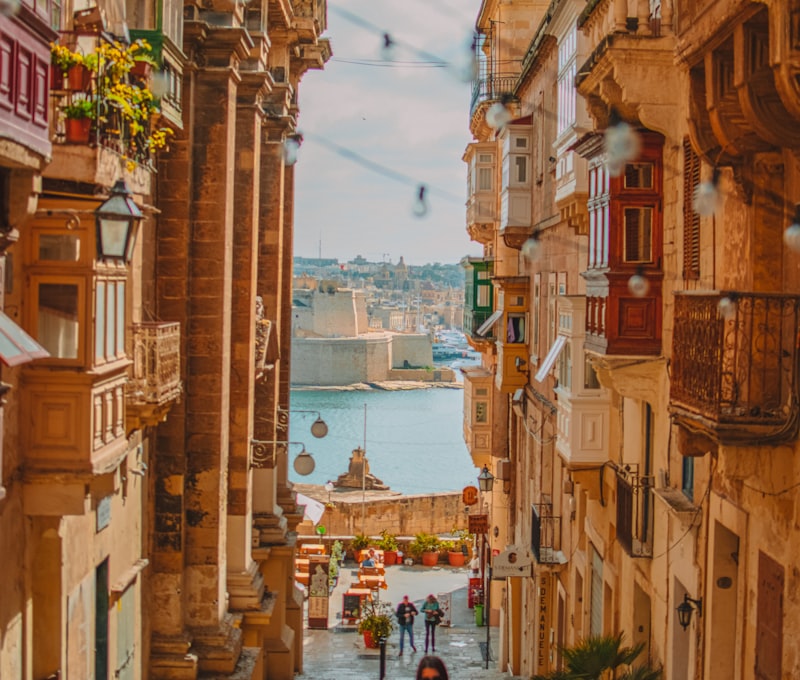
After the cathedral, walk along Republic Street — the main spine of Valletta — to the Grand Master's Palace. The Palace served as the seat of the Knights of St. John and later as the British Governor's residence during colonial rule. The State Rooms and the Armoury (one of the most complete collections of medieval and Renaissance arms in Europe) are open to the public. The Palace's inner courtyard, filled with orange trees and shaded arcades, is a serene contrast to the busy street outside.
Lunch at one of the restaurants along Merchant Street — parallel to Republic Street and slightly less touristic. Pastizzi (flaky pastry filled with ricotta or mushy peas) from the many kiosks cost €0.50–1.00 each and are the defining Maltese street food. A full lunch runs €15–25 per person at a sit-down restaurant.
In the afternoon, walk to the Upper Barrakka Gardens at the southwestern tip of the peninsula. The gardens sit on the old fortification walls and give the most celebrated view in Malta: the Three Cities (Vittoriosa, Cospicua, Senglea) across the Grand Harbour, with the water between them busy with luzzu fishing boats and the occasional superyacht. The Saluting Battery below the gardens fires a cannon at noon and at 4pm.
Day Two: The Three Cities and the Harbour
Take the Valletta Waterfront ferry across the Grand Harbour to the Three Cities — a cluster of three fortified medieval cities that predate Valletta itself. The ferry costs €1.50 and the crossing takes about 10 minutes; it's one of the most scenic short boat rides in the Mediterranean.
Vittoriosa (also called Birgu) is the most complete of the three. Walk its narrow alleyways — narrower than any street in Valletta — past the Inquisitor's Palace (the only surviving Inquisitor's residence open to the public anywhere in the world) and the Maritime Museum, which occupies the old Naval Bakery building and traces Malta's extraordinary seafaring history.
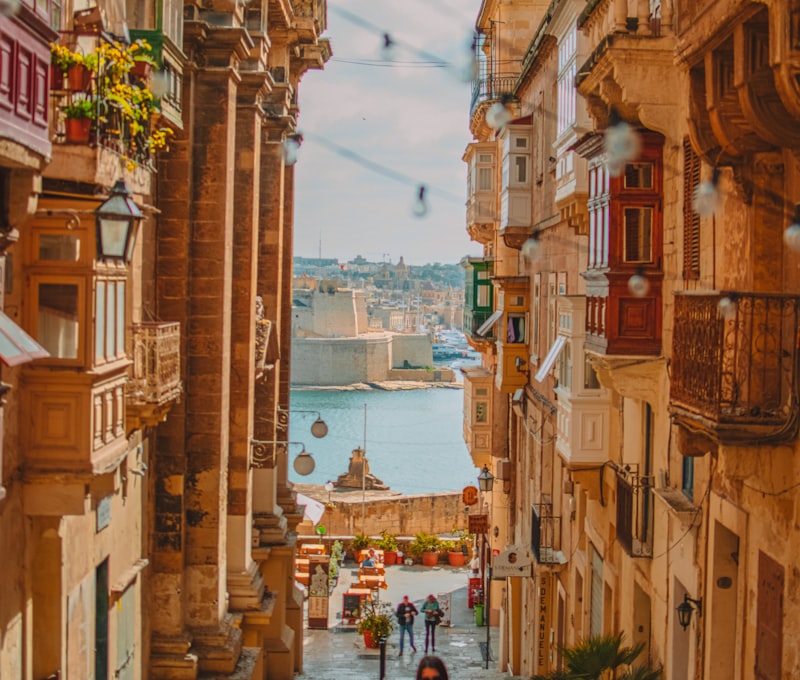
The Fort St. Angelo, at the tip of the Vittoriosa peninsula, was the Knights' headquarters and the base from which they withstood the Ottoman siege. The fortifications are vast and their restoration is ongoing, but the views from the battlements back across the harbour to Valletta's skyline — all honey-colored limestone in evening light — are among the finest in Malta.
Return to Valletta by late afternoon and walk to St. Elmo's Fort at the tip of the Valletta peninsula. The fort's war museum, focused on the Second World War when Malta endured one of the most sustained bombing campaigns in history, is surprisingly moving. Malta's George Cross — awarded collectively to the entire island by King George VI in 1942 — is displayed here. Malta was nearly starved into surrender during the siege, and the quiet details of the exhibit (the rationing ledgers, the bomb damage photographs, the testimony of survivors) make it the most affecting war museum experience in the central Mediterranean.
Day Three: Mdina and the Island Beyond
Day three calls for a trip out of Valletta into the Maltese interior. Mdina, the former capital (called the Silent City), sits on a hilltop in the center of the island and looks as it did in the 16th century — a walled medieval city of about 300 permanent residents, no cars, and stone streets that muffle even footsteps. The Cathedral of St. Paul dominates the center, and the views from the city walls over the Maltese countryside — which stretches, green in winter and gold in summer, all the way to the sea — are exceptional.
Combine Mdina with Rabat, the town immediately outside the city gates, which has the Catacombs of St. Paul and St. Agatha — early Christian burial chambers dating to the 3rd–5th centuries, carved directly into the limestone bedrock. Entry costs €5 for the main complex.
Bus travel in Malta is cheap (€2 for a two-hour pass) and connects Valletta to Mdina in about 45 minutes. Return to Valletta for dinner at one of the restaurants on Strait Street — once Malta's notorious red-light district for British sailors, now a string of restaurants and bars in narrow townhouses that open their shutters onto the alley in the evenings.
Practical Information
Valletta's peak tourist season runs April through October, with August the hottest (35°C+) and most expensive month. The best weather windows are April–May and October, when temperatures hover at 22–26°C and the sea is warm enough for swimming. December through February is mild by northern European standards (15–18°C) and quiet, with significantly lower accommodation prices — budget hotels run €50–80 per night compared to €90–150 in summer.
Getting around Valletta itself requires nothing but walking; the city is so compact that a taxi or bus would be absurd for any in-city journey. For day trips, the public bus network is comprehensive and cheap. The island is small enough that any point is reachable from Valletta in under an hour by bus.
Malta's food is an underexplored pleasure: a mix of Sicilian, North African, and Middle Eastern influences filtered through centuries of maritime trade. Rabbit (stuffed or stewed in wine), horse meat sausage, and fresh Mediterranean fish dominate traditional menus. Kinnie, a local bittersweet soft drink made from bitter oranges and aromatic herbs, is worth trying as a non-alcoholic introduction to Maltese flavor profiles.
 3 Days in Dubrovnik: Old Town, Islands, and the Best Sunset Spots
 3 Days in Marrakech: Riads, Souks, and the Atlas Mountains