
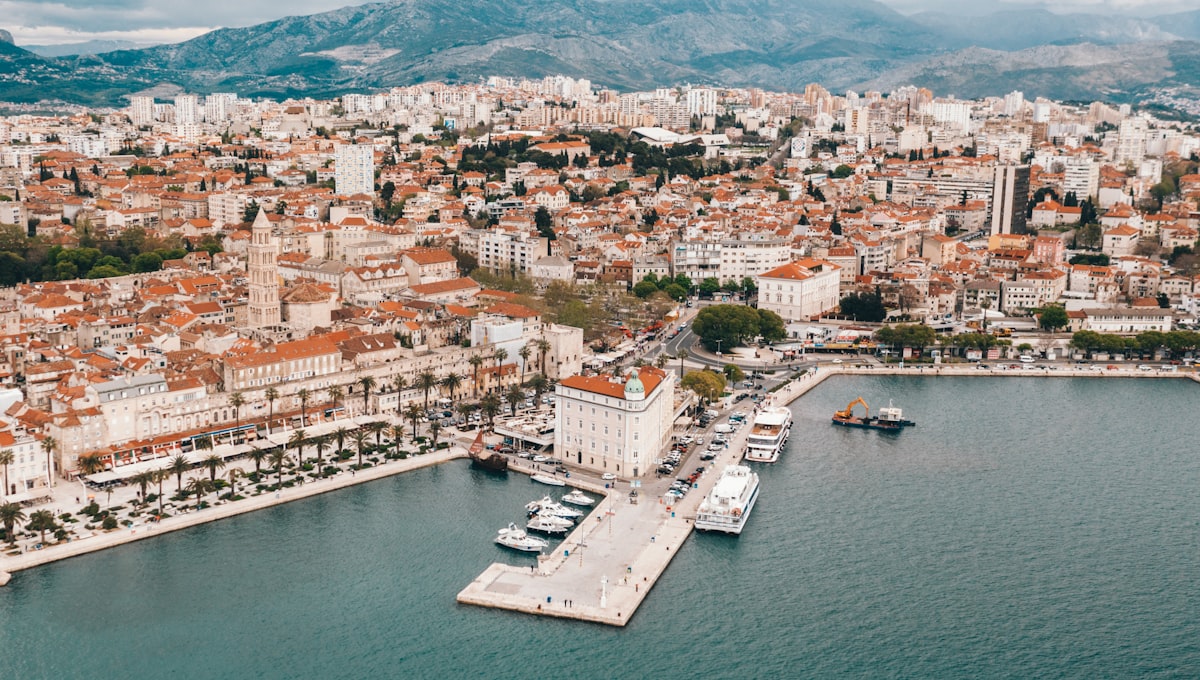
3 Days in Split: Diocletian's Palace and the Islands Beyond
May 31, 2026
Split is best time to visit Croatia's second city, but in summer it often feels like the country's most alive. The old town is built inside and around a fourth-century Roman palace — not near a palace, not adjacent to one, but literally inside it. People live in old emperor's apartments. Bars operate out of ancient vestibules. Cats sleep on Roman columns. It's the most casually extraordinary urban fabric in Europe, and it costs far less to visit than most comparable Mediterranean cities.
Three days is enough to see Split properly and squeeze in at least one island trip. Here's exactly how to spend them.
Getting to Split
Split Airport (SPU) is served by Ryanair, easyJet, Wizz Air, British Airways, and Croatia Airlines, among others. From London, return fares typically run £80–£160 depending on season and booking lead time. Peak summer (July–August) pushes prices higher and you'll want to book 3–4 months ahead to secure reasonable prices. May, June, and September are the sweet spots: warm enough for swimming, quiet enough to move around the old town without being swept along by tour groups, and cheap enough to feel like a genuine bargain.
From other European cities, low-cost carriers dominate the Split route. Frankfurt, Vienna, Warsaw, and Amsterdam all have direct summer connections. If you're travelling from Italy, the Jadrolinija overnight ferry from Ancona takes around ten hours and docks at Split's harbour — an experience in itself and a way to save a night's accommodation.
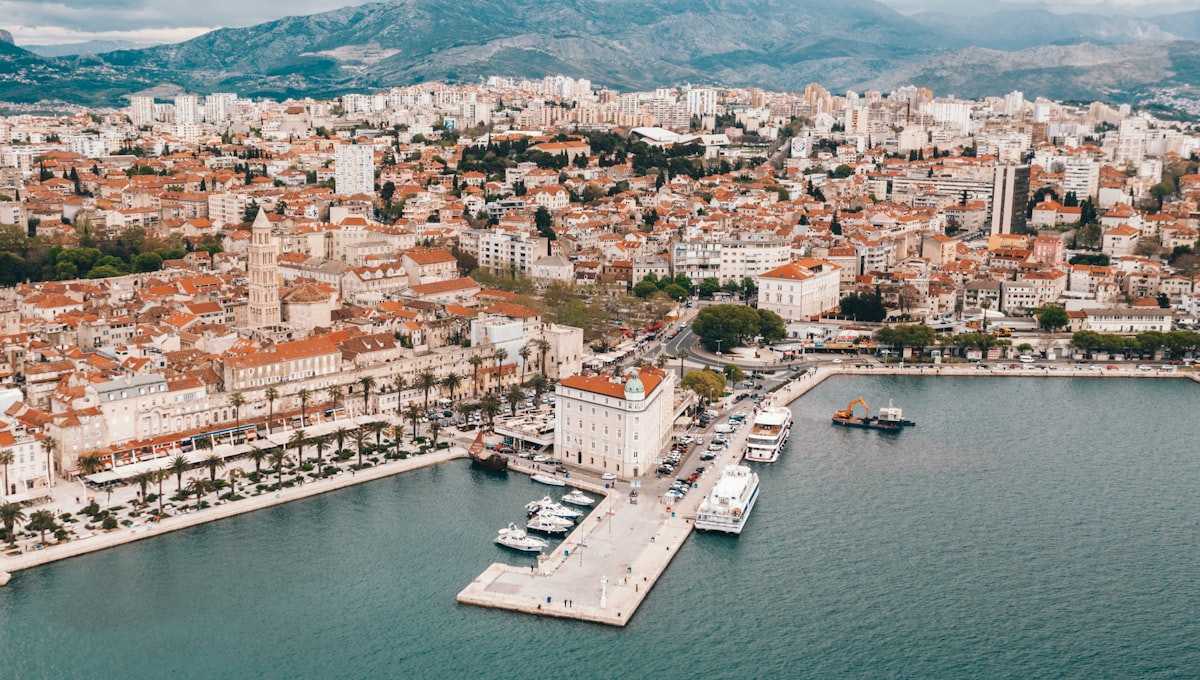
Day 1: Inside the Palace Walls
Start at the Peristyle, the central square of Diocletian's Palace, and just stand still for a moment. The columns around you date from 305 AD. The café umbrellas and espresso cups are from this morning. The juxtaposition never fully resolves, which is precisely what makes Split so compelling as a place — it refuses to be a museum.
From the Peristyle, explore the subterranean halls beneath the palace (entrance on Obala hrvatskog narodnog preporoda — the Riva waterfront street). These basement vaults give you the clearest sense of the palace's original footprint and are partially air-conditioned in summer, a mercy in July when the streets above can reach 35°C. Entry is around €8.
Then lose yourself in the labyrinth of the old town's streets. They have names but nobody uses them. You'll find the Cathedral of Saint Domnius — built inside Diocletian's mausoleum, which is one of history's great repurposings of architecture — and the adjacent Jupiter Temple, now a baptistery. The bell tower of the cathedral is climbable (€5) and offers rooftop views across the terracotta sea of old-town roofs toward the harbour. An inexhaustible supply of small stone squares, fountain courtyards, and half-hidden churches fill the hours between these landmarks.
Lunch at Konoba Matejuška, a ten-minute walk west of the palace on Tomaslava street near the Varoš neighbourhood. Stone walls, no-frills table settings, grilled fish priced by the kilogram. A shared brancin (sea bass) with vegetables and a carafe of local Dalmatian white wine runs around €37 for two. Unpretentious and excellent.
After lunch, walk the Riva — Split's seafront promenade. It's a little touristy but deeply pleasant in the late afternoon when the light falls golden over the harbour and you can watch ferries head out toward Hvar, Brač, and Šolta. Gelato from Luka Ice Cream on the Riva is mandatory. The promenade is also where the local population comes to promenade in the early evening — the passeggiata culture that persists across the former Venetian coastline.
Dinner in the Meštrović Gallery neighbourhood on the western edge of the old town. Restaurant Makrovega is the city's best vegetarian option, which matters because Croatian fish-heavy menus can become monotonous by day two. Excellent salads, grains, and a well-chosen wine list focused on Dalmatian varieties.
Day 2: Brač Island and the Beach at Bol
The island of Brač is 50 minutes by catamaran from Split's Riva harbour. The first fast catamaran departs at 8:30 AM; buy tickets the evening before at the Jadrolinija kiosk on the Riva or online. Return fare is around €9 each way — exceptional value for 50 minutes of island travel through the Adriatic.
Bol is the town on Brač's south coast and its beach — Zlatni Rat — is arguably the most photographed in Croatia. It's a white pebble spit that extends into impossibly turquoise water and shifts shape slightly with the currents. In July it's crowded by midday; in May or September it's something close to paradise. The water is clear enough to see the seafloor five metres down.
From the Brač ferry port at Supetar, a bus connects to Bol in around 50 minutes. Alternatively, take a taxi or pre-book a transfer if you're visiting with family. Bol itself has excellent seafood at Konoba Mlin — stone building, terrace overlooking a garden, fresh lobster and grilled fish at market price — and several smaller cafés along the waterfront that do grilled calamari and local olive bread for lunch.
If Zlatni Rat is crowded (a real possibility in peak July–August), the coves east of Bol accessible by walking trail are quieter and just as beautiful. A 20-minute walk along the coastal path to Murvica cove usually rewards you with something approaching solitude, a few fishing boats, and water you don't have to share. The island's interior is worth exploring if you have a car — the town of Bol sits below dramatic limestone hills, and the views from the road to the Vidova Gora mountain (the highest peak on any Croatian island) are outstanding.
Return by fast catamaran in time for a late dinner back in Split. Dvor restaurant, built into the city walls on the eastern edge of the old town, has a terrace with harbour views and a menu focused on grilled Adriatic fish — try the sea bass on a bed of Swiss chard and blitva potatoes.
Day 3: Hvar Town and the View from the Fortress
Hvar Town is Split's glamorous sister island and the most famous stop on the Dalmatian party circuit. It's also genuinely beautiful and worth seeing before the evening crowds and the post-yacht-party crowd take over.
Take the 9:00 AM catamaran direct from Split to Hvar Town (70 minutes, around €8). The approach from the sea — terracotta rooftops rising above a medieval harbour, the Fortica fortress on the hill, cypress-lined limestone mountains behind — is one of Croatia's great arrival moments. It rewards the early departure.
Climb to the Fortica fortress above the town (entry €8). The views from the top encompass the Pakleni islands scattered below, the channel back toward Split, and in good visibility the outline of the mainland mountains. The walk up takes 20 minutes on a stone path and is steep; start early before the heat builds. The fortress itself has a small collection of cannons and old charts from the Venetian period when Hvar was a critical Adriatic naval base.
The cathedral and loggia in Hvar's central square are worth 30 minutes. The square itself — one of the finest Venetian-era squares in Dalmatia — fills with tourists by noon but at 9:30 AM has a pleasingly quiet quality. Skip the oyster bars on the waterfront (overpriced; better at source in the Pelješac peninsula further south) and instead find Konoba Menego in one of the narrow alleys above the main square. This family-run place does traditional Dalmatian small plates — pršut (air-dried ham), peka (lamb or octopus slow-cooked under an ash-covered dome), stuffed peppers — at reasonable prices by Hvar standards.
The Pakleni Islands, reachable by water taxi from Hvar Town harbour for around €8 return, offer the quietest swimming of the trip. There are half a dozen named coves across the island cluster. Palmižana cove on Sveti Klement island is particularly good: pine trees down to the shoreline, crystalline water, a restaurant serving fresh fish from midday. Vinogradišće cove is slightly harder to reach and accordingly quieter.
Return by catamaran in the late afternoon to be back in Split for a final evening. The restaurant Šperun, just off the Riva in a side street near the old town western gate, does excellent fish soup and Dalmatian mixed grill for a reasonable final-night dinner.
Practical Notes
Accommodation in Split old town runs €80–€120 per night for a well-located apartment in shoulder season; €150–€200 in July–August when demand is highest. Book at least 2–3 months ahead for summer travel. The Varoš neighbourhood just west of the palace walls offers good value and a slightly more local feel than apartments inside the palace itself, which can be noisy from bar and foot traffic late into the night.
Croatia switched to the euro in January 2023, so standard European budgeting applies. Cards are widely accepted in restaurants and shops; cash is useful for ferry tickets at smaller kiosks and the smallest konobas.
Split rewards slow walking. The old town is dense but genuinely compact — you can cross it end to end in under ten minutes. Getting lost isn't a problem. You can't go more than five minutes in any direction without hitting a city wall, the sea, or a café. All three outcomes are perfectly acceptable.
Beyond the Three-Day Itinerary: What Else Is Nearby
If you have a fourth or fifth day, Split opens up considerably as a base. The Krka Waterfalls National Park is 75km north by car or bus — a series of cascading waterfalls on the Krka river where swimming in the pool below Skradinski Buk waterfall is one of Dalmatia's most photographed experiences (entry fee applies; swimming availability varies by season and conservation rules, so check the National Park website before planning this as a primary activity). The Old Town of Šibenik, en route to Krka, has the Cathedral of St James — a UNESCO site built entirely from stone without mortar between 1431 and 1535, an engineering curiosity almost as interesting as it is beautiful.
Trogir, 30 minutes from Split by bus (runs hourly for around €2), is a Renaissance town on its own small island connected to the mainland by bridge. The Cathedral of St Lawrence in Trogir's main square is comparable to Šibenik's in quality and older in origin. Trogir's mediaeval streets are more intimate than Split's palace interior and feel authentically inhabited rather than tourist-configured — the resident population still lives and works within the old walls.
For anyone who wants a longer Dalmatian road trip, the Pelješac Peninsula 2.5 hours southeast of Split produces some of Croatia's best red wine (Dingač and Postup Plavac Mali, often described as Croatia's answer to Primitivo or Zinfandel) and the world's finest oysters, farmed in the Ston estuary and served raw from the water for almost nothing at the waterfront restaurants in Mali Ston. A day trip combining Pelješac wine tasting with Mali Ston oysters and a swim on the peninsula's south coast beaches represents one of the most compressed enjoyments per square kilometre available in European travel.
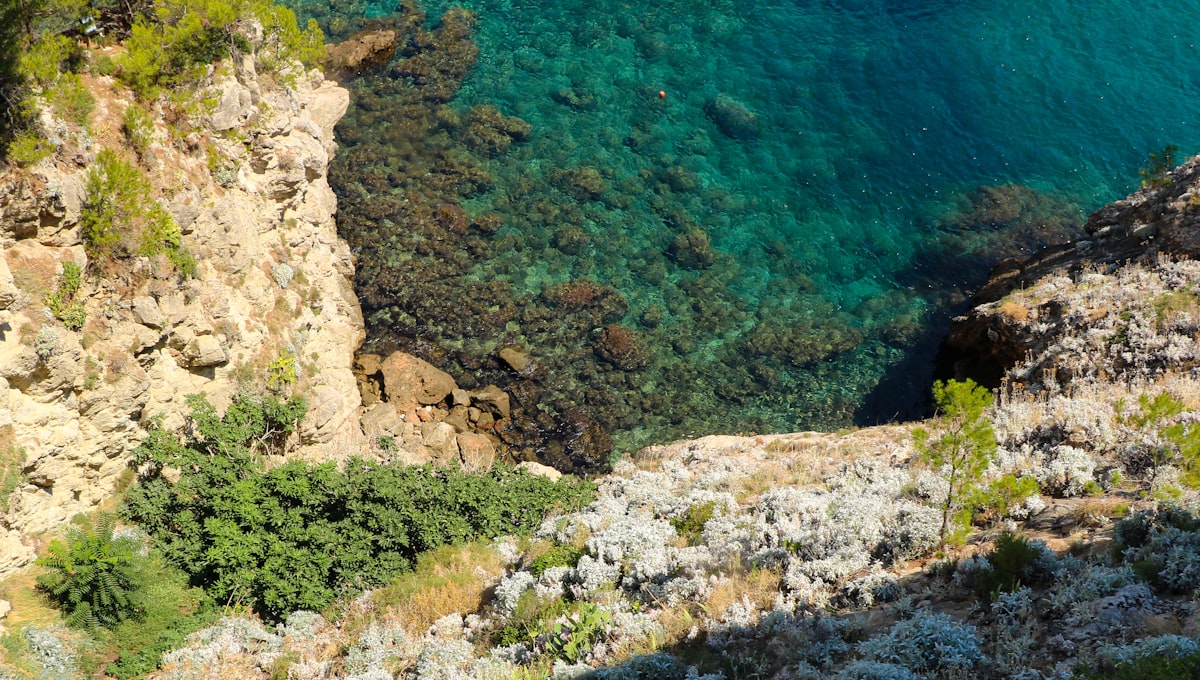 3 Days in Dubrovnik: Old Town, Islands, and the Best Sunset Spots
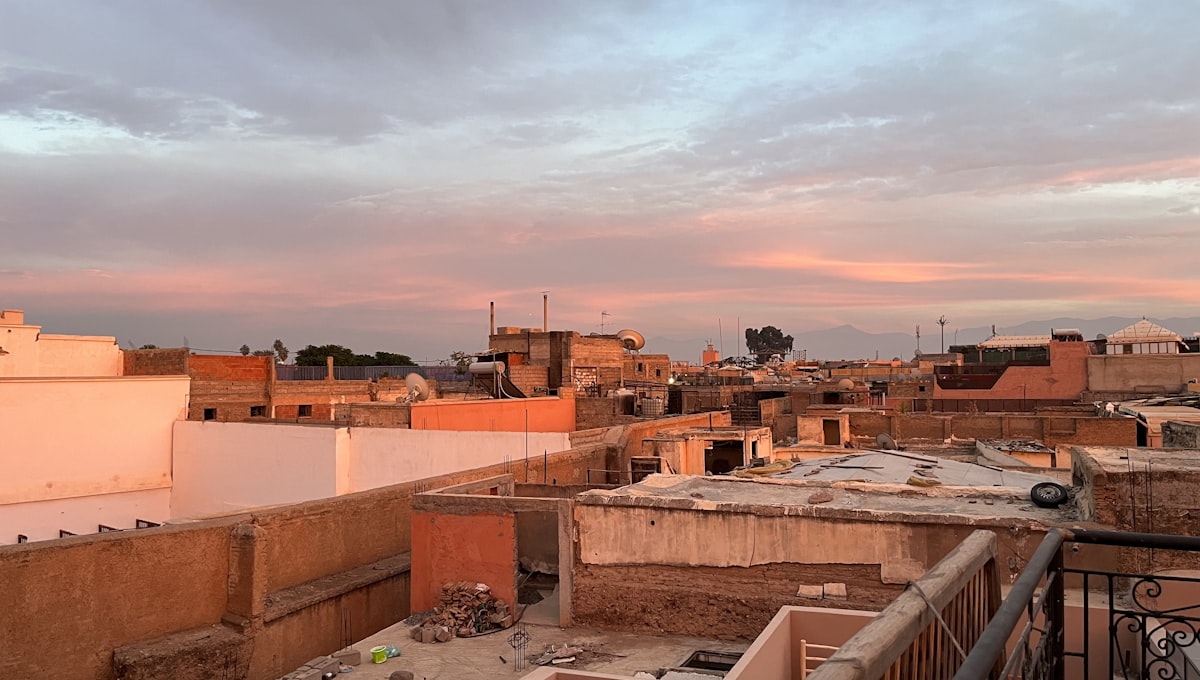 3 Days in Marrakech: Riads, Souks, and the Atlas Mountains