

Why New York Flights Are Cheaper from These European Cities
April 30, 2026
Planning a transatlantic trip to New York from Europe? The city you fly from matters far more than most travelers realize. Flights from Warsaw, Prague, or Budapest to JFK regularly run $400–$600 round trip, while comparable itineraries from London or Paris land at $650–$1,000. That gap — often 20–35% — is not random. It's the product of airline competition, carrier strategy, and the regional pricing mechanics that affect how fares differ across markets.
The Cities That Beat London and Paris
London Heathrow and Paris CDG are among the busiest transatlantic departure hubs on the planet. That volume has a cost: intense demand pushes base fares up, and the legacy carriers that dominate those routes — British Airways, Air France — rarely need to discount aggressively. When a route fills itself, airlines don't discount it.
Eastern and Southern European cities operate differently. Warsaw (WAW), Prague (PRG), Budapest (BUD), and Lisbon (LIS) all have competitive transatlantic options, lower base demand, and airlines that need to work to fill seats. Round-trip fares to JFK from these cities frequently come in at: Warsaw $420–600 via LOT Polish Airlines on direct service to both JFK and Newark, Prague $430–620 via connections through Vienna or Frankfurt, Budapest $440–650 connecting through Vienna or Warsaw, and Lisbon $420–580 via TAP Air Portugal.
Compare that with London or Paris, where $700–950 for the same travel window is common during peak periods. The difference is real and repeatable — not an occasional sale that disappears by next week.
Why Eastern European Hubs Win Structurally
Several factors keep Eastern European fares to New York consistently lower than their Western counterparts.
Purchasing power pricing: Airlines calibrate fares to local market conditions. Poland, Czech Republic, and Hungary have lower average incomes than the UK or France. To generate competitive booking volume, carriers price their Polish or Czech market fares at levels that reflect what the local market will bear — and those fares are cheaper in absolute terms.
LOT Polish Airlines' direct Warsaw–New York service is the central driver. LOT operates non-stop from Warsaw Chopin (WAW) to both JFK and Newark (EWR), and as the national carrier competing for a price-sensitive Polish traveling public, it actively prices these routes to stimulate demand. Round-trip fares in the $450–550 range appear consistently outside peak summer and holiday windows. During shoulder season — May, September, October — LOT sometimes drops to $380–430 return, a price point that Western European carriers simply don't offer on direct transatlantic service.
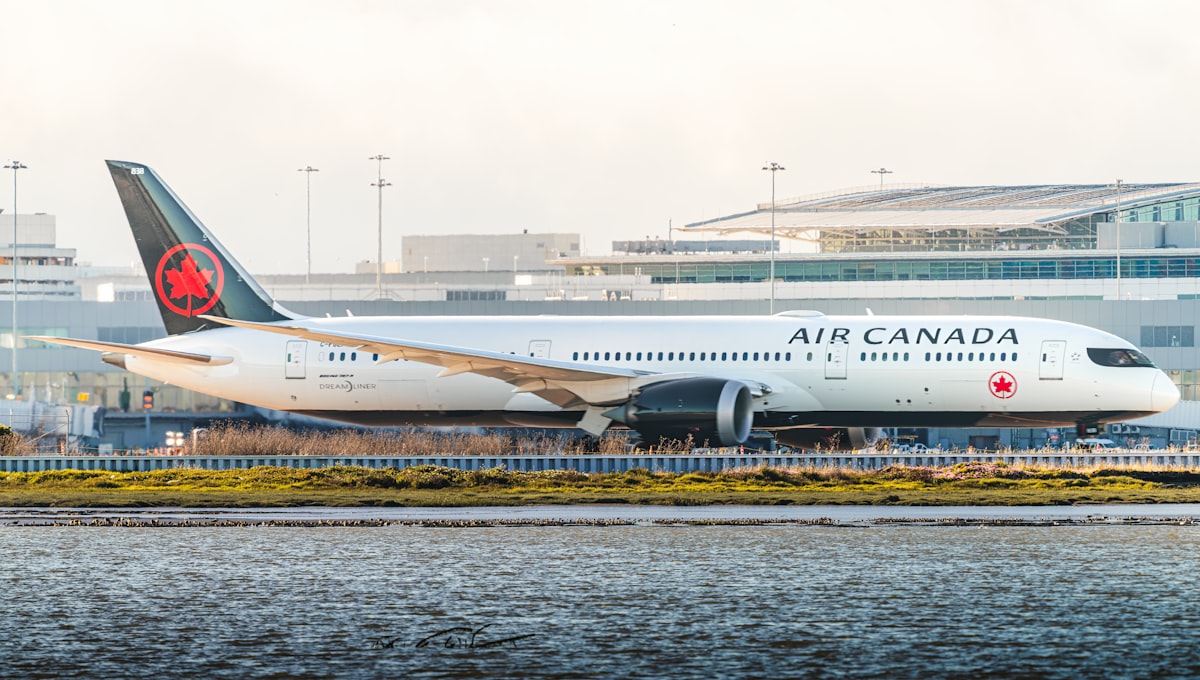
LOT operates Boeing 787 Dreamliner aircraft on its long-haul routes, so the cheaper fare doesn't come with a worse product. The seat and service quality are comparable to what you'd find on BA or Air France at a meaningfully higher price.
Hub competition via Vienna and Frankfurt: Travelers from Prague or Budapest connecting through Vienna (Austrian Airlines, Lufthansa Group) or Frankfurt face a competitive fare environment specifically because LOT's direct Warsaw service exists as a reference point. Austrian and Lufthansa Group carriers discount connecting fares from Eastern European spokes to retain passengers who might otherwise route through Warsaw. This competition benefits Prague and Budapest travelers even though neither city has a direct New York flight.
Lower airport infrastructure costs: Heathrow's slot constraints and high per-passenger charges flow through into ticket prices. Warsaw Chopin, Prague Václav Havel, and Budapest Ferenc Liszt operate with lower overhead. This contributes to the structural fare floor being lower before airline revenue management decisions even enter the picture.
TAP Air Portugal and the Lisbon Advantage
Lisbon is the most important outlier in Western Europe for transatlantic pricing, and TAP Air Portugal is the mechanism.
TAP has built its entire long-haul strategy around the Lisbon hub. The airline connects dozens of European cities through Lisbon to New York (JFK and Newark), Miami, Boston, and Washington. TAP's model means it needs to fill seats from a city with limited organic demand — Portugal's 10 million people don't generate the volume that the UK's 67 million do. TAP compensates with competitive pricing, and the result is one of the most consistently cheap transatlantic fares available anywhere in Western Europe.
Lisbon–JFK round trips in the $420–580 range appear regularly on TAP across most of the year, climbing toward $650–750 only during peak summer and Christmas windows. TAP also offers a formal stopover program allowing passengers to break their journey in Lisbon for up to three nights at no additional fare cost — turning a New York trip into a two-city itinerary with no extra airfare.
TAP's connecting fares from other European cities via Lisbon extend this advantage further. Travelers from Madrid, Barcelona, London, Paris, and Amsterdam can sometimes reach New York more cheaply by routing through Lisbon than by taking direct service from their home city. A positioning flight to Lisbon (often €40–80) is frequently more than offset by the transatlantic fare saving.
Iceland and the Budget Transatlantic Corridor
Reykjavik Keflavik (KEF) is a genuinely underrated departure point for transatlantic travel. Icelandair has operated Keflavik–JFK for decades with fares in the $400–650 return range and a consistent stopover program allowing a free overnight in Reykjavik en route. PLAY Airlines — Icelandair's direct low-cost competitor from the same airport — regularly offers base fares under $350 one-way to JFK or Boston on modern Airbus A320neo and A321neo aircraft.
Norse Atlantic Airways took over transatlantic routes from London Gatwick (LGW) to JFK and continues operating the budget transatlantic model with fares that legacy Heathrow carriers don't attempt to match. Travelers departing from secondary London airports (Gatwick, Luton, Stansted) have access to a low-cost transatlantic market that simply doesn't exist at Heathrow. Same destination, structurally different pricing.

How Cross-Market Booking Compounds the Savings
Even after choosing the cheapest departure city, there's a further savings layer: which country's booking site you use. Airlines and OTAs set fares in local currencies, and those prices don't perfectly track exchange rates as they fluctuate. The same flight can cost meaningfully different amounts depending on whether you book through the Polish, Czech, Israeli, or UK version of a booking platform.
For transatlantic routes, the spread between the most expensive and cheapest regional market version of a booking site often runs 10–20%. On a $500 fare, that's $50–100 in additional savings on top of already having chosen a cheaper departure city. These two strategies affect different parts of the pricing system and stack independently.
A LOT Warsaw–New York fare at $480 on Skyscanner UK might appear at $410 on Skyscanner Poland or $395 through an Israeli market search. The flight is identical. The ticket produced is the same IATA e-ticket. The difference is which regional fare bucket was accessed. RegionFare checks all 97 regional market versions simultaneously, so you see the true cheapest price rather than your home country's default.
More City Comparisons: The Full European Picture
The Eastern European advantage extends beyond the four core cities. Madrid and Barcelona (MAD/BCN) have benefited from Iberia and Level (Iberia's low-cost long-haul arm) operating transatlantic service at competitive prices — round trips to JFK frequently come in at €480–620, positioning them closer to Eastern European pricing than to London or Paris. Rome Fiumicino (FCO) is similarly competitive through ITA Airways and connecting itineraries via Frankfurt or Amsterdam, with return fares to New York in the €500–650 range for most of the year.
The cities that genuinely underperform relative to their size: Paris (CDG) and Frankfurt (FRA). Both are massive hubs dominated by Air France and Lufthansa respectively — flag carriers with less incentive to discount aggressively. Frankfurt–JFK on Lufthansa typically runs €650–850 return outside deep sales windows. The Lufthansa Group fare structure reflects its network dominance; travelers departing from Frankfurt often save money connecting through Vienna (on Austrian) or Warsaw rather than flying direct on Lufthansa.
Amsterdam (AMS) deserves a separate mention. KLM's hub-and-spoke model produces fares to New York that frequently undercut British Airways and Air France on comparable dates. AMS–JFK or AMS–EWR return fares in the €480–620 range are common, and KLM's positioning flights from regional UK cities (Edinburgh, Manchester, Birmingham) via Schiphol are often priced low enough to make Amsterdam a competitive origin even for UK travelers.
PLAY and Norse Atlantic: The Budget Transatlantic Detail
PLAY Airlines (founded 2021, Icelandair's direct competitor from Keflavik) deserves more attention than it typically receives in transatlantic fare discussions. The airline operates a fleet of Airbus A320neo and A321neo aircraft on routes to JFK, BOS, BWI, and several other US East Coast airports. Base fares from KEF to JFK can drop below €120 one-way during promotional windows — making even the positioning flight from London or Paris to Reykjavik worthwhile.
PLAY's cabin is standard low-cost: seats are sold in Basic, Comfort, and Business tiers with Comfort adding seat selection and cabin baggage. The A321neo's cabin pressure and humidity are better than older aircraft, which reduces the fatigue of a 6-hour Atlantic crossing. For travelers who are comfortable without a meal included and will bring their own food, PLAY produces some of the lowest effective fares available on any transatlantic route.
Norse Atlantic (N0), operating from London Gatwick (LGW) to JFK and EWR, fills a similar niche for UK-based travelers. Norse uses Boeing 787 Dreamliners, which means better cabin air quality than narrow-body budget carriers. Economy base fares start from £149 one-way in promotional sales, with average fares around £190–280 one-way during off-peak windows. Norse doesn't have a frequent flyer program and doesn't feed connecting itineraries — it's a point-to-point carrier. That constraint means it's most useful for travelers with Gatwick as a convenient departure airport. South London, Surrey, and Sussex residents have direct access to Gatwick; central London travelers face a 35-40 minute rail journey.

JFK vs EWR: Which New York Airport to Target
The choice between JFK and Newark (EWR) is more consequential than it appears, and the right answer depends heavily on where you're staying.
JFK handles the majority of transatlantic arrivals and has the widest carrier selection. Getting into Manhattan from JFK: the AirTrain connects to the A train at Howard Beach or the E/J/Z at Jamaica — the full journey to Midtown takes 50–75 minutes depending on connections and costs $10.75 total. For Brooklyn or Queens, the AirTrain to Jamaica with onward subway is direct and inexpensive. For lower Manhattan or New Jersey, the subway routing adds time. Taxis and rideshare from JFK to Midtown average $55–75 without traffic; with traffic (rush hour, major events), allow $85–120.
Newark (EWR) is geographically closer to Midtown Manhattan than JFK — about 16 miles versus 15 miles — but the transport infrastructure is different. NJ Transit to New York Penn Station takes 25–35 minutes from Newark Airport station (a free AirTrain hop from the terminals) and costs $15.25. This route is consistently faster and more reliable than the subway from JFK. For anyone staying in Midtown, Hell's Kitchen, or the Upper West Side, Newark often produces faster door-to-door times than JFK. For Brooklyn, downtown Manhattan, or the East Village, JFK wins.
On carrier choice: LOT Polish Airlines serves both JFK (seasonal) and EWR (year-round) from Warsaw. United operates LHR–EWR and some seasonal LGW–EWR service. Norse Atlantic flies LGW to both JFK and EWR. When comparing fares from any European origin, run both JFK and EWR as destination airports — the price difference between the two can be £20–60 on the same airline's routing.
Positioning Flights from UK Regions
For travelers outside London, the calculation changes significantly. The standard assumption — book from your nearest UK airport — is often suboptimal when the transatlantic carrier choice is limited.
Manchester (MAN) has its own transatlantic service: United to EWR, American to PHL and JFK (via some codeshares), and Virgin Atlantic to JFK. Manchester fares are often competitive with Heathrow on the same airlines. But Manchester lacks Norse and PLAY service entirely, which means the pricing floor is higher.
Edinburgh (EDI), Glasgow (GLA), Bristol (BRS), and Birmingham (BHX) all have limited or no direct transatlantic service. Travelers from these cities are typically routing through Heathrow, Gatwick, Amsterdam, or Dublin. The Dublin routing (via Aer Lingus) is worth pricing specifically: Aer Lingus operates from Edinburgh, Glasgow, and Belfast to Dublin with onward connection to JFK and EWR, and the pricing of the combined itinerary is often competitive. US immigration preclearance in Dublin means arriving as a domestic passenger — no immigration queue on arrival in the US.
The positioning-flight-to-Warsaw calculation applies equally to UK regional travelers. An Edinburgh–Warsaw easyJet return (€80–140) combined with a LOT Warsaw–JFK return (€420–550) can produce a total lower than the cheapest Edinburgh–London–JFK combination on legacy carriers. Run the numbers for your specific dates; the gap varies significantly by season and booking timing.
Finding Your Cheapest Origin
Price your home airport first to establish a baseline. Then run the same search from Warsaw, Lisbon, and Keflavik. A positioning flight within Europe — London to Lisbon, Paris to Warsaw — typically costs €40–80 return, which pays for itself if the transatlantic saving exceeds €120.
Check PLAY and Norse Atlantic directly alongside aggregator results. Low-cost transatlantic carriers don't always appear prominently on all metasearch tools. Their own websites sometimes show fares not available through third-party intermediaries.
Book 6–10 weeks out for shoulder season travel and 4–5 months out for summer and holiday windows. September and October are particularly good for New York: clear fall weather, lower fares than summer, fewer crowds, and some of the best restaurant reservations of the year. LOT, TAP, and Icelandair all run competitive pricing during this window.
Once you've identified a specific itinerary, run it through RegionFare to check whether that exact flight is cheaper on another country's version of the same booking platform. The check takes two minutes and regularly adds another $50–150 in savings on top of the departure city advantage.

The Bottom Line
New York is one of the most competitive transatlantic routes in the world — but competitive doesn't mean equally priced from every European city. Travelers departing from Warsaw, Prague, Budapest, Lisbon, or Reykjavik have a structural price advantage over those flying from London or Paris. LOT's direct service, TAP's hub model, and PLAY's budget competition are permanent features of this market, not temporary anomalies.
Layer that with the cross-market pricing gap and the total savings available on a New York trip from Europe are substantially larger than most travelers realize. RegionFare searches across 97 country markets to surface the cheapest regional booking link for any specific itinerary.
 Why the Same Flight Costs More in Your Country (And How to Pay Less)