

Dubai Flights: Round-Trip vs Two One-Ways — Which Saves More
April 30, 2026
You're planning a trip to Dubai and you've found a round-trip fare that looks reasonable. But then you notice: a one-way vs return flights outbound is listed at a surprisingly low price, and so is the return — and combined they undercut the round-trip by a noticeable margin. Or is it the other way around? Which structure actually saves more money? The answer changes depending on the carrier, the route, and how flexible you're willing to be with airlines.
The Case for Round-Trips
For most of aviation history, round-trips were straightforwardly cheaper. Legacy carriers like Emirates and Etihad still build this assumption into their fare structures, and for long-haul routes it generally holds.
A New York (JFK) to cheapest flights to Dubai (DXB) round-trip on Emirates typically lists between $700 and $1,500 depending on season and lead time. Buying the outbound and return separately on the same carrier usually pushes that higher. Emirates and Etihad also bundle better baggage allowances and easier rebooking into their round-trip fares — if your trip involves tight connections, having one airline responsible for both legs is worth something.
On intercontinental routes from the US, Canada, Australia, and East Asia, round-trips from a single full-service carrier typically beat two separately purchased one-ways on the same airline.
When Two One-Ways Win
The picture changes significantly on short- and medium-haul routes, especially once budget carriers enter the mix. FlyDubai, Wizz Air, and Ryanair (on some European routes) price each direction independently — their "round-trips" are literally two one-ways added together with no bundle discount.
A Wizz Air one-way from London Luton (LTN) or Gatwick (LGW) to Dubai World Central (DWC) can be found in the £80–180 range. Buying two separately matches or beats any package the carrier offers. From mainland Europe, Turkish Airlines and Pegasus round-trips typically run €300–600, but splitting the legs can come in lower when you catch a sale on one direction.
Two one-ways reliably win when the cheapest outbound and cheapest return fall on different airlines. No round-trip fare bridges two carriers — the only way to capture the best price on each direction is to book them independently.
Mixing Carriers: The Advanced Strategy
Dubai is one of the world's best-connected airports, served by a dense web of carriers competing for the same passengers. That competition creates pricing mismatches you can exploit by mixing carriers across the two legs.
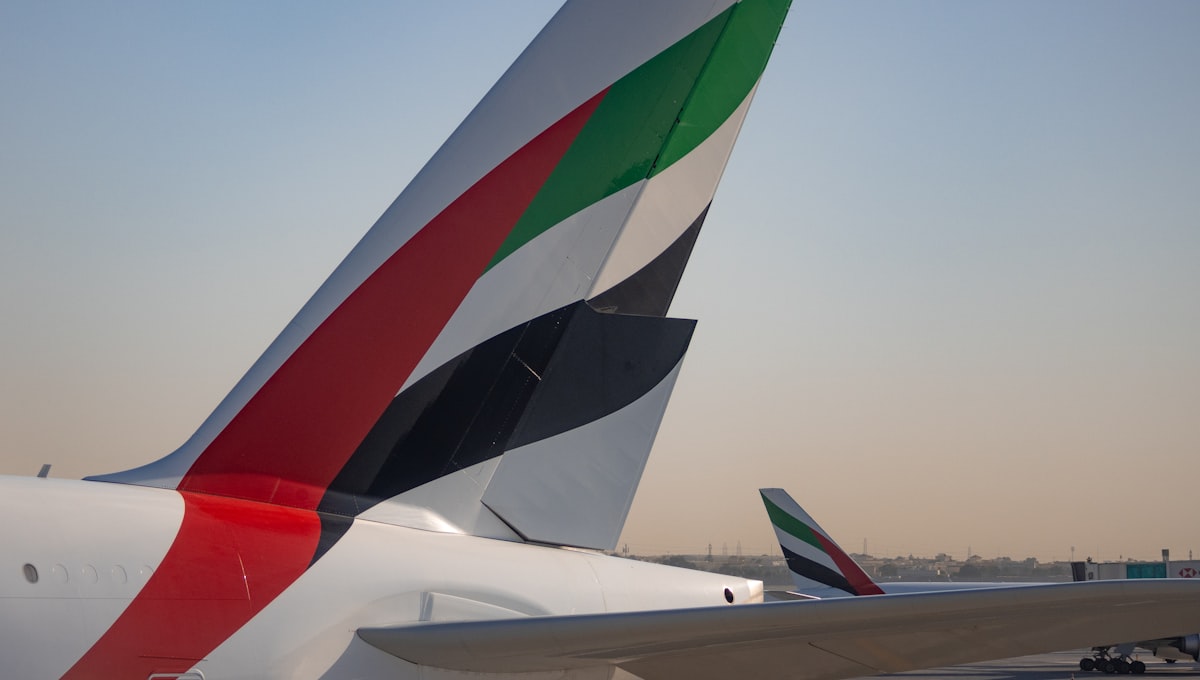
Emirates outbound + FlyDubai return is the most useful UK-market combination. Emirates and FlyDubai are sister airlines (FlyDubai is majority-owned by the Emirates Group) that share a codeshare agreement but price their inventory completely independently. Emirates' premium Heathrow service might have the best outbound sale fare on a specific date; FlyDubai's return from DWC might undercut any Emirates return option by 30–40%. Booking each leg separately captures both deals in a way that no single round-trip can.
Turkish Airlines outbound + Pegasus return works well from Continental Europe. Turkish operates from most major European hubs through Istanbul (IST) to Dubai. Pegasus (PC), Turkey's major low-cost carrier, operates the Istanbul–Dubai route independently and prices aggressively against TK to capture Turkish-market leisure travelers. A TK-outbound/PC-return combination from Frankfurt, Amsterdam, or Paris can come in meaningfully below any single-carrier round-trip.
Etihad outbound + Wizz Air return is worth testing from UK secondary airports. Etihad operates from Heathrow (LHR) and Manchester (MAN) to Abu Dhabi (AUH), which is a 90-minute drive from Dubai or accessible via a short FlyDubai connection. Wizz Air operates Luton–DWC independently. When Etihad runs a promotional flash sale on European departures — they do this several times per year — and Wizz Air has low one-way inventory on the return, the combined total can undercut both carriers' published round-trips.
Lufthansa or BA outbound + FlyDubai return suits business travelers. Full-service legacy carriers often have better availability on business-heavy departure windows: Monday mornings, Thursday evenings. FlyDubai's return, purchased separately, captures a lower price on the leisure-dominated return window without sacrificing the outbound premium product.
Air India outbound + IndiGo return is worth checking for UK and European travelers who don't mind connecting through Indian hubs. Air India operates competitive fares via Delhi (DEL) and Mumbai (BOM) to Dubai; IndiGo serves the same routing with lower one-way prices. India is a major source market for Dubai, which drives aggressive pricing from Indian carriers in both directions.
The operational caveat applies to all mixed-carrier combinations: if your outbound is significantly delayed, the return carrier owes you nothing. Build at least one overnight buffer between arrival and return departure. Never mix carriers on a same-day connection.
The Regional Pricing Layer
The country you book from affects the price of each leg independently — and the cheapest market for your outbound may differ from the cheapest for your return.
Airlines and booking platforms use regional pricing: the same seat on the same flight can be listed at different prices depending on which country's version of Skyscanner, Kiwi, Kayak, or Momondo you're using. A Dubai–London flight priced at £280 on UK Skyscanner might appear at the equivalent of £240 on the Israeli or Polish version — identical flight, same date, same class.
When booking two one-ways, this effect compounds. You can independently optimize the booking market for each leg: a cheaper market for the outbound, potentially a different cheaper market for the return. With a single-carrier round-trip you're locked into one booking context for both legs. The independent optimization advantage belongs exclusively to the two-one-way structure.
RegionFare searches across 97 country markets simultaneously. On Dubai routes, the spread between the most expensive and cheapest market regularly runs 10–25%.
How to Compare Both Options
Run both searches in parallel. First, search the round-trip on RegionFare to find the cheapest market price for the combined fare. Then search each one-way separately and add the totals together. If the cheapest outbound and return are on different airlines, you're in two-one-way territory regardless — no round-trip bridges them. Factor in baggage fees, which differ significantly between carriers and can flip a close comparison.

The Bottom Line
Round-trips win on long-haul routes from the Americas, Australia, and East Asia with full-service carriers. Two one-ways win on short- and medium-haul European routes with budget carriers, and they're the only structure that lets you combine carriers to capture the best price on each leg. The regional pricing layer adds independent savings on top of either approach. RegionFare compares across all 97 booking markets, which is the fastest way to see the cheapest version of whichever structure wins for your specific trip.
FlyDubai: Positioning and What It Actually Is
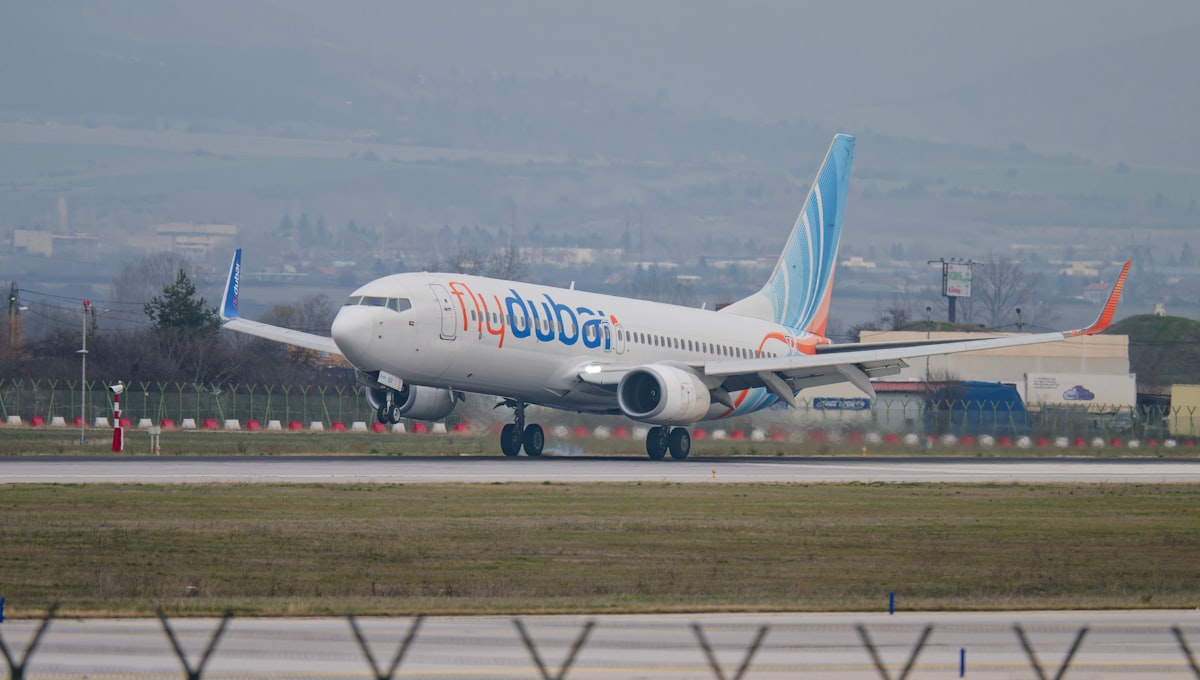
FlyDubai (FZ) is the element most travelers overlook because it operates from Dubai World Central (Al Maktoum International, DWC) rather than Dubai International (DXB). DWC is 55km southwest of the city center — about 50 minutes by taxi (AED 100–130) or by the RTA coach service (AED 25). This is a material consideration for your itinerary, but it does not outweigh the price difference when FlyDubai is significantly cheaper. FlyDubai operates Boeing 737 MAX aircraft in a standard low-cost configuration. Its business class (called "Business") is a domestic-style product — recliner seats, not lie-flat — priced at a premium over economy but significantly below Emirates business class. FlyDubai codeshares with Emirates, meaning the two carriers can be booked together in a single Emirates reservation on some routes, which makes mixed-carrier itineraries easier to manage operationally.
Abu Dhabi as an Alternative Entry Point
If Emirates and FlyDubai are both fully priced on your travel dates, Abu Dhabi (AUH) deserves a separate search. Etihad Airways, Abu Dhabi's flag carrier, operates from London Heathrow and Manchester. Dubai and Abu Dhabi are 140km apart by road — approximately 90 minutes to two hours by bus (Flixbus serves the route, AED 25) or 70–80 minutes by taxi (AED 200–280). For a Dubai trip of three nights or more, arriving into Abu Dhabi on a cheaper Etihad fare and taking the bus is a reasonable trade. The Etihad fare via AUH sometimes undercuts the cheapest Dubai-direct fare by £80–120, particularly on sale periods or when Etihad is running promotional pricing on its London routes. Etihad's business class (The Residence and Business Studio) is generally regarded as one of the finer products in the market when priced competitively.
Specific Fare Examples to Calibrate Expectations
To make the comparison concrete: for a London–Dubai round-trip in October (shoulder season), a representative search in 2026 shows Emirates LHR–DXB–LHR at £620–720 for economy. Norse does not operate this route. FlyDubai LGW–DWC–LGW (two one-ways combined) runs £320–420. A mixed itinerary of Emirates LHR–DXB outbound + FlyDubai DWC–LGW return runs £380–480 depending on dates. The cheapest outbound plus cheapest return from different carriers typically undercuts the cheapest single-carrier round-trip by 15–25%. Regional pricing adds a further 10–18% discount when the booking market is optimized: the Israeli, Polish, or UAE market version of Skyscanner or Kayak often shows Emirates fares meaningfully below the UK-default price.
When comparing, also factor in baggage fees: Emirates economy includes 30kg checked baggage; FlyDubai charges for hold baggage as an add-on (typically £25–45 each way). Build this into the total before deciding.

 One-Way vs Return Flights: When Each Strategy Saves More