
London to New York: The Complete Guide to Finding the Cheapest Flight
May 3, 2026
London to New York is the world's most valuable long-haul aviation route by revenue, and one of the most competitive in terms of carrier selection and fare range. At any given time, between 8 and 12 airlines operate nonstop service between London's two main airports (Heathrow, LHR; Gatwick, LGW) and New York's three (JFK, Newark EWR, LaGuardia LGA). Understanding which carriers to watch, when prices move, and how to exploit the regional pricing layer can reduce a transatlantic fare by £100–200 per ticket.
The Carrier Landscape
Nonstop London–New York service is dominated by: British Airways (BA) from LHR to JFK and LHR to EWR; Virgin Atlantic (VS) from LHR to JFK; American Airlines (AA) from LHR to JFK; United Airlines (UA) from LHR to EWR and LGW to EWR; Delta Air Lines (DL) from LHR to JFK; Norse Atlantic (N0) from LGW to JFK and LGW to EWR; JetBlue Airways (B6) from LHR to JFK; Air India (AI) and some charter/seasonal operations.
Norse Atlantic and JetBlue are the significant newcomers. Norse (launched 2022) operates premium-economy and economy only with base fares consistently 20–40% below legacy carrier pricing. JetBlue's transatlantic service (launched 2021) introduced a business class product (Mint) at roughly half the price of BA or Virgin business class, with economy fares competitive with Norse.
For economy travelers, the pecking order by typical base fare is: Norse → JetBlue → United → Delta → American → British Airways → Virgin Atlantic. The legacy carriers close the gap with sales, but in a baseline comparison, Norse and JetBlue set the floor.

When to Book: The Transatlantic Calendar
The London–New York route follows a fairly predictable annual pricing pattern:
January and February: lowest fares of the year. Norse regularly offers LGW–JFK from £220 return; legacy carriers respond with sales bringing fares to £280–350. Book in January for February/March travel and you'll often find the year's lowest prices.
March–April: prices begin rising for the summer season. Good fares still available for May and early June travel if booked 8–12 weeks out.
May–August: peak summer. Return fares from London to New York average £550–750 on legacy carriers; Norse holds the floor at £320–450. The last two weeks of August, as US families return before school starts, are among the most expensive flying days of the year.
September: prices fall sharply after Labor Day. Mid-September through mid-October is arguably the best combination of value and New York weather — fares drop to £300–450 return, the city is warm and uncrowded, and the fall foliage begins upstate.
November–December: prices rise again for Thanksgiving (the most expensive flying period in the US calendar) and Christmas. Fly the week before Thanksgiving or the week after and prices drop significantly.
The LHR vs. LGW vs. LCY Question
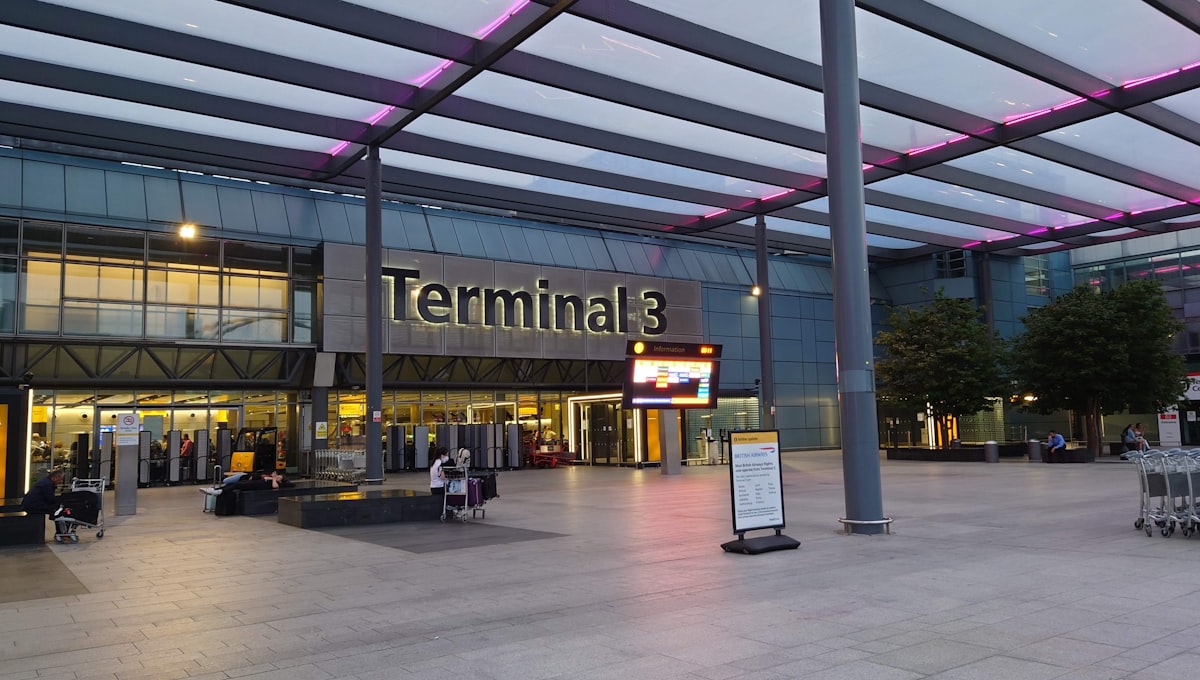
For most travelers, the airport choice is the carrier choice: if you want BA, American, Virgin, or Delta, you're flying Heathrow. If you want Norse or certain United routes, you're flying Gatwick. JetBlue flies from Heathrow.
The practical difference: Heathrow is better connected to central London (Piccadilly line 45 minutes to Leicester Square, Heathrow Express 15 minutes to Paddington) but more expensive for parking and has more congestion. Gatwick is 30 minutes from Victoria on the Thameslink service (£17) or 30 minutes on the Gatwick Express (£22). For long-haul, the airport matters less than the fare — but a £60 fare difference doesn't make sense if you have to pay £40 more in transport to reach Gatwick.
The New York Airport Question
JFK is best for Manhattan and Brooklyn access: the AirTrain to Jamaica and the E or J train to Manhattan runs ~60 minutes and costs $10.75 total. An Uber to Manhattan is $55–85.
Newark (EWR) is equidistant from Midtown in time — NJ Transit to Penn Station takes 30 minutes and costs ~$18 — but the routing is slightly more complex. Useful if you're staying in Lower Manhattan (closer to the PATH train) or traveling to New Jersey.
LaGuardia is poorly connected by public transit; it effectively requires a taxi or ride-share ($35–55 to Manhattan) and is best used if you're staying in Queens or Upper Manhattan.

Norse and JetBlue: What the Price Buys
Norse Atlantic is a genuine low-cost long-haul carrier. Economy seats are pitched at 31–32 inches (standard budget airline short-haul pitch). There is no complimentary meal; food is purchased on board. Seat selection and baggage are add-ons. The aircraft are Boeing 787 Dreamliners, which means good cabin pressure, low turbulence, and good air quality regardless of price point. For a 7-hour transatlantic flight, it's a reasonable trade.
JetBlue economy on transatlantic routes has slightly more legroom than Norse (32–33 inches) and includes free Wi-Fi — which, on a 7-hour flight, has meaningful value. JetBlue Mint (business class) is genuinely excellent: lie-flat beds, direct aisle access, and fares that start around £800–950 one-way vs return flights versus British Airways Club World at £1,400–1,800 one-way.
Connecting via Other Hubs
If nonstop prices are high, connecting flights can produce significant savings. Typical connecting options:
Via Dublin with Aer Lingus (EI): Aer Lingus operates LHR–DUB–JFK and LHR–DUB–EWR. Dublin offers US immigration preclearance, meaning you arrive in the US as a domestic passenger (faster). Fares via Dublin can be £50–100 below nonstop London pricing.
Via Amsterdam, Paris, or Frankfurt with KLM (KL), Air France (AF), or Lufthansa (LH): longer total journey time (10–13 hours versus 7 hours nonstop), but these carriers frequently offer the lowest total fares in the market during sales. The connection also allows split city options (fly London–Amsterdam–NYC, return NYC–Frankfurt–London).
Via Reykjavik with Icelandair (FI): Icelandair's hub-and-spoke model via KEF has a cult following for budget transatlantic travel. Economy fares can be competitive in the off-season; the stop in Reykjavik can be extended for a free layover of up to 7 nights under the Stopover scheme.
Regional Pricing on the LHR–JFK Route
The London–New York route shows consistent regional price variation. British Airways prices its tickets differently across its regional booking markets: the same LHR–JFK ticket that shows as £520 on ba.com (UK) may appear as the equivalent of £460 on the US-market version of the site or £440 on the Israeli market. American Airlines, Delta, and United all apply similar market-level pricing.
RegionFare checks all 97 regional markets simultaneously on any search, which surfaces the actual floor price for any given route rather than the market-default price. On a transatlantic route with £80–100 variation between the cheapest and most expensive market, this is material — for a couple, it's one night of accommodation in New York.
What to Expect to Pay: A Summary
Economy return, 6–8 weeks booking lead time: - January/February: £250–320 (Norse/JetBlue), £320–420 (legacy) - March/April/September/October: £320–420 (Norse/JetBlue), £420–550 (legacy) - May/June/July/August: £380–520 (Norse/JetBlue), £550–750 (legacy) - Thanksgiving week: £650–900 (all carriers) - Christmas week: £700–950 (all carriers)
Airport Comparison: LHR vs LGW vs STN vs Other UK Airports
The airport question for London is really a carrier question. Heathrow (LHR) is where the legacy full-service carriers concentrate: British Airways, American Airlines, Virgin Atlantic, Delta, United, JetBlue, and Air India all operate nonstop transatlantic service from Heathrow. For most UK travelers, Heathrow is the baseline. Gatwick (LGW) is where the low-cost and value transatlantic carriers operate: Norse Atlantic runs LGW–JFK and LGW–EWR; certain United routes also depart from Gatwick. London Stansted (STN) does not currently have nonstop transatlantic service but is the departure point for European connections that feed into transatlantic routes via Dublin (Aer Lingus), Amsterdam (KLM), or Paris (Air France). London City (LCY) has no transatlantic nonstop service. The transport cost from central London: Heathrow Piccadilly line costs £6.40 (50 minutes to Leicester Square), Heathrow Express costs £37 (15 minutes to Paddington). Gatwick Thameslink costs £17.80 (30 minutes from London Bridge). If you are comparing a Norse fare from Gatwick against a BA fare from Heathrow, add the transport cost differential before concluding which is cheaper overall.
Airline Comparison: What You Are Actually Buying
The hierarchy of economy class products on the LHR–JFK route in 2026: Norse Atlantic sits at the bottom on seat pitch (31 inches) and product, but operates Boeing 787 Dreamliners with excellent air quality and no meals included. JetBlue economy is a step up (32–33 inches, free Wi-Fi on all transatlantic flights, complimentary snacks). United Economy is comparable to JetBlue with slightly better inflight entertainment on newer aircraft. Delta economy offers roughly the same pitch as United but with a stronger entertainment system and better meal quality. American and British Airways economy are roughly equivalent and include a checked bag in some fares. Virgin Atlantic economy is generally regarded as slightly better in-seat experience than BA, with a more personable cabin crew reputation. The gap between Norse and Virgin on a 7-hour transatlantic flight is real — if you are six feet tall, the 31-inch pitch matters. If you are taking a redeye and planning to sleep, the difference is smaller.
Seasonal Pricing: The Specific Windows to Target
The cheapest reliable windows for London–New York over the full year: late January through early February (post-Christmas, pre-half-term) is consistently the cheapest two-week period. The first two weeks of November (before Thanksgiving pricing kicks in around the 20th) are underrated. Early March, before spring break begins to lift fares, often has the year's best value for non-peak travel. The most consistently overpriced windows: the last week of August (US Labor Day) and the full Thanksgiving week. Christmas Day itself and the day before New Year are also peak priced — but the week between Christmas and New Year's Eve is frequently cheaper than the weeks immediately before and after.
Positioning from UK Regions
For travelers based outside London, the calculation is different. Edinburgh (EDI) has direct transatlantic service to New York on American Airlines and United. Manchester (MAN) has British Airways, Virgin Atlantic, and American Airlines transatlantic service. Birmingham (BHX) has fewer options and most travelers connect through Heathrow or Dublin. For a Manchester-based traveler, a Manchester–JFK direct on Virgin Atlantic is frequently competitive with or cheaper than a London positioning plus Heathrow departure, once the additional train cost and time are factored in. The Dublin connection (Irish city → Aer Lingus → Dublin → JFK) is worth checking for anyone in Northern England or Scotland: Manchester–Dublin is short and Aer Lingus fares to JFK via Dublin regularly undercut London-originating fares by £40–80.
The Regional Pricing Layer: Specific Carrier Behavior
Not all carriers apply the same regional pricing variation. British Airways shows consistent differences across its booking markets — the UK, US, Israeli, and Polish markets frequently produce different fares for the same LHR–JFK date. American Airlines applies similar market-level adjustments but with tighter variance. Delta and United show the pattern less pronounced on transatlantic routes than on their domestic US pricing. Norse Atlantic applies minimal regional variation — its pricing is relatively uniform across markets. JetBlue shows modest variation. The implication: regional pricing is most valuable when booking BA, American, or Virgin Atlantic — the carriers with the most market-segmented pricing. The optimal market for a given departure date varies and requires checking rather than assuming.
